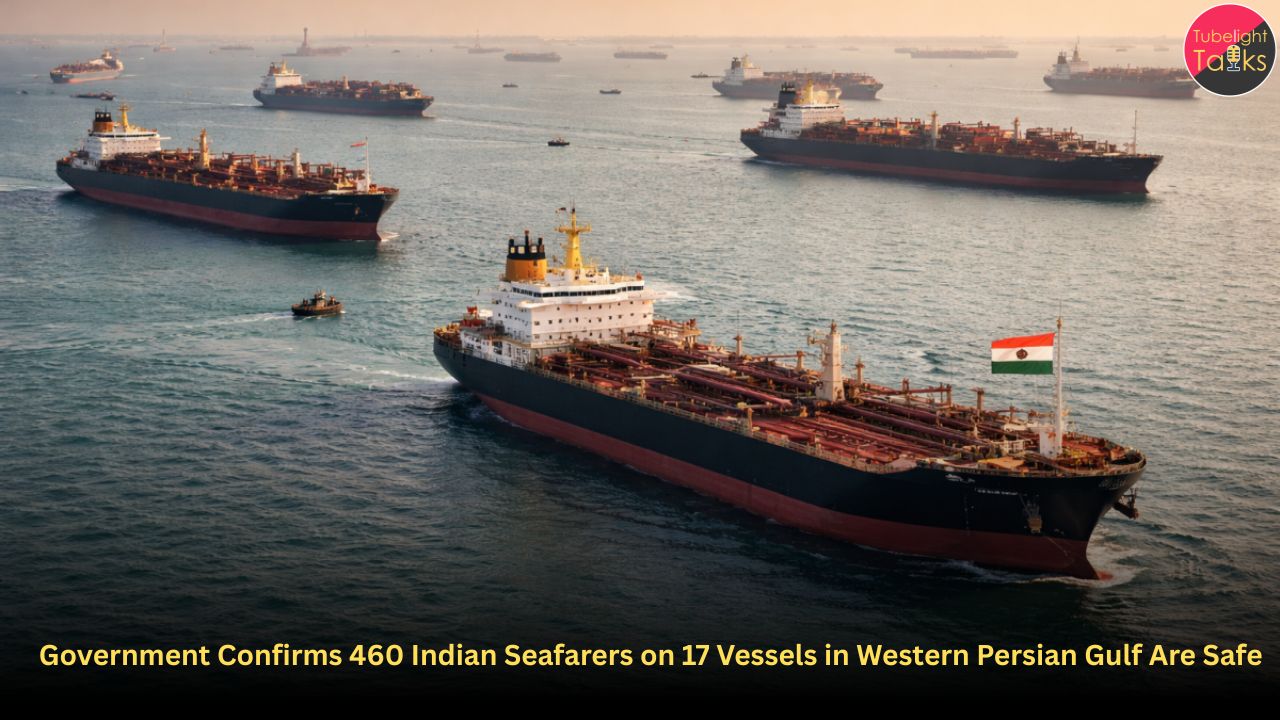
Community Resilience: Authorities Confirm Safety of 460 Indian Seafarers in the Western Gulf Region
460 Indian Seafarers on 17 Vessels: The government has confirmed that 17 Indian-flagged vessels carrying 460 Indian seafarers remain in the western Persian Gulf region and that the crews are safe. PIB reported that the Directorate General of Shipping is working in coordination with shipowners, placing agencies and Indian missions to monitor the evolving situation, while also ensuring continuity of maritime trade.
Safety is being monitored at both crew and shipping levels
This is not merely a one-line reassurance. The official update indicates active oversight of vessel movement, port operations and crew safety. That matters because the western Gulf has become one of the world’s most sensitive maritime zones due to recent conflict-linked disruption and uncertainty around the Strait of Hormuz.
Reuters reported today that two more Indian-flagged LPG carriers had exited the Gulf and entered the eastern Strait of Hormuz, bringing the total number of Indian-flagged LPG carriers that had successfully transited to eight. That reinforces the official claim that, despite the tension, maritime operations involving Indian vessels are still moving.
Also Read: Rescue Operation Brings 345 Indian Fishermen Home from Iran via Armenia
Why this matters for India
Shipping safety in the Gulf is not only a labour issue. It is also tied directly to India’s energy security, because a large share of LPG and other energy flows depend on safe maritime passage through or around Hormuz. Reuters noted that India remains heavily dependent on LPG imports and that Gulf-linked routes have been central to current supply concerns.
That means protecting seafarers and maintaining trade continuity are part of the same strategic task. When crews are safe and ships keep moving, India avoids a deeper supply shock and reduces pressure on domestic fuel logistics. This is an inference, but it is strongly supported by the official safety update and Reuters’ reporting on LPG vessel movement.
A sign of operational resilience
The fact that vessels remain active and monitored under difficult conditions shows a degree of institutional resilience. It indicates that India’s maritime and shipping authorities are not only reacting to emergencies, but trying to maintain a functioning trade corridor under stress. That matters both for seafarer welfare and for national supply chains. This is an inference based on the official monitoring language and the recent successful vessel transits.
Duty and safety go together
The work of seafarers is often invisible until crisis arrives, yet it underpins everyday national life. In a wider human sense, their safety deserves more than temporary attention. The principle that those who sustain society should be protected with seriousness and dignity also aligns with the teachings of Sant Rampal Ji Maharaj, which emphasize compassion, responsibility and care for those who serve others.
Call to Action
The next key things to watch are whether additional Indian vessels clear the Gulf safely and whether the official monitoring framework remains strong if regional tensions intensify again. Crew safety updates should stay public, regular and precise, because reassurance matters most when it is backed by visible operational continuity.
FAQs: Government Confirms 460 Indian Seafarers on 17 Vessels in Western Persian Gulf Are Safe
1. How many Indian seafarers are currently in the western Persian Gulf region?
460, according to the government update.
2. How many Indian-flagged vessels are involved?
17 vessels.
3. Are the seafarers safe?
Yes. The government said they are safe and under active monitoring.
4. Which authority is monitoring the situation?
The Directorate General of Shipping, in coordination with stakeholders and Indian missions.
5. Is maritime trade continuing?
Yes. The official update says continuity of maritime trade is being ensured, and Reuters reported fresh successful transits by Indian LPG carriers.
6. Why is this update important?
Because crew safety and Gulf shipping continuity are directly tied to India’s maritime and energy security.
Related Stories









Discussion (0)