Sunita Williams Retires from NASA After 27 Years, Three Space Missions and a Record 608 Days in Orbit
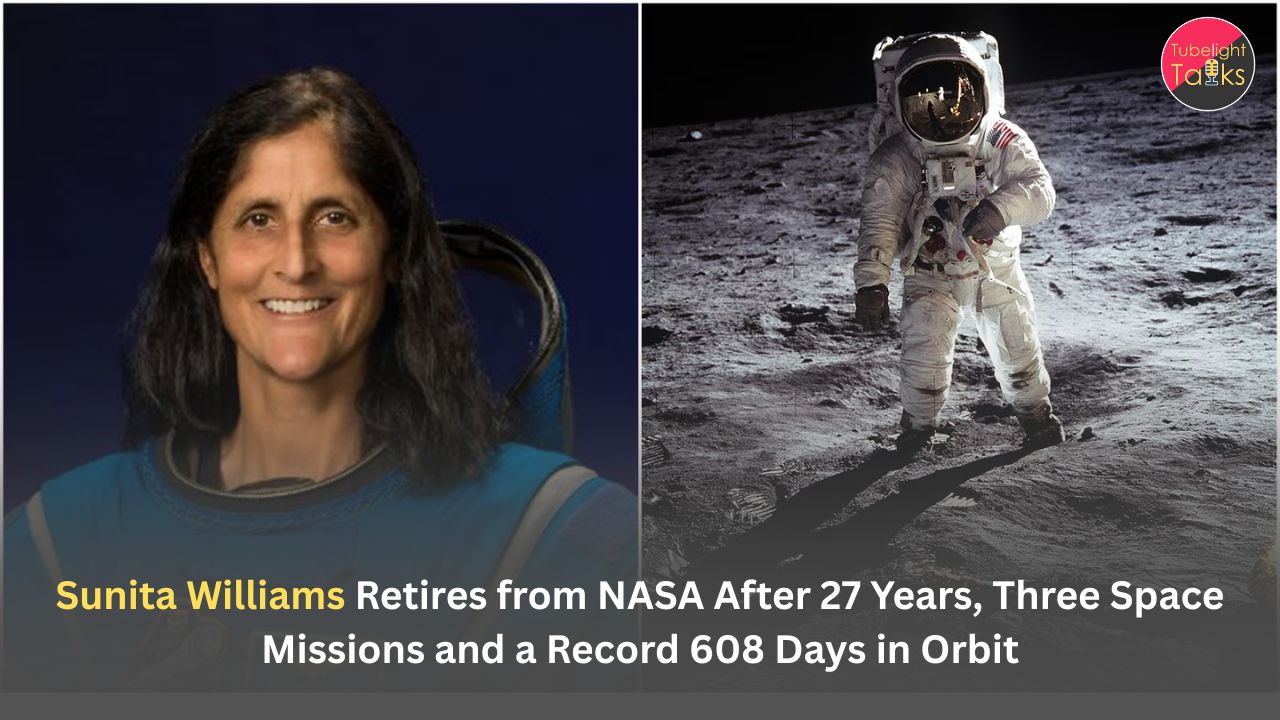
Sunita Williams Retires from NASA: After spending nearly three decades pushing the boundaries of human spaceflight, Sunita Williams has officially retired from NASA, bringing to a close one of the most accomplished astronaut careers in modern history.
Effective December 27, 2025, Williams steps away after 27 years of service, three missions to the International Space Station, and a cumulative 608 days in space — the second-highest total ever logged by a NASA astronaut. Her retirement follows a historic and unexpected nine-month stay aboard the ISS, triggered by technical problems with Boeing’s Starliner spacecraft, a mission that tested not only engineering limits but also human resilience.
Why Sunita Williams’ NASA Retirement Matters in Human Spaceflight History
- Retired after 27 years with NASA, effective December 27, 2025
- Completed three missions to the International Space Station
- Logged 608 days in space, second only to Peggy Whitson
- Spent 286 consecutive days in orbit during the Starliner mission
- Completed nine spacewalks totaling 62 hours and 6 minutes, the most by a woman
- First human to run a marathon in space
- Served twice as ISS commander and played a key role in astronaut training and future Moon missions
A Career That Began in Uniform and Reached the Stars
Born on September 19, 1965, in Euclid, Ohio, Sunita Williams is the daughter of a Gujarati father, Deepak Pandya, from Jhulasan in Gujarat’s Mehsana district, and a Slovenian mother, Bonnie Pandya. She considers Needham, Massachusetts, her hometown.
Williams graduated from the United States Naval Academy with a degree in physical science and later earned a master’s degree in engineering management from the Florida Institute of Technology. A retired U.S. Navy captain, she flew helicopter and fixed-wing aircraft, logging more than 4,000 flight hours across 40 aircraft types before being selected as a NASA astronaut in 1998.
First Spaceflight: Setting Records from the Start
Williams launched into space for the first time in December 2006 aboard Space Shuttle Discovery on the STS-116 mission. Serving as a flight engineer for Expeditions 14 and 15, she quickly made history by completing four spacewalks — a record for women at the time — and spending more than 195 days in space.
During this mission, she became the first person to run a marathon in orbit, completing the Boston Marathon on a treadmill aboard the space station.
Leadership in Orbit: Expedition 32 and 33
In 2012, Williams returned to space aboard a Soyuz spacecraft launched from the Baikonur Cosmodrome in Kazakhstan. She served as a flight engineer for Expedition 32 and later became commander of Expedition 33.
During the 127-day mission, she conducted three spacewalks to repair a leaking station radiator and replace a critical power distribution component. By the time she returned to Earth, her cumulative spacewalk time exceeded 50 hours, reinforcing her reputation as one of NASA’s most skilled and dependable astronauts.
The Starliner Mission That Redefined Endurance
Williams’ third and final spaceflight began in June 2024, when she and fellow astronaut Butch Wilmore launched aboard Boeing’s Starliner spacecraft as part of NASA’s Crew Flight Test mission. Planned as a short-duration test, the mission dramatically changed course when five thrusters failed during docking and helium leaks were detected in the propulsion system.
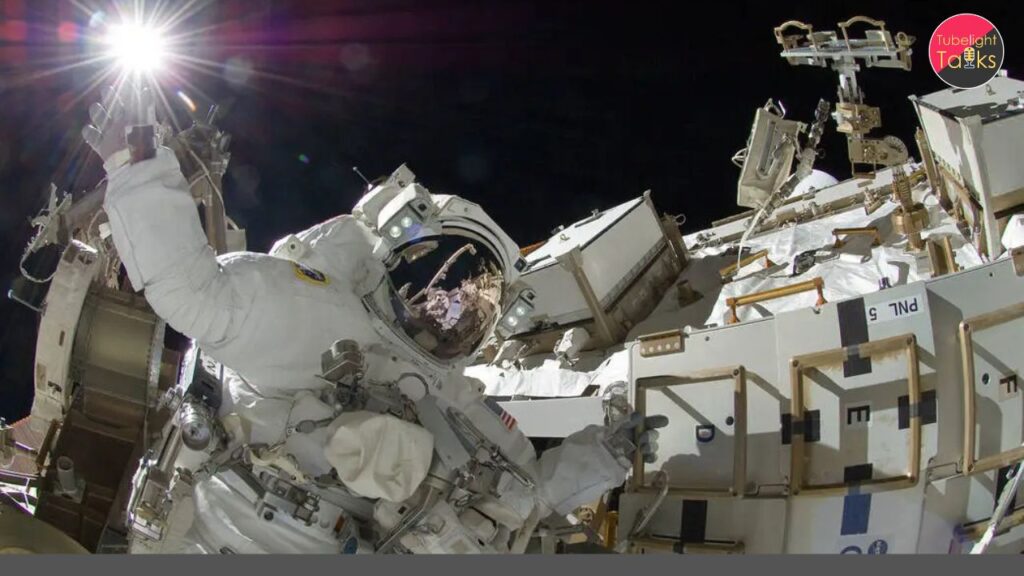
NASA ultimately decided to return Starliner to Earth uncrewed. Williams and Wilmore remained aboard the ISS, joining Expeditions 71 and 72. After more than nine months in orbit — 286 days — they returned safely to Earth on March 18, 2025, aboard SpaceX’s Crew-9 Dragon spacecraft.
Also Read: NASA Astronauts Sunita Williams and Butch Wilmore Back to Earth After long ISS Mission
Records That Place Her Among NASA’s Greats
Over her career, Williams completed nine spacewalks totaling 62 hours and 6 minutes, ranking fourth on NASA’s all-time list for cumulative spacewalk duration and first among women. Her 608 total days in space place her second in NASA history, behind Peggy Whitson.
Despite these milestones, Williams has consistently downplayed individual achievement, describing spaceflight as a collective effort built on trust, training and teamwork.
Seeing Earth as One Planet
Beyond records and missions, Williams’ most lasting contribution may be her perspective. Speaking during her recent visit to India, including appearances at the Kerala Literature Festival and the American Center in New Delhi, she reflected on how viewing Earth from orbit changed her understanding of life.
From space, she said, borders disappear. Human conflict feels pointless. Earth appears alive, fragile and shared — a single home for people, animals and nature alike. She described space missions as the ultimate “team sport,” where international cooperation is not optional but essential.
More Than an Astronaut: Training the Future
Between missions, Williams held several leadership roles at NASA. She served as a NEEMO crew member, living underwater for nine days, worked as deputy chief of NASA’s Astronaut Office, directed operations in Star City, Russia, and most recently helped establish helicopter training programs to prepare astronauts for future Moon landings under the Artemis programme.
A Career That Leaves the Path Clear for What Comes Next
Sunita Williams retires not just with records, but with a legacy defined by calm under pressure, technical mastery and a deeply human understanding of space exploration. From running marathons in orbit to enduring an unplanned nine-month mission, her journey reflects the evolving reality of human spaceflight — unpredictable, demanding and profoundly collaborative.
As NASA prepares for its next era of exploration, Williams’ career stands as a reminder that progress in space is built not only on technology, but on trust, resilience and the ability to see our planet — and each other — as part of one shared future.
FAQs on Sunita Williams Retirement from NASA
1. When did Sunita Williams retire from NASA?
Sunita Williams retired from NASA on December 27, 2025, ending a 27-year career marked by three International Space Station missions and record-setting achievements.
2. How many days did Sunita Williams spend in space during her career?
Sunita Williams spent a total of 608 days in space, making her the second-highest NASA astronaut in cumulative time spent in orbit.
3. Why did Sunita Williams stay in space for nine months in 2024–25?
Her mission was extended to nine months after technical issues with Boeing’s Starliner spacecraft forced NASA to delay her return and bring her back via SpaceX Crew-9.
4. What records did Sunita Williams set at NASA?
She completed nine spacewalks totaling 62 hours and 6 minutes, the most by any woman, and became the first person to run a marathon in space.
5. What did Sunita Williams say about seeing Earth from space?
Williams said viewing Earth from orbit makes borders and conflicts seem meaningless, highlighting the planet as a shared home for humanity, nature, and all living beings.
Related Stories









Discussion (0)