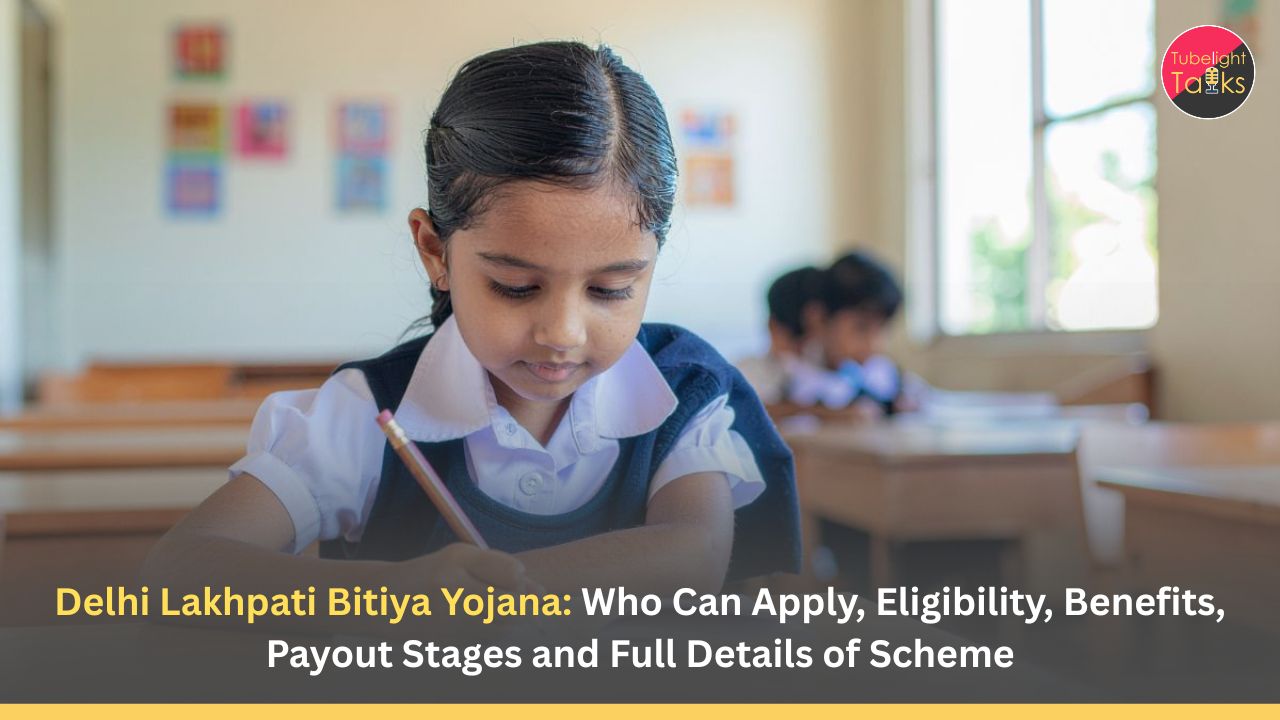
Delhi Lakhpati Bitiya Yojana: Who Can Apply, Eligibility, Benefits, Payout Stages and Full Details of Scheme
The Delhi government has announced the launch of the Delhi Lakhpati Bitiya Yojana, an upgraded welfare initiative aimed at strengthening girls’ education and financial security across the national capital. Introduced by Chief Minister Rekha Gupta, the scheme will replace the existing Ladli Scheme and come into effect from April 1, 2026. The programme provides structured financial assistance from birth until graduation or diploma-level education, ensuring that financial constraints do not force girls to discontinue their studies.
By linking financial benefits directly with educational milestones, the scheme seeks to promote higher education, reduce dropouts and create long-term financial security for girls from economically weaker families.
Key Highlights of Delhi Lakhpati Bitiya Yojana: Eligibility, Benefits and Full Scheme Details
- Delhi Lakhpati Bitiya Yojana will replace the Ladli Scheme from April 1, 2026.
- Financial assistance of up to ₹56,000 will be provided in phased installments.
- The accumulated amount is expected to grow to over ₹1 lakh with interest at maturity.
- Benefits are linked to educational milestones from birth to graduation or diploma level.
- The scheme applies to girls born in Delhi from economically weaker families.
- Maximum two daughters per family are eligible.
- Annual family income must not exceed ₹1.20 lakh.
- Entire application and payment process will be digital and Aadhaar-linked.
- Mandatory vaccination and regular schooling are part of eligibility conditions.
- Marriage before the age of 18 results in disqualification from benefits.
- Maturity amount can be claimed after Class 12 at age 18 or after graduation at age 21.
- Coverage expanded to include girls studying in government-recognised institutions across India, including those in child care institutions.
What Is the Delhi Lakhpati Bitiya Yojana?
The Delhi Lakhpati Bitiya Yojana is a restructured version of the Ladli Scheme launched in 2008 to support girls’ education. Announced on February 10, 2026, the new scheme aims to provide enhanced financial support and address implementation gaps identified in the earlier programme. According to the Delhi government, the initiative combines social security with education-linked incentives to strengthen gender equity, financial inclusion and human capital development.
Under the scheme, financial assistance is deposited directly into the beneficiary’s Aadhaar-linked bank account as she crosses key educational milestones. The amount is invested through structured financial instruments, allowing it to grow over time and mature into more than ₹1 lakh.
Why the Ladli Scheme Was Replaced
The Ladli Scheme was reviewed after the government found significant implementation gaps, including a large number of unclaimed maturity accounts. Officials stated that more than 1.86 lakh maturity accounts remained unclaimed for years, meaning funds meant for beneficiaries did not reach them on time.
Following identification of pending cases, the government disbursed ₹90 crore to around 30,000 beneficiaries. Another ₹100 crore is expected to be released to approximately 41,000 beneficiaries, taking the total amount being delivered to ₹190 crore. The redesigned scheme aims to eliminate such issues through digital monitoring, Aadhaar-based transfers and automated tracking of educational progress.
Financial Assistance Structure and Payout Stages
Under the Delhi Lakhpati Bitiya Yojana, the government provides financial assistance of up to ₹56,000 per beneficiary through phased deposits linked to education milestones.
| Education Stage | Financial Assistance |
| At birth | ₹11,000 |
| Admission to Class I | ₹5,000 |
| Admission to Class VI | ₹5,000 |
| Admission to Class IX | ₹5,000 |
| Passing Class X | ₹5,000 |
| Admission to Class XII | ₹5,000 |
| Graduation or Diploma (in phases) | ₹20,000 |
The deposited amount accrues interest and forms a maturity corpus exceeding ₹1 lakh. The maturity amount can be claimed after the beneficiary passes Class 12 and turns 18 years of age, or after completing graduation or diploma studies and attaining 21 years of age.
Who Can Apply? Eligibility Criteria and Registration Process
The scheme is designed for girls born in Delhi whose families have been residing in the city for at least three years and whose annual family income does not exceed ₹1.20 lakh. Benefits are restricted to two surviving girl children per family.
Registration can be completed within one year of birth or later during admission to Class I, VI, IX or XI, or at the time of admission to a recognised graduation or diploma course. The revised scheme expands coverage beyond the earlier Ladli provisions by including girls pursuing graduation or professional diploma courses in government-recognised institutions anywhere in India, including UGC-affiliated colleges and other statutory institutions.
Special relaxations have also been introduced for girls residing in government-protected child care institutions to ensure inclusion of vulnerable beneficiaries.
Also Read: UP Budget 2026-27: ₹65,926 Crore Energy Push Targets Grid Expansion, Smart Meters and Solar Cities
Conditions, Safeguards and Digital Implementation
The Delhi government has introduced several safeguards to ensure that benefits are used to promote education continuity. Eligibility remains linked to regular schooling, educational progression and mandatory vaccination requirements. If a beneficiary marries before attaining the age of 18, the scheme benefits cease. If she marries after turning 18, benefits may continue as per prescribed conditions.
If the beneficiary fails to meet educational milestones, such as not completing Class 12 by the age of 21, the deposited amount along with accrued interest may be returned to the government. Unclaimed maturity amounts may also be forfeited.
The entire process—from application to payment—will be fully online through a dedicated digital portal, eliminating the need for beneficiaries to visit government offices and improving transparency through Aadhaar-based verification.
Spiritual Perspective: The Importance of True Knowledge and Moral Education in Building a Better Society
Beyond financial assistance and educational support, many spiritual thinkers emphasise that real empowerment comes from combining education with moral and spiritual awareness. The teachings of Saint Rampal Ji Maharaj focus on the importance of true spiritual knowledge, ethical living and freedom from social evils such as discrimination, addiction and early marriage.
His teachings highlight that when knowledge is guided by righteousness and humanity, individuals contribute positively to society and family welfare. In this broader perspective, initiatives that encourage education among daughters also align with the idea that enlightened knowledge and values together help build a balanced, progressive and compassionate society.
Education Security and Financial Empowerment at the Centre of the Scheme
The Delhi Lakhpati Bitiya Yojana reflects a policy shift towards linking financial assistance directly with education outcomes. By increasing financial support, expanding coverage to higher education, ensuring transparent digital implementation and introducing safeguards against early marriage and school dropout, the scheme aims to provide long-term educational and economic security for girls.
The government has described the initiative as an investment in the future of daughters and a step towards strengthening families, improving social outcomes and enabling girls to pursue education with confidence and independence.
FAQs on Delhi Lakhpati Bitiya Yojana
1. Who can apply for the Delhi Lakhpati Bitiya Yojana?
Girls born in Delhi whose families have lived in the city for at least three years, with annual income below ₹1.20 lakh, are eligible. Benefits are limited to two daughters per family.
2. How much financial assistance is provided under the Delhi Lakhpati Bitiya Yojana?
The government provides up to ₹56,000 in phased instalments linked to education milestones. With interest, the accumulated amount is expected to mature to more than ₹1 lakh.
3. When can beneficiaries withdraw the maturity amount?
The maturity amount can be claimed after passing Class 12 and turning 18, or after completing graduation or diploma studies and attaining the age of 21.
4. What are the main benefits of the Delhi Lakhpati Bitiya Yojana?
The scheme provides education-linked financial assistance, promotes higher education, reduces dropout risk, encourages financial security for girls and supports families from economically weaker sections.
5. What conditions can lead to cancellation of benefits under the scheme?
Benefits may cease if the beneficiary marries before 18, fails to meet education milestones, or if eligibility conditions are not fulfilled as per the scheme guidelines.
Related Stories






Discussion (0)