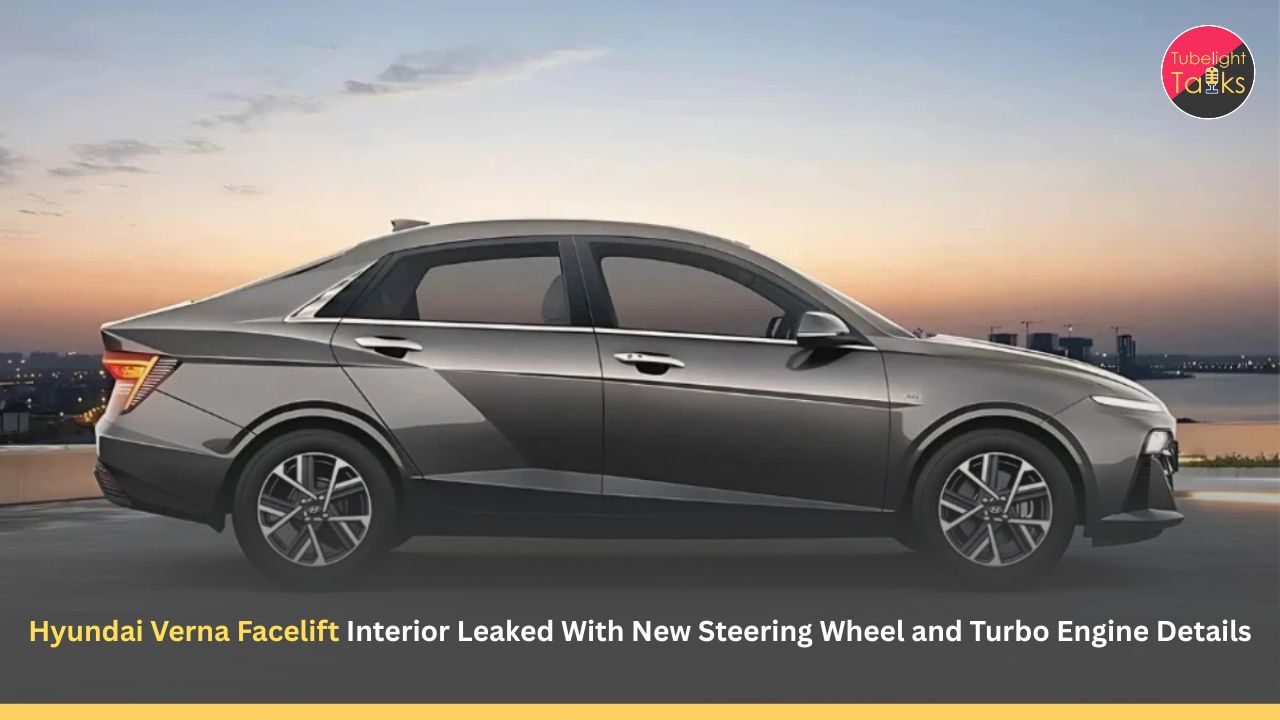
Hyundai Verna Facelift Interior Leaked With New Steering Wheel and Turbo Engine Details
The upcoming Hyundai Verna facelift has been spotted testing once again, and recent interior leaks have provided a clearer understanding of the changes Hyundai is preparing for its mid-size sedan. The latest spy images and leaked visuals suggest that the update focuses largely on improving the cabin experience, technology, and overall appeal while retaining the existing powertrain options. Arriving nearly two years after the current generation was introduced, the facelift appears to be a strategic move by Hyundai to maintain competitiveness in a segment that includes the Volkswagen Virtus, Skoda Slavia, and Honda City.
Hyundai Verna Facelift Interior Updates and Key Highlights
- Dual digital screen setup integrating instrument cluster and infotainment display
- Newly designed steering wheel with dotted Hyundai logo and revised hub design
- Dual-tone upholstery with red contrast stitching
- Leather-wrapped steering wheel and sporty accents in turbo variants
- Refreshed dashboard layout inspired by the updated Venue
- Brushed aluminium interior inserts
- Expected improvements in connectivity and software experience
- Level 2 ADAS suite expected to receive refinements
- 1.5-litre turbo-petrol engine producing 158 bhp and 253 Nm torque
- Seven-speed dual-clutch automatic transmission for turbo variant
- Continued competition with Volkswagen Virtus, Skoda Slavia and Honda City
Interior Design Inspired by Hyundai’s Latest Cabin Layout
Leaked images indicate that Hyundai has adopted several design cues from the recently updated Venue, particularly in the layout of the dashboard and digital interfaces. The most prominent addition is the dual-screen configuration, which combines the digital instrument cluster and infotainment system into a single housing. This arrangement gives the cabin a cleaner and more modern appearance while aligning the Verna with Hyundai’s current global design direction.
The interior appears more premium than before, with dual-tone materials and contrast red stitching enhancing the overall look. The layout remains familiar but has been refined to offer a more technology-focused environment for both driver and passengers.
Also Read: Tata Sierra 2025 Launch on November 25: Price, Features, Variants and Full Model Breakdown
New Steering Wheel Adds a Sportier Character
One of the most noticeable changes revealed in the leaks is the redesigned steering wheel. The new unit features a square hub design along with the dotted Hyundai logo, replacing the conventional emblem seen earlier. The three-spoke layout continues, but the updated design gives the cabin a fresher and more contemporary feel.
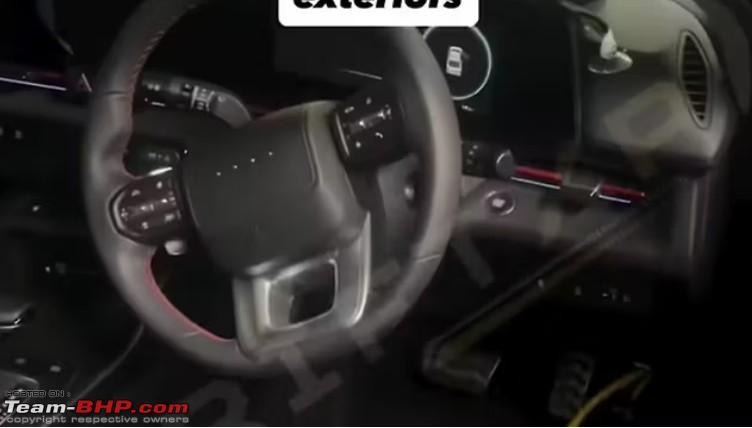
In turbo variants, the steering wheel is expected to be leather-wrapped with red stitching, matching the sporty interior accents seen on the seats and dashboard elements. The presence of an automatic gearbox in the test vehicle further confirms Hyundai’s focus on comfort and performance in higher trims.
Exterior Changes Expected to Focus on Refinement
While interior updates appear significant, exterior revisions are expected to be more subtle. Test vehicles spotted in South Korea were heavily camouflaged at the front and rear sections, suggesting updates in these areas without altering the overall silhouette of the car.
Expected changes include a revised front grille, updated bumper design, refreshed lighting elements, and minor updates to alloy wheels. The connected LED tail-lamp setup is likely to continue, possibly with updated internal graphics. The side profile, window line, and overall proportions are expected to remain unchanged, indicating that Hyundai is focusing on refinement rather than a complete redesign.
Engine and Transmission Details Remain Familiar
Mechanically, the Hyundai Verna facelift is expected to retain its existing engine lineup. The naturally aspirated 1.5-litre petrol engine producing around 113–115 PS and 143 Nm of torque will continue with manual and IVT transmission options.
The more powerful 1.5-litre turbo-petrol engine, producing approximately 158 bhp and 253 Nm of torque, will continue to be paired with a seven-speed dual-clutch transmission. This engine remains one of the strongest performance offerings in the segment and plays a significant role in the Verna’s appeal among performance-oriented buyers.
Features, Safety and ADAS Enhancements
The facelifted Verna is expected to retain its extensive feature list while refining the overall experience. Features likely to continue include automatic climate control, ventilated seats, electric seat adjustment, electric sunroof, connected car technology, and a 360-degree camera system.
Safety continues to be a strong aspect of the Verna, with the current model already holding a five-star Global NCAP safety rating. The facelift is expected to bring improvements to the Level 2 ADAS suite, potentially enhancing calibration and driver assistance functionality.
Competition in the Mid-Size Sedan Segment
The timing of the update appears important as the mid-size sedan segment is expected to see multiple upgrades over the coming months. Hyundai’s decision to refresh the Verna now reflects its intention to remain competitive against established rivals such as the Volkswagen Virtus, Skoda Slavia, and Honda City.
By focusing on interior technology, performance retention, and safety refinements, Hyundai appears to be strengthening the Verna’s position in a segment where buyers increasingly prioritise modern features and driving experience.
What the Hyundai Verna Facelift Indicates for Upcoming Sedan Updates
The leaked interior details and continued road testing suggest that Hyundai is preparing a meaningful update rather than a minor cosmetic revision. With improved cabin technology, a redesigned steering wheel, and the continuation of a strong turbo-petrol engine, the Verna facelift addresses evolving customer expectations in the mid-size sedan space.
As competition continues to intensify, the update reflects Hyundai’s approach of refining an already established product while adding modern features that align with current market demands.
Understanding True Progress
While modern automobiles continue to evolve with advanced technology, comfort, and performance, material development alone cannot provide lasting peace or satisfaction in human life. According to the unique spiritual knowledge of Saint Rampal Ji Maharaj, true happiness comes from understanding the real purpose of human existence and following the correct spiritual path shown in holy scriptures.
Just as vehicles require the right direction to reach their destination, human life also requires true spiritual guidance to attain permanent peace, freedom from suffering, and ultimate salvation beyond temporary material achievements.
FAQs on Hyundai Verna Facelift Interior Leak
1. What changes are seen in the Hyundai Verna facelift interior?
The facelift introduces dual digital screens, a redesigned steering wheel with dotted Hyundai logo, dual-tone upholstery, red stitching, and a more technology-focused dashboard inspired by Hyundai’s newer models.
2. Which engine will power the Hyundai Verna facelift?
The Hyundai Verna facelift will continue with a 1.5-litre turbo-petrol engine producing around 158 bhp and 253 Nm of torque, paired with a seven-speed dual-clutch transmission.
3. Will the Hyundai Verna facelift get ADAS features?
Yes, the facelifted Verna is expected to retain and refine its Level 2 ADAS suite, improving driver assistance functions and overall safety performance in the mid-size sedan segment.
4. What cars compete with the Hyundai Verna facelift in India?
The Hyundai Verna facelift competes with the Volkswagen Virtus, Skoda Slavia, and Honda City in India’s mid-size sedan segment, where technology and performance are key buying factors.
5. When is the Hyundai Verna facelift expected to launch?
Hyundai has not officially confirmed the launch date, but the Verna facelift is expected to arrive later this year as testing continues and more details emerge closer to launch.
Related Stories








Discussion (0)