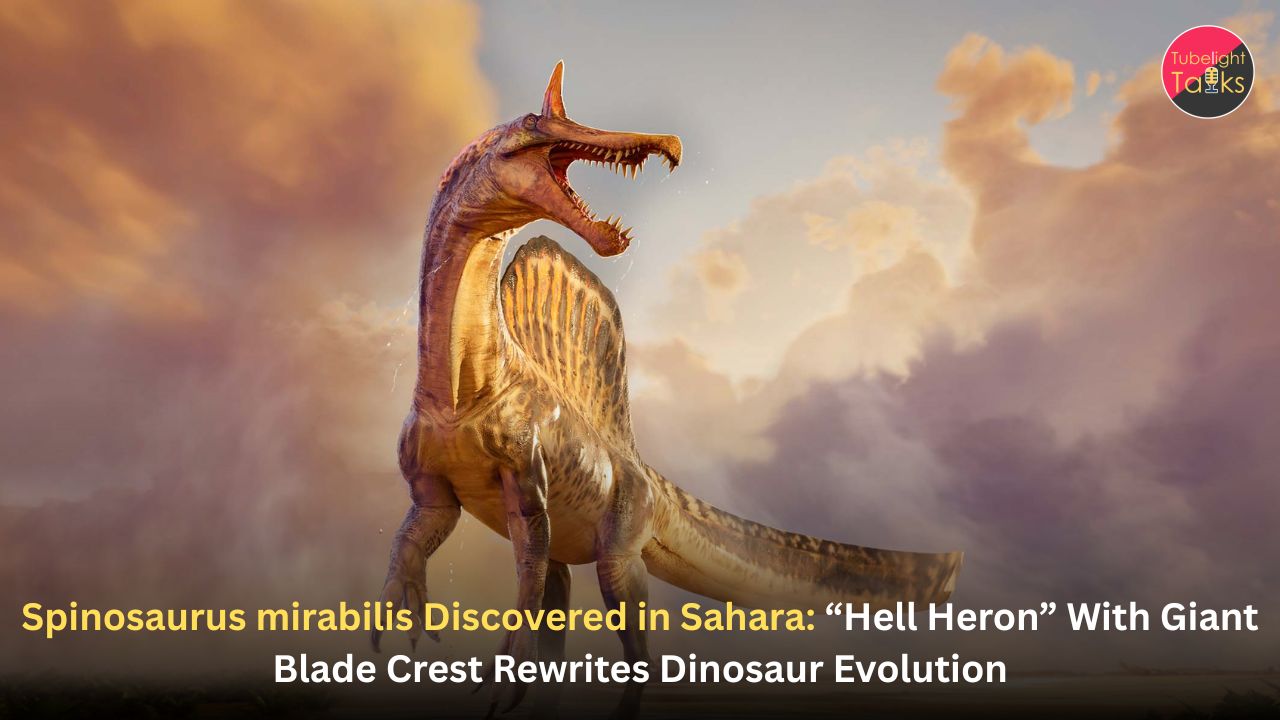
Spinosaurus mirabilis: The “Hell Heron” Discovery in the Sahara
A new fossil discovery from Niger’s Sahara Desert has exploded into global science news because it changes the Spinosaurus mirabilis story at its roots. Paleontologists have identified Spinosaurus mirabilis, a newly described species with a dramatic blade-like crest on its skull – about 20 inches (50 cm) tall – earning it the nickname “Hell Heron.”
The research, published in Science, argues this predator was likely a shallow-water wader that hunted large fish in inland river systems – far from coastal habitats where spinosaur fossils are more commonly found. In one find, the Sahara didn’t just reveal a dinosaur. It revealed how incomplete our assumptions still are.
Why This Find Is Being Called a “Discovery of the Year” Contender
Because it’s the first new Spinosaurus species described in more than a century
Spinosaurids are famous, but new, well-supported species discoveries in this group are rare. The University of Chicago team behind this work describes it as the first new spinosaurid species discovered in more than a century, which immediately explains why it’s moving so fast across science media.
Because the crest is not a minor feature – it’s a biological statement
This isn’t just “another skull.” The defining trait is a scimitar-shaped cranial crest – a curved, blade-like ridge that likely extended even further in life due to a keratin covering (similar in concept to structures seen in some modern birds). The Natural History Museum (UK) describes it as a large sword-shaped crest that likely helped with display, mate attraction, or rivalry – functions that imply behavior, social signaling, and evolutionary pressure.
Because it reshapes the debate on how Spinosaurus lived
Spinosaurus has been at the center of a long-running argument: was it an aquatic swimmer, a shoreline hunter, or something in between? This discovery adds evidence for a “wading predator” model, suggesting some Spinosaurus relatives were not fully aquatic divers but sturdy-legged hunters in shallow inland waters.
Meet Spinosaurus mirabilis: What Scientists Say They Found
The basics: name, age, location
Researchers describe fossils from a remote site in Niger, in the central Sahara, dating to about 95 million years ago (Late Cretaceous). The species name mirabilis means “astonishing,” reflecting how unexpected the crest and the find were.
Size and build: one of the giants
Reuters reports the animal was roughly 40 feet long and weighed around 5–7 tons, placing it among the giant meat-eaters of its era. Like other spinosaurids, it had a long crocodile-like snout and specialized teeth for gripping slippery prey.
The “blade crest”: what it looked like and what it might mean
The crest is described as scimitar-shaped and rising from the top of the skull – dramatic enough that the team compared it to a bird-like head ornament, and media nicknamed the dinosaur “Hell Heron.” Scientists think the crest was likely covered in keratin and may have been visually striking in life. The leading idea is display: attracting mates, intimidating rivals, signaling dominance, or species recognition.
Try this Tool: Free Minecraft 3D Circle & Sphere Generator: Build Perfect Domes
This matters because display structures tell us something about the creature’s social world. Evolution doesn’t “spend” energy on huge ornaments without a payoff. In many living animals, exaggerated structures evolve when competition and mate selection are intense.
Why “Hell Heron”? The Behavior Theory Behind the Nickname
A predator built to wade, not necessarily to swim like a crocodile
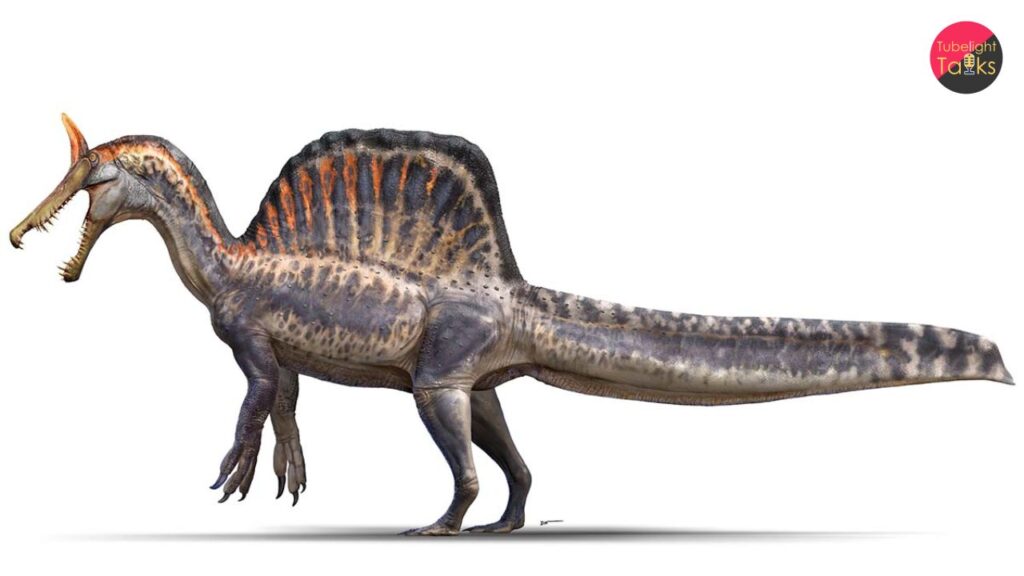
The “Hell Heron” label isn’t just a catchy phrase; it captures a proposed hunting style. The team leader, Paul Sereno, is quoted describing the animal as a kind of “hell heron” that could wade into deeper water but probably hunted in shallower traps for fish.
That suggests a predator behaving more like a giant, terrifying wading bird – patient, stalking, striking – rather than a pursuit swimmer.
Teeth like a fish trap
Spinosaurids are known for conical teeth and snouts designed to seize fish. Reuters notes interlocking conical teeth and nostril placement that could allow partial submersion while breathing – traits consistent with semi-aquatic hunting.
Inland rivers: the location is the real surprise
A key shock is that this species lived hundreds of miles inland from the ancient sea. That challenges the idea that spinosaurids were mostly coastal predators. If a spinosaurid giant thrived deep inland, it implies a far more complex ecological spread than previously assumed.
The Expedition Story: Why This Discovery Took Years
2019 and 2022: repeated expeditions, not a single lucky day
According to the University of Chicago report, the team first encountered distinctive bones in 2019, and then returned in 2022 with a larger expedition, ultimately uncovering multiple crest fragments and skull material that clarified the species.
This matters because big fossil announcements are often the end of a long chain: finding fragments, verifying they belong to something new, returning for more material, then applying imaging, comparative anatomy, and peer review.
Remote Sahara logistics: discovery at the edge of access
The Sahara is not forgiving terrain. The reports emphasize how remote the fossil site is and how difficult the logistics were – one reason the story feels “cinematic” and is trending outside hardcore science circles.
3D models in the desert: why the first “look” was emotional
The University of Chicago story highlights a powerful moment: researchers assembled digital 3D models of bones and saw the emerging skull form – in the field, using solar power. Sereno described the moment as emotional for the team.
That moment captures why people love science: discovery isn’t always a lab coat; sometimes it’s dust, heat, and the sudden realization that the planet still holds secrets.
What This Means for the Spinosaurus Debate
Spinosaurus is not one creature – it’s a lineage with variation
When people hear “Spinosaurus,” they imagine a single dinosaur. But discoveries like this show the group likely contained multiple species with different adaptations, behavior, and habitat preferences. National Geographic notes the find adds to an active debate and suggests we may keep being surprised until more complete skeletons are found.
The “fully aquatic” idea faces fresh pressure
Some reconstructions in recent years have portrayed Spinosaurus as highly aquatic. This new species – interpreted as a wader – adds evidence that at least some spinosaurids were not ocean-going divers but river hunters. Reuters describes this species as a shallow-water predator rather than a fully aquatic one.
The scientific implication isn’t “case closed.” It’s more honest: spinosaur ecology was probably diverse, and our models must tolerate complexity.
Also Read: The Indian Violet Tarantula: A Hidden Gem of the Western Ghats
Why a skull matters so much
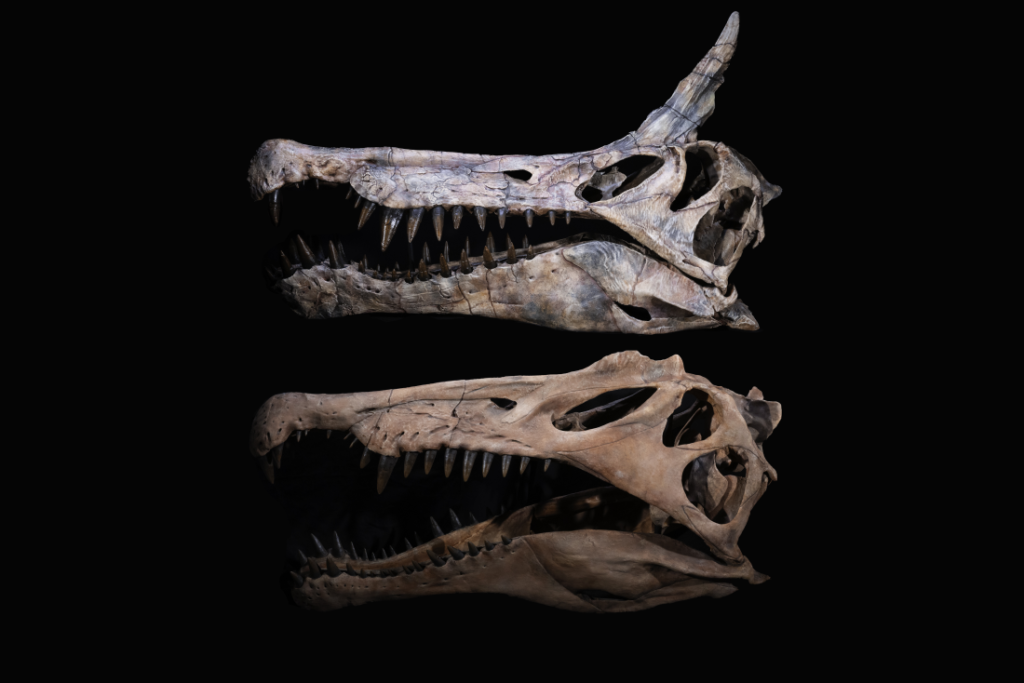
In spinosaurids, skull shape and tooth arrangement are key to understanding feeding style and habitat use. The more skull material we have, the better we can infer diet, sensory adaptation, and behavior. That’s why this discovery matters even without a complete skeleton: skulls can be the “signature” of lifestyle.
The Crest: How Evolution Builds Such Strange Structures
Display structures are costly – so they usually mean high stakes
A crest that tall and distinctive would have required biological investment. Even if it didn’t help hunting, it could help reproduction – and reproduction is the engine of evolution. The NHM writeup emphasizes the crest may have been used to attract mates and compete with rivals.
“Keratin sheath” changes the visual impact
If the crest was sheathed in keratin, it likely appeared larger, smoother, and more dramatic in life than bare bone suggests. That would make it even more plausible as a display structure – like a living billboard.
The psychological angle: fear in modern humans, function in ancient ecosystems
People call it “Hell Heron” because the shape triggers an instinctive reaction – this thing looks like it was built to dominate. But in its ecosystem, it was simply one solution among many: a predator tuned for rivers, fish, and competition.
Why This Story Went Viral Today
1) The visuals: 3D renders make the dinosaur feel real
Science communication has changed: a discovery becomes mainstream when people can “see” it. The Sahara Spinosaurus is trending because modern reconstructions – 3D models and paleoart – make the crest and skull instantly recognizable and shareable. (This is widely emphasized in coverage describing first looks at the skull reconstructions.)
2) It hits a universal curiosity: “We still don’t know everything”
In an age where many people feel the world is mapped and explained, discoveries like this puncture that illusion. A brand-new species of giant predator emerging from desert rock is a reminder: the Earth still hides entire chapters of life.
3) The Sahara is becoming a symbol of “lost worlds”
The Sahara is often seen as empty. Fossils prove it was once full – rivers, forests, giant fish, and predators. The romance of that contrast is part of what makes this news travel.
What Comes Next: The Scientific Work After the Headline
More fieldwork: the missing pieces still matter
National Geographic and researchers emphasize that more complete skeleton material would help answer unresolved questions about movement, swimming ability, tail function, and full-body proportions.
Museum access and replication: why it matters
High-quality casts and museum displays help broader scientific scrutiny and public education. When multiple institutions can study replicas and imagery, the scientific conversation accelerates.
The deeper payoff: rebuilding ancient ecosystems
This isn’t only about one dinosaur. It’s about reconstructing a whole river ecosystem – what fish it hunted, what other predators existed, how water systems looked, and how climate shaped the region. Each new fossil is one more puzzle piece.
The Discipline of Discovery
A discovery like the “Hell Heron” only happens when people endure discomfort for knowledge – heat, distance, failure, and long seasons with nothing guaranteed. That perseverance has a deeper meaning beyond science: it shows how disciplined effort can pull truth out of the unknown.
In the teachings shared by Sant Rampal Ji Maharaj, there is emphasis on living with patience, humility, and a commitment to truth – because real understanding doesn’t come from noise or ego, it comes from steady pursuit and right intention. When knowledge is sought to benefit society – through education, wonder, and deeper respect for nature – it becomes a form of service.
In that sense, this fossil isn’t only a dinosaur story; it’s a reminder that truth still exists beyond our assumptions, waiting for those willing to search.
FAQs: “Hell Heron” discovery – a new Spinosaurus species found in the Sahara.
1. What is the “Hell Heron” dinosaur?
It’s a newly described Spinosaurus species, Spinosaurus mirabilis, nicknamed for its wading predator profile.
2. Where was it discovered?
In a remote Sahara site in Niger, within ancient inland river deposits.
3. What makes it different from other Spinosaurus finds?
A dramatic blade-like (scimitar-shaped) cranial crest about 20 inches tall, plus evidence suggesting inland, shallow-water hunting.
4. How old is this species?
About 95 million years old (Late Cretaceous).
5. Why is this discovery important?
It expands spinosaur diversity and adds evidence to debates about whether these predators were fully aquatic or more like wading river hunters.
Related Stories










Discussion (0)