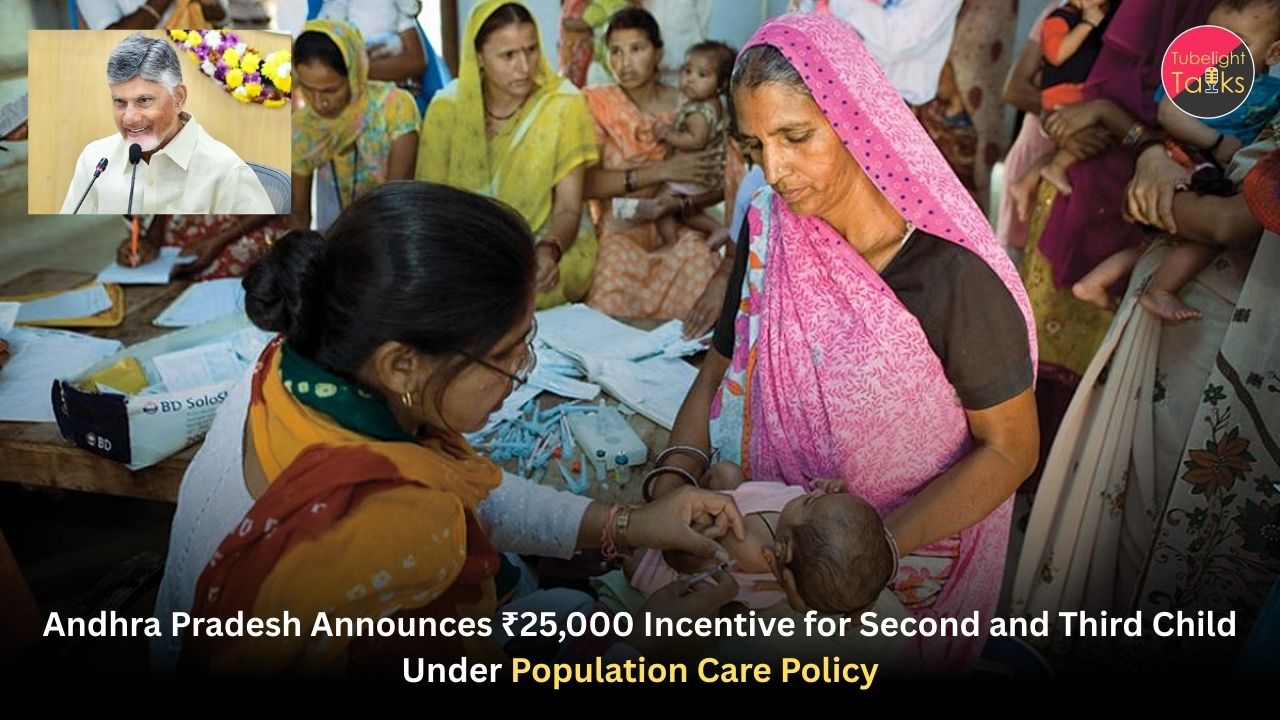
Andhra’s Population Care Policy: ₹25,000 Incentive for 2nd & 3rd Child
India’s population policies have traditionally focused on controlling growth. However, Andhra Pradesh has taken a different approach by announcing a financial incentive aimed at encouraging larger families. Under the state’s Population Care policy, families will receive ₹25,000 for the birth of a second or third child.
The initiative reflects rising global discussions about demographic balance and workforce sustainability. While India overall continues to have a young population, some policymakers believe that long-term economic stability requires careful demographic planning. The new policy is therefore attracting national attention as a unique shift in how governments approach population management.
Why Andhra Pradesh Introduced the Policy
Concerns about demographic balance
Many countries are currently facing declining birth rates and aging populations, which can reduce the size of the working-age population.
The Andhra Pradesh government believes that maintaining a balanced demographic profile is essential for long-term economic growth and social stability.
Supporting future workforce needs
A stable population structure ensures that future industries have a strong workforce. Policymakers argue that encouraging healthy population growth today may help prevent labour shortages and economic challenges in the future.
Financial Incentive Details
₹25,000 support for families
Under the proposed policy framework, families welcoming a second or third child may receive a ₹25,000 financial incentive.
The goal is to provide support to families while encouraging responsible population growth.
Focus on long-term social planning
The incentive is not simply a cash program. It reflects a broader strategy of demographic planning where governments analyze population patterns and adapt policies to maintain economic balance.
Why This Policy Is Trending
A shift from traditional population control policies
For decades, public messaging in India focused on small family norms. Andhra Pradesh’s approach represents a significant policy pivot, making it a major topic of national discussion.
A global demographic debate
Countries such as Japan, South Korea, and several European nations are already facing severe population decline. Their experiences have triggered global conversations about the importance of balanced population growth.
Possible Economic and Social Impact
Strengthening future economic productivity
If implemented effectively, the policy could contribute to maintaining a stable workforce and economic growth in the coming decades.
Supporting family welfare
Financial incentives may also help families manage the costs associated with raising children, particularly in the early years.
Balanced Living and Responsible Society
Population policies ultimately aim to create a balanced and stable society. Spiritual teachings shared by Sant Rampal Ji Maharaj emphasize responsible living, strong family values, and compassion toward future generations. When societies make decisions that protect both present welfare and future stability, they align with the principle of living thoughtfully and responsibly.
Policies that support families while encouraging ethical living help build stronger communities and a more harmonious society.
FAQs: Andhra’s “Population Care” Policy – ₹25,000 incentive for second and third child.
What is Andhra Pradesh’s new population policy?
It is a “Population Care” initiative offering incentives for families having a second or third child.
How much financial incentive is offered?
Families may receive ₹25,000 under the program.
Why did the government introduce this policy?
To maintain demographic balance and support long-term economic stability.
Is this different from traditional family planning policies?
Yes, it encourages balanced population growth rather than limiting family size.
Why is the policy attracting national attention?
Because it represents a shift in how governments approach demographic planning.
Related Stories







Discussion (0)