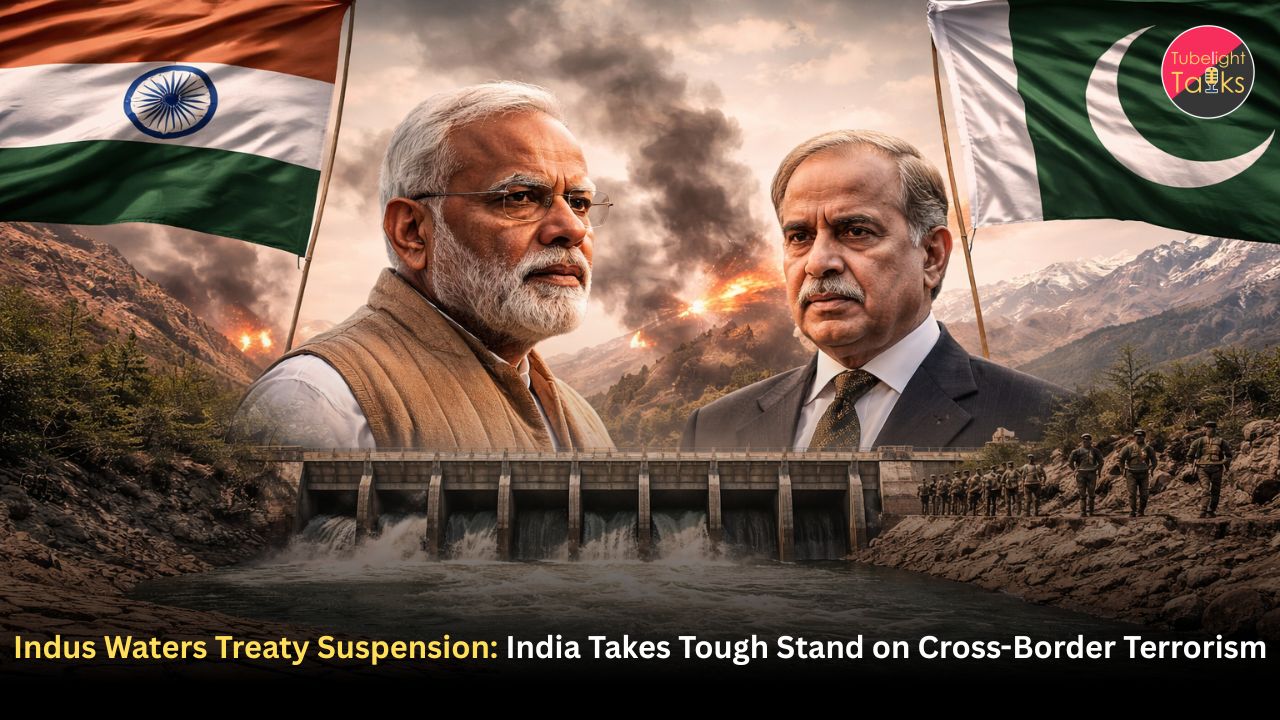
India Takes Firm Stand on Indus Waters Treaty Suspension Linked to Action Against Terrorism
In a significant development in South Asian geopolitics, India has declared that the Indus Waters Treaty (IWT) suspension will remain in place, reinforcing the broader stance on Indus Waters Treaty suspension until Pakistan takes “concrete and credible action” against cross-border terrorism. This marks a sharp shift in India’s approach toward one of the world’s longest-standing water-sharing agreements and reflects growing frustration over persistent security concerns.
The decision comes amid heightened tensions between the two nuclear-armed neighbors and signals a more assertive policy stance that links water cooperation directly with national security.
Understanding the Indus Waters Treaty
A Historic Agreement
The Indus Waters Treaty, signed in 1960 between India and Pakistan with the World Bank as a mediator, governs the sharing of waters from the Indus River system. It has long been considered a rare example of sustained cooperation between the two countries despite political and military conflicts.
Under the treaty, India has rights over the eastern rivers (Ravi, Beas, Sutlej), while Pakistan has rights over the western rivers (Indus, Jhelum, Chenab), with certain usage provisions for India.
Why It Matters Today
The treaty is critical for Pakistan’s agriculture and water supply, while also being strategically important for India. Any disruption or suspension has far-reaching implications for regional stability, food security, and diplomatic relations.
India’s Shift in Policy
Linking Water to Security
India’s latest statement makes it clear that water cooperation can no longer be viewed in isolation from security concerns. By tying the treaty’s status to Pakistan’s actions on terrorism, India is signaling a more integrated approach to foreign policy.
This move reflects a broader strategy where economic, environmental, and diplomatic tools are increasingly aligned with national security objectives.
A Message to the International Community
India’s stance also sends a strong message globally—that continued tolerance of cross-border terrorism will have consequences beyond traditional diplomatic channels. It highlights the need for accountability and action in maintaining regional peace.
Implications for India-Pakistan Relations
Rising Diplomatic Tensions
The suspension of the treaty is likely to further strain already fragile relations between India and Pakistan. It could lead to diplomatic protests, international mediation efforts, and increased scrutiny from global organizations.
Potential Impact on Pakistan
Pakistan relies heavily on the Indus river system for irrigation and drinking water. Any prolonged disruption could have serious economic and humanitarian consequences, particularly in agricultural regions.
Also Read: Why Does China Want the Mohmand Dam Built So Fast in Pakistan?
Strategic and Environmental Concerns
Water as a Strategic Resource
Water is increasingly becoming a strategic asset in global geopolitics. India’s decision underscores the growing importance of water security in international relations.
Environmental Considerations
While geopolitical factors dominate the narrative, environmental sustainability remains a key concern. Both countries must ensure that water resources are managed responsibly to prevent long-term ecological damage.
Government’s Position and Future Outlook
India has maintained that the suspension is conditional and reversible, depending on Pakistan’s actions. This leaves room for diplomatic resolution while keeping pressure intact.
The coming weeks will be crucial in determining whether this move leads to negotiations, escalation, or a redefinition of bilateral agreements.
Spiritual Insight: Peace and Justice
Sant Rampal Ji Maharaj teaches that true peace can only be achieved through righteousness and adherence to divine law. According to His teachings, conflicts rooted in injustice and violence cannot lead to lasting solutions.
In the context of India-Pakistan relations, these teachings emphasize the importance of truth, non-violence, and spiritual awareness as the foundation for resolving disputes. While policies and agreements are necessary, inner transformation and ethical conduct are essential for enduring peace.
Call to Action
As citizens, it is important to stay informed about major geopolitical developments like the Indus Waters Treaty. Awareness helps in understanding the broader implications of such decisions.
At the same time, embracing values of peace, responsibility, and spiritual wisdom can contribute to a more harmonious society, even in times of tension.
FAQs: Indus Waters Treaty Suspension
1. What is the Indus Waters Treaty?
A 1960 agreement between India and Pakistan for sharing the waters of the Indus river system.
2. Why has India suspended the treaty?
India has linked the suspension to Pakistan’s failure to take action against cross-border terrorism.
3. What does “suspension” mean in this context?
It implies that normal cooperation under the treaty is paused until certain conditions are met.
4. How will this affect Pakistan?
Pakistan may face challenges in water supply, especially for agriculture.
5. Can the treaty be restored?
Yes, India has indicated it is conditional and can be reversed if concerns are addressed.
6. What are the global implications?
The move highlights how water resources are becoming central to geopolitical strategies.
Related Stories









Discussion (0)