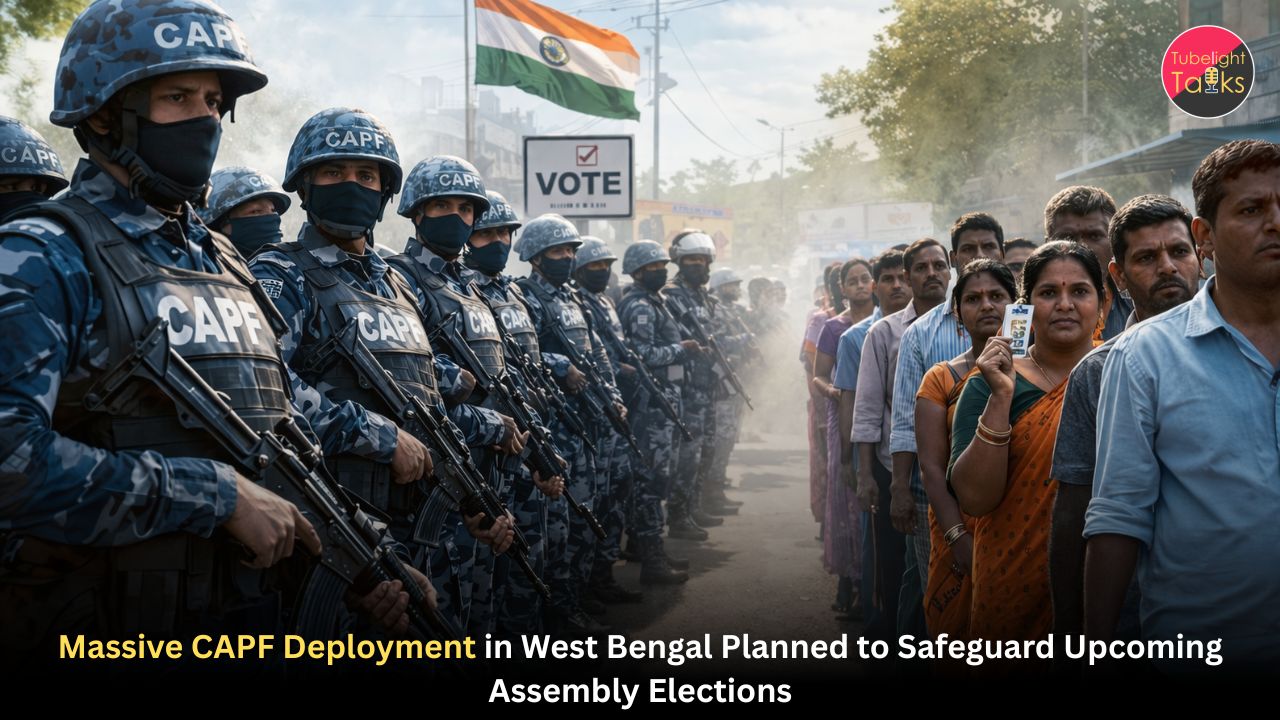
CAPF Deployment in West Bengal: Massive Force Mobilization Ahead of Elections to Ensure Peaceful Voting
As West Bengal prepares for its upcoming Assembly elections, the focus has shifted sharply toward ensuring a peaceful and secure voting process. The central government is planning CAPF deployment in West Bengal with nearly 2,400 companies of Central Armed Police Forces (CAPF) across the state in a phased manner.
This marks one of the largest security mobilizations in the region, reflecting both the importance of the elections and the challenges associated with maintaining law and order during the electoral process.
Why Such a Large Deployment is Needed
History of Electoral Violence in West Bengal
West Bengal has witnessed instances of electoral violence and post-poll clashes in previous elections. These incidents have raised concerns about voter safety, intimidation, and the overall fairness of the democratic process.
The deployment of CAPF aims to address these concerns by providing a neutral and strong security presence across sensitive areas.
Ensuring Free and Fair Elections
The primary goal of this massive deployment is to ensure that voters can cast their ballots without fear or pressure. Free and fair elections are the backbone of democracy, and security plays a crucial role in achieving this.
CAPF personnel are trained to handle sensitive situations, crowd control, and maintain neutrality during elections.
Phased Deployment Strategy
Strategic Positioning Across the State
The deployment will be carried out in phases, with forces being stationed in districts identified as sensitive or vulnerable. This allows authorities to optimize resources and respond quickly to any emerging situation.
Coordination with State Police
CAPF will work in close coordination with the West Bengal Police to ensure seamless security coverage. While CAPF provides additional strength, local police offer ground-level intelligence and familiarity with the region.
Role of CAPF in Elections
Neutral Force for Public Confidence
CAPF is often deployed during elections to ensure neutrality and build public confidence. Their presence reassures voters that the process will be conducted fairly.
Preventing Post-Poll Violence
One of the key objectives is to prevent violence after the results are declared. Post-poll clashes have been a concern in the state, and the deployment aims to mitigate such risks.
Also Read: Bangladesh Election 2026: Tarique Rahman’s BNP Secures Historic Victory
Political and Administrative Implications
High-Stakes Election Environment
The large-scale deployment indicates that the upcoming elections are expected to be highly competitive and sensitive. Political parties are likely to closely monitor the security arrangements.
Central Government’s Proactive Approach
The decision to deploy such a large number of forces reflects a proactive approach by the central government to ensure stability and security during the elections.
What This Means for Voters
For voters, this deployment is a positive step toward ensuring safety and confidence in the electoral process. It allows citizens to exercise their democratic rights without fear.
A secure environment encourages higher voter turnout and strengthens the legitimacy of the election results.
Fairness and Social Harmony
Sant Rampal Ji Maharaj teaches that fairness, honesty, and equality are essential for a harmonious society. According to His teachings, when systems operate with integrity and impartiality, trust and peace naturally follow.
In the context of elections, these values highlight the importance of conducting processes that are free from bias and fear, ensuring justice for every individual.
FAQs: Massive CAPF Deployment in West Bengal Ahead of Elections
1. How many CAPF companies will be deployed?
Around 2,400 companies are expected to be deployed.
2. Why is such a large deployment needed?
To prevent electoral and post-poll violence and ensure fair elections.
3. What is the role of CAPF during elections?
To maintain security, ensure neutrality, and build voter confidence.
4. Will CAPF work with state police?
Yes, they will coordinate closely with local police forces.
5. What is the benefit for voters?
A safer environment to cast votes without fear.
6. When will the deployment begin?
It will be carried out in phases ahead of the elections.
Related Stories









Discussion (0)