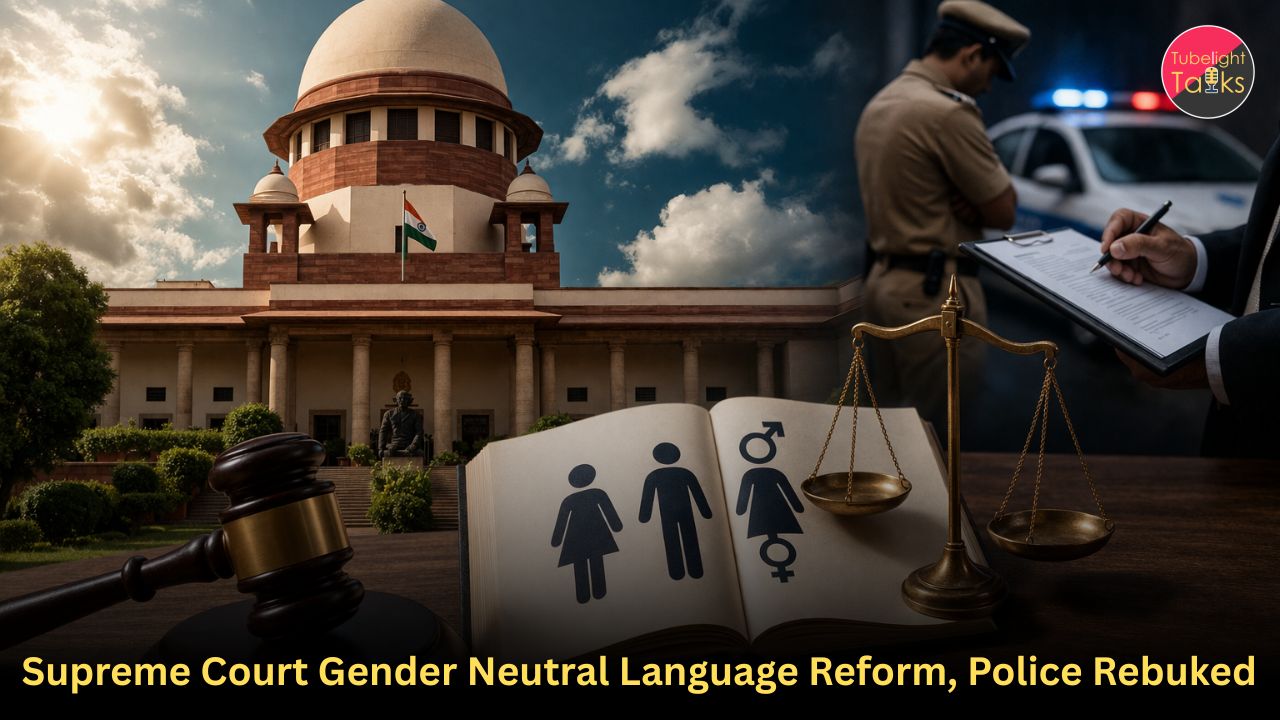
Supreme Court Gender Neutral Language Push Marks Shift Toward Inclusive Justice
India’s judicial system is undergoing a significant shift toward inclusivity and sensitivity, following a landmark direction from the Supreme Court Gender Neutral Language in legal documents across the country. This move is being seen as a progressive step toward ensuring that the legal system reflects the diversity and equality of modern society.
Alongside this directive, the Court also issued a strong rebuke to the Gurugram police and a magistrate for their handling of a sensitive child-related case, highlighting serious concerns about empathy and procedural conduct within the justice system.
Gender-Neutral Language: A Landmark Step
What the Supreme Court Directed
The Supreme Court has instructed that all legal documents, including court orders and official communications, should adopt gender-neutral language.
This means replacing gender-specific terms with inclusive alternatives, ensuring that the law does not unintentionally exclude or marginalize any group.
Why This Matters
Language plays a crucial role in shaping perceptions. By adopting gender-neutral terminology, the judiciary aims to:
- Promote equality
- Eliminate bias in legal interpretation
- Reflect constitutional values of inclusivity
This step aligns India with global trends toward more inclusive legal frameworks.
Also Read: Collegium System Under Spotlight: Justice B.R. Gavai Defends Judicial Independence Framework
Court’s Rebuke in Child Case
Strong Words for Authorities
In a separate but significant development, the Supreme Court criticized the Gurugram police and a magistrate for their “insensitive” handling of a child-related case.
The Court’s remarks underline the importance of empathy and care, especially in cases involving minors.
Message for Systemic Reform
This rebuke is not just about one case—it signals the need for broader reforms in how sensitive cases are handled by law enforcement and judicial officers.
Broader Impact on the Legal System
Towards a More Inclusive Judiciary
The introduction of gender-neutral language is expected to make the legal system more accessible and respectful to all individuals, regardless of gender identity.
Emphasis on Sensitivity and Accountability
The Court’s observations also highlight the need for accountability and human-centered approaches in legal processes.
Why This Development is Significant
Strengthening Constitutional Values
The move reinforces principles of equality, dignity, and justice enshrined in the Constitution.
Setting a Precedent
As the apex court, the Supreme Court’s directives will influence lower courts and legal institutions across the country.
What Lies Ahead
The implementation of gender-neutral language will require updates in legal drafting, training for judicial officers, and awareness among legal practitioners.
At the same time, stricter standards for handling sensitive cases may lead to improved trust in the justice system.
Equality and Compassion
Sant Rampal Ji Maharaj teaches that all human beings are equal and deserve respect and dignity. According to His teachings, compassion and fairness should guide all actions.
In the context of the judiciary, these values highlight the importance of treating every individual with sensitivity and ensuring justice without bias.
Call to Action
Citizens should support initiatives that promote equality and sensitivity in institutions. Awareness and participation can help build a more inclusive society.
Adopting values of compassion and fairness in daily life contributes to a just and harmonious world.
FAQs: Supreme Court Gender Neutral Language
1. What did the Supreme Court mandate?
Use of gender-neutral language in legal documents.
2. Why is this important?
It promotes inclusivity and reduces bias.
3. What was the Court’s criticism about?
Insensitive handling of a child-related case.
4. Who was criticized?
Gurugram police and a magistrate.
5. Will this affect all courts?
Yes, it sets a precedent nationwide.
6. What changes are expected?
Updates in legal drafting and training.
Related Stories









Discussion (0)