Delhi Police Arrest of LeT Shabbir Ahmed Lone as Investigators Say a Major Terror Strike Was Averted
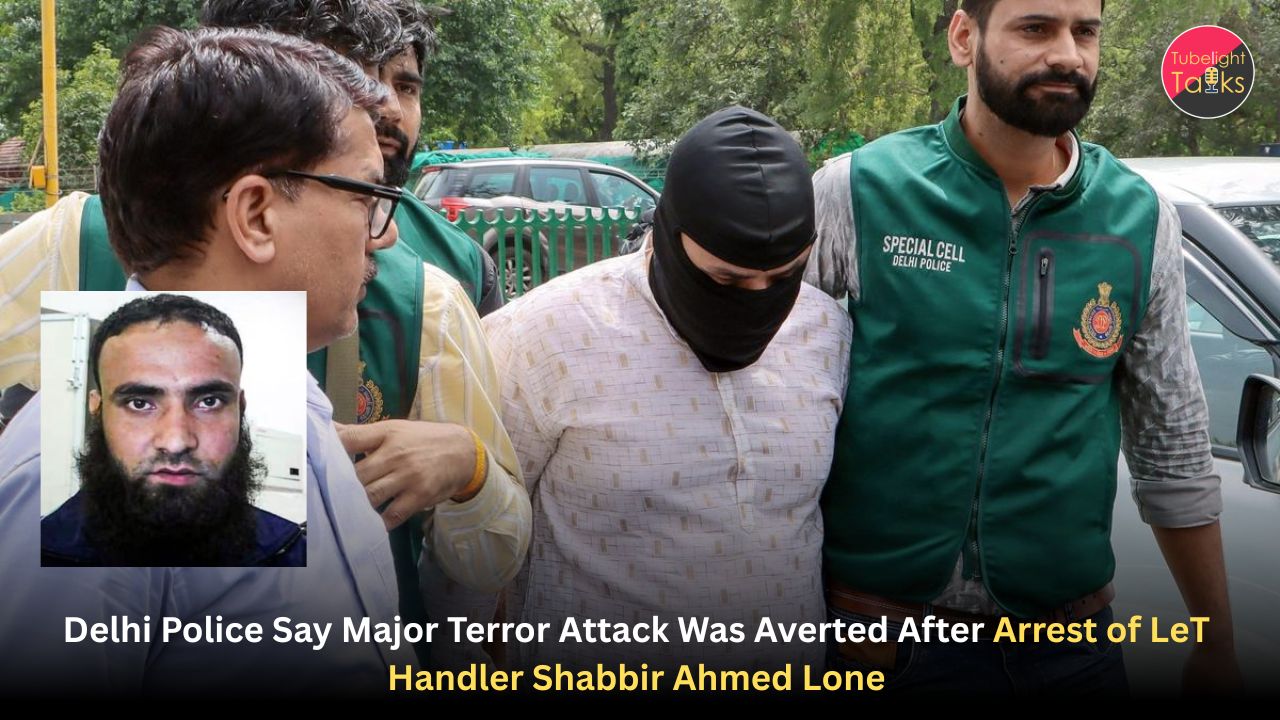
Delhi Police’s arrest of alleged Lashkar-e-Taiba handler Shabbir Ahmed Lone has turned an already serious poster-and-propaganda investigation into a full-scale terror story. According to police and court submissions, Lone was the key handler behind the Bangladesh-linked module busted in February 2026 after anti-India and “Free Kashmir” posters appeared at sensitive sites in Delhi.
Investigators now say the group had moved beyond symbolic messaging and reconnaissance toward planning a larger attack inside India. That makes this more than an arrest headline. It is a case about how terror ecosystems test the ground, recruit quietly, and build operational networks long before any strike takes place.
The Arrest Near Ghazipur Has Given the Probe a New Center
What police say happened
Delhi Police told the media and the court that Shabbir Ahmed Lone was arrested on March 29 near the Ghazipur area after a month-long investigation by the Special Cell. Police said he had been operating primarily from Bangladesh and had re-entered India through the Nepal route.
During court proceedings, Delhi Police told Patiala House Court that Lone was a trained terrorist, that a Nepali SIM card was recovered from him, and that his custody was needed to trace a wider network spanning Bangladesh, Pakistan, and Nepal. The court then granted five days of police custody.
This arrest matters because police are not treating Lone as a peripheral recruit. They have described him as the handler of the recently busted Lashkar-linked module connected to the metro poster case. In court, Delhi Police said the poster activity at sensitive locations, including the Supreme Court area, was carried out on his instructions and that reconnaissance work was also done under his direction. That shifts the story from one of scattered radical acts to one of centralised operational control.
Why the arrest is being seen as a major breakthrough
The significance of the arrest lies in timing and function. Delhi Police said it came almost a month after the earlier crackdown on a Bangladesh-based terror module of which Lone was the alleged main handler. Investigators believe he was not just passing messages but recruiting, indoctrinating, guiding reconnaissance, and building a terror structure inside India through illegals and sleeper links.
When police identify the person coordinating those layers, the investigation moves from the outer circle of operatives to the nerve center of the plot.
Also Read: India Takes Firm Stand on Indus Waters Treaty Suspension Linked to Action Against Terrorism
The Case Began With Posters, but Police Say It Was Never Just About Posters
How the February trail started
The first visible clue was not an explosion or a weapons seizure. It was posters. In early February, posters carrying pro-Pakistan slogans, inflammatory Kashmir messaging, and images of militant Burhan Wani were found at Janpath Metro Station and other locations in Delhi. Similar material was also traced to Kolkata. The Delhi Police Special Cell took over the probe and began tracking the people who had pasted the posters using CCTV, surveillance, digital evidence, and human intelligence.
That trail led to a broader crackdown. In February, Delhi Police and allied agencies arrested eight people linked to the module, including several Bangladeshi nationals working in garment units in Tamil Nadu and others in West Bengal. Police said fake Aadhaar cards, mobile phones, SIM cards, debit and credit cards, point-of-sale machines, passports, and incriminating material were recovered. At that stage too, investigators were already saying the case pointed to a possible larger terror operation rather than mere poster vandalism.
What the earlier arrests revealed
According to police-linked reporting, interrogation of the first set of accused suggested that the poster exercise had been used as a “test task” to assess the capability and reliability of recruits. Additional CP Pramod Kushwaha was quoted as saying that the eight operatives arrested earlier were the first batch of recruits sent to Delhi for this purpose. Police further said the men had established a base in Kolkata, completed the task in Delhi, and then returned, allowing investigators to uncover the wider chain.
This is a crucial insight into modern terror methods. A network may begin with something that appears low-risk and symbolic, but the real purpose can be vetting, discipline testing, communication checking, and proof of obedience. Once that stage succeeds, the network can escalate into reconnaissance, logistics, weapons procurement, recruitment, and attack preparation. That is exactly why Delhi Police appear to view the poster case as the outer skin of a more dangerous conspiracy.
Did Delhi Police Really Avert a Major Terror Strike?
What is clearly verified
The arrest is verified. The connection to the earlier Bangladesh-linked Lashkar module is verified. The police claim that the group had progressed toward attack planning is also on record. NDTV reported that, according to Delhi Police, the module was preparing for a major terrorist attack in India and that the plot was foiled. The same report said investigators found evidence that recruits were instructed to conduct reconnaissance of important locations, film them, recruit more people, and arrange weapons.
A February NDTV report on the earlier crackdown also said police had recovered videos and photographs of reconnaissance from the accused and found indications of attempts to buy weapons. It reported that police suspected the men were planning a major attack in various parts of the country and that intelligence agencies believed the plot had been foiled in time. That means the phrase “major terror strike averted” is supported as a police and intelligence assessment, not just television drama.
The careful way to frame it
At the same time, precision matters. A court has remanded Lone to custody and the investigation is ongoing. Some details are police allegations and intelligence assessments, not yet judicially tested findings after full trial.
So the most accurate wording is this: Delhi Police say a major attack was averted, and investigators have placed on record evidence suggesting the module had moved beyond propaganda toward reconnaissance, recruitment, and potential strike preparation. That formulation is serious without running ahead of the legal process.
Cross-Border Movement, Recruitment, and Sleeper-Cell Methods Made This Case More Dangerous
Bangladesh link and illegal routes
Police have repeatedly linked the module to Bangladesh-based operations. The Indian Express reported that Lone was alleged to have used illegal routes to travel between Bangladesh and several Indian cities, including Delhi, in order to recruit and indoctrinate youth. Police also said he operated a recruitment cell from a hideout in Bangladesh and returned to India through illegal channels, including via Nepal. Court submissions added that he was found with a Nepali SIM card and foreign currencies.
These details matter because they show the network was not confined to one city or one state. It allegedly relied on fluid movement across borders, identity concealment, local placement of illegal entrants, and the ability to blend into normal economic life.
Such methods make sleeper structures harder to detect because they do not initially resemble conventional armed cells. They look like fragments: workers, migrants, handlers, posters, messaging groups, and small recces. Together, they can become something far more dangerous.
Also Read: India and Malaysia Slam Cross‑Border Terrorism — A Unified Regional Message
Recruitment and radicalisation strategy
Police sources told Indian Express that Lone’s role included recruiting and indoctrinating youth and using Bangladeshi nationals who could blend into the local population by taking on Indian identities. TOI reported that the first recruits were allegedly drawn from illegal entrants working in the garment sector, then pushed to bring in more people in exchange for money and a better life. Police also said the network relied on handlers in contact with Pakistan-based figures and on encrypted communication trails that eventually helped investigators locate Lone.
This is what makes the case disturbing. It suggests a layered strategy: exploit vulnerable or illegal migrants, assign them low-visibility tasks, radicalise them slowly, use them for recce and logistics, and then create the possibility of a larger strike using people who attract less early suspicion. From a counter-terror perspective, that is much harder to detect than a classic armed infiltration model.
Potential Targets and Reconnaissance Raise the Alarm Further
What investigators say was being surveyed
Police-linked reporting has gone beyond general warnings. The Indian Express said police believed Lone was in Delhi at the time of his arrest to conduct recce of high-footfall spots for a possible terror attack and to recruit new men. TOI further reported that the earlier recruits had allegedly conducted reconnaissance of Kalkaji temple and Gauri Shankar temple in Chandni Chowk, along with other crowded commercial and religious sites.
These details should be read carefully and responsibly. They do not mean an attack date, weapon type, or final execution plan had been publicly established. But they do suggest that investigators had moved from abstract suspicion to identifying concrete places allegedly surveyed by the module. In counter-terror probes, that is the point where a case becomes operationally urgent rather than merely ideological.
Why high-footfall sites are always a warning signal
High-footfall religious and commercial places are repeatedly seen by security agencies as attractive targets because they combine symbolic impact with the potential for panic and casualties. When police say a network was filming locations, doing reconnaissance, and trying to arrange weapons, the risk is no longer theoretical. Even if an attack had not yet materialised, the ingredients for one were allegedly being assembled. That is why the phrase “major attack averted” has resonated so strongly in this case.
The Old 2007 Case Added to the Urgency
Lone was already known to security agencies
Police told court that Lone had been convicted in 2007 in a terror-related case involving possession of an AK-47 and a hand grenade. Indian Express also reported that in 2007 he had been arrested by the Special Cell in a case involving an alleged plot against a high-profile politician and that sophisticated weapons like AK-47s were recovered. Media reports say he later got out of jail and moved to Bangladesh, from where he allegedly resumed anti-India activity.
This background helps explain why the Special Cell treated him as a priority target rather than an unknown suspect. A person already known in prior terror cases, now allegedly resurfacing as the handler of a fresh transnational module, represents continuity of threat. It suggests that older networks can mutate rather than disappear, especially when they find new logistics routes and new pools of recruits.
Security Success Must Lead to Social Vigilance
The larger lesson from this case
The case is not only about a single arrest. It is about the way terror networks adapt. They use propaganda to test attention, fake documents to mask identity, local employment to hide presence, encrypted communication to issue orders, illegal routes to move people, and small reconnaissance tasks to prepare for bigger missions. That means security today depends not only on border enforcement, but on intelligence fusion, digital tracking, inter-state coordination, document verification, and public alertness in sensitive urban zones.
Delhi Police’s operation shows how a case that began with suspicious posters could uncover a wider network spanning Delhi, Kolkata, Tamil Nadu, Bangladesh, Nepal routes, and Pakistan-linked handlers. That kind of layered response is exactly what modern counter-terror policing requires. But it also shows that threats are increasingly hybrid. They can begin as information warfare, symbolic messaging, and quiet recruitment before moving toward hard violence.
Peace Is Strongest When Violence Is Rejected at the Root
This case is a reminder that the deepest answer to violence is not only stronger policing, but also stronger values. Official teachings associated with Sant Rampal Ji Maharaj emphasize compassion, peaceful conduct, equality of human beings, and freedom from hatred and destructive company. His social teachings also stress brotherhood and ethical living rather than division or aggression.
That insight fits naturally here: a society becomes safer not only when terror cells are dismantled, but when young minds are prevented from falling into hatred, manipulation, and blind violence in the first place.
Call to Action
Stay alert to the small warning signs
Citizens often imagine terror threats only in their final violent form. But this case shows that the early warning signs can look very different: suspicious propaganda, coordinated poster campaigns, fake identity networks, radical messaging, unexplained reconnaissance, and unusual digital communication patterns.
Public vigilance, fast reporting, and careful verification by authorities remain essential, especially in transport hubs, religious places, and crowded public spaces.
Security is a shared responsibility
The arrest of Shabbir Ahmed Lone is being seen as a major breakthrough because it appears to have disrupted a network before it could mature into violence. But long-term protection requires more than one successful raid. It requires strong intelligence coordination, document integrity, community trust, and a public culture that does not ignore suspicious behaviour. The lesson is clear: by the time terror becomes visible, it is often already late. The safest society is one that notices the warning signals early.
FAQs: Delhi Police Say Major Terror Attack Was Averted After Arrest of LeT Handler Shabbir Ahmed Lone
1. Who is Shabbir Ahmed Lone?
Delhi Police and multiple media reports describe him as an alleged Lashkar-e-Taiba handler or recruiter linked to the Bangladesh-based module busted in February 2026. Police say he operated mainly from Bangladesh and was coordinating activities inside India.
2. Was a major terror attack actually foiled?
Delhi Police say yes. NDTV reported that police said the module was preparing for a major terrorist attack in India and that the plot was foiled. Earlier reporting also said reconnaissance material and possible weapons-related efforts were found during the probe.
3. How did this investigation begin?
It began after pro-Pakistan and “Free Kashmir” posters were found at Delhi Metro-linked and other sensitive locations in early February 2026. The trail from those posters led investigators to a larger Bangladesh-linked module.
4. Why is the case linked to Bangladesh?
Police say the module was being handled from Bangladesh, that Lone was operating from there, and that several earlier arrestees were Bangladeshi nationals allegedly using fake Indian identity documents.
5. Were any specific places allegedly surveyed by the accused?
Police-linked reporting cited reconnaissance of crowded and sensitive places, and TOI reported that Kalkaji temple and Gauri Shankar temple were among the sites allegedly recced by the earlier recruits.
6. What did the court say after Lone’s arrest?
Patiala House Court granted five days of police custody after Delhi Police said Lone’s interrogation was needed to trace the wider network, handlers, and cross-border links.
Related Stories





Discussion (0)