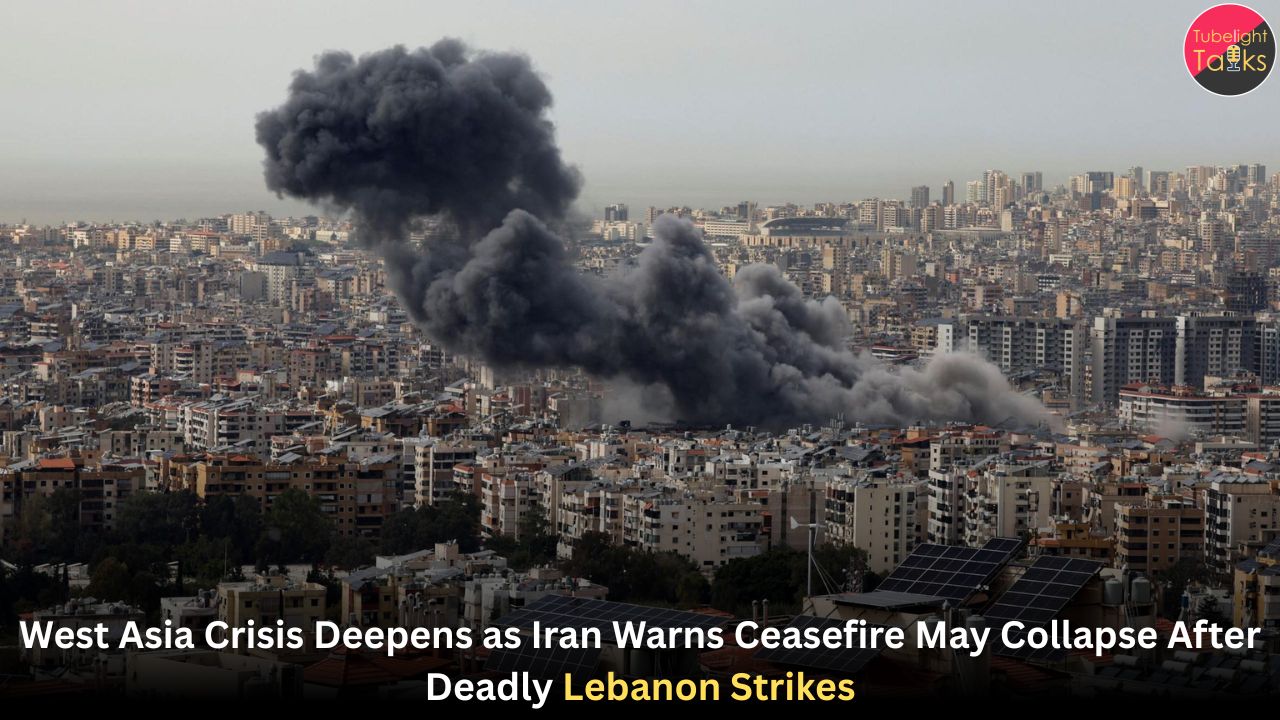
West Asia Crisis: Iran Warns Ceasefire at Risk After Deadly Lebanon Airstrikes
Lebanon Strikes: A tentative U.S.-Iran ceasefire is under immediate strain after Israeli strikes across Lebanon killed more than 250 people, according to Lebanese civil defence figures cited by Reuters and other global outlets. Iran-backed actors had expected the truce to reduce regional hostilities, but Israeli officials maintained that Lebanon was outside the scope of the pause. That disagreement has become the central fault line, with Iran signaling that a ceasefire excluding Lebanon is not credible and may not hold.
What triggered the fresh crisis
Reuters reported that the strikes were among the heaviest seen in Lebanon in recent weeks, hitting Beirut and other areas soon after the ceasefire announcement. The UN condemned the casualty reports as “appalling,” while rights officials called for investigations into possible violations of international humanitarian law. Iran, meanwhile, indicated that key ceasefire clauses had already been violated, raising doubts over whether negotiations could proceed under such conditions.
Why the truce looks fragile
The ceasefire appears to suffer from competing interpretations. Iran and some mediating voices treated it as part of a broader regional de-escalation, while Israel and the U.S. position treated Lebanon separately. That ambiguity matters because it leaves room for military escalation even while diplomacy is being publicly advertised. Markets, shipping routes and regional alliances are all reacting to that uncertainty.
Lebanon Strikes Push the Region Back to the Brink
The reported scale of casualties in Lebanon has sharply intensified fears that the wider West Asia crisis may be entering another dangerous phase. Large airstrikes in a fragile diplomatic environment do not remain confined to one border; they immediately affect regional alliances, civilian morale and the credibility of international mediation.
Hospitals, rescue workers and already vulnerable communities are bearing the immediate burden, while governments across the region are recalculating their positions in response to the rising human and political cost.
Ceasefire Ambiguity Could Trigger Wider Instability
One of the biggest problems in the current situation is the lack of clarity over what the U.S.-led ceasefire actually covers. If one side interprets the truce as a limited pause while another sees it as a broader de-escalation framework, the risk of sudden collapse rises dramatically.
Such ambiguity weakens diplomacy, encourages retaliatory logic and keeps markets, shipping routes and energy corridors on edge. In conflict zones, unclear agreements often become more dangerous than openly broken ones because they create false expectations of peace.
Peace, anger and Sat Gyaan
This crisis shows how quickly violence returns when agreements are driven by strategic convenience rather than genuine commitment to peace. Sant Rampal Ji Maharaj teaches that anger, ego and domination destroy both individual life and social order. Nations too suffer from the same defects. Lasting peace requires truth, compassion and moral restraint. Without those values, ceasefires become pauses in conflict, not solutions.
Call to Action
Read only credible and official updates, avoid forwarding inflammatory misinformation, and pray for civilian safety. In times of war, truth and humanity are as important as diplomacy.
FAQs: West Asia Crisis Deepens as Iran Warns Ceasefire May Collapse After Deadly Lebanon Strikes
Q1. Why is Iran warning about the ceasefire?
Iran says the ceasefire loses credibility if Israeli attacks on Lebanon continue.
Q2. How many people were reportedly killed in Lebanon?
Lebanese civil defence figures cited by Reuters put the death toll above 250.
Q3. What has the UN said?
UN officials condemned the casualty reports and called the scale of civilian suffering appalling.
Related Stories







Discussion (0)