Tool-Using Cow Discovery: Veronika Challenges What Scientists Thought About Bovine Intelligence
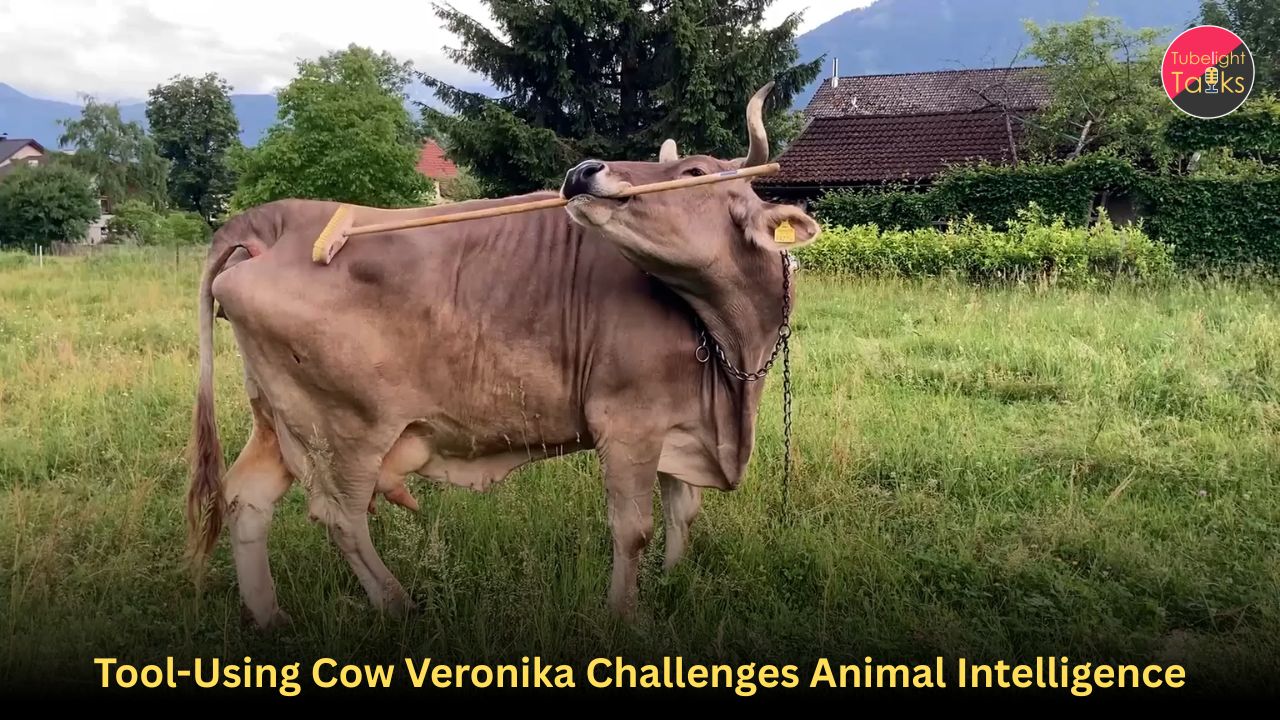
A Swiss Brown cow named Veronika has surprised scientists by showing flexible tool use, a behavior rarely documented in cattle. A Current Biology paper titled “Flexible use of a multi-purpose tool by a cow” reported that Veronika used different parts of a brush for different body regions, revealing multi-purpose tool use not previously reported in non-primate mammals. ScienceDaily, citing Cell Press, described it as the first documented case of tool use in a pet cow.
Meet Veronika
Veronika is a Swiss Brown cow living as a companion animal in Austria. Her owner had noticed for years that she picked up sticks and used them to scratch her body. Researchers later studied her behavior through structured tests using a deck brush.
Why Scientists Were Surprised
Tool use is often associated with primates, crows, parrots, elephants, and some marine animals. Cattle are usually not studied as tool-using animals. Veronika’s behavior challenged that assumption because she did not merely bump into an object; she controlled it with purpose.
Flexible Tool Use
Researchers found that Veronika chose different ends of the brush depending on the body part she wanted to scratch. ScienceDaily reported that she used the bristled side for larger, firmer areas and the smoother handle for more sensitive lower-body regions. She also adjusted her movement style, using broader motions for upper-body scratching and more precise movements for lower areas.
First Confirmed Case in Cattle
ScienceDaily reported that this discovery represents the first confirmed case of tool use in cattle. Scientific American also noted that Veronika’s behavior suggests society may have underestimated the minds of farm animals.
Why Environment Matters
Researchers believe Veronika’s enriched living environment may have supported this behavior. She lived longer than most farm cattle, interacted daily with humans, and had access to objects she could manipulate. This raises important questions about how animal intelligence may appear when animals receive space, safety, stimulation, and care.
Animal Welfare Implications
The discovery encourages a broader conversation about livestock welfare. Enrichment, humane handling, social contact, and freedom to explore may reveal abilities that remain hidden in restrictive environments. Veronika’s case does not mean every cow will use tools, but it shows that cattle cognition deserves more scientific attention.
Intelligence Deserves Compassion
Veronika’s story reminds us that living beings may possess more awareness and capacity than humans assume. Sant Rampal Ji Maharaj’s teachings emphasize compassion, non-violence, and disciplined living. True spiritual knowledge helps humans see animals not merely as resources but as part of God’s creation deserving care and kindness. His official teachings guide people toward true worship, moral conduct, and liberation from ignorance.
Call to Action
Rethink Animal Welfare
Scientists, farmers, and citizens should support research and practices that improve the lives of animals.
Encourage Humane Environments
Providing animals with space, enrichment, care, and freedom from cruelty can reveal natural intelligence and improve welfare.
FAQs: Tool-Using Cow Veronika Challenges Animal Intelligence
1. Who is Veronika?
Veronika is a Swiss Brown cow in Austria documented using tools for self-scratching.
2. What tool did Veronika use?
Researchers studied her use of sticks and a deck brush.
3. Why is this discovery important?
It is reported as the first confirmed case of tool use in cattle and suggests bovine intelligence may be underestimated.
4. What made her tool flexible?
She used different parts of the same brush for different body regions and adjusted her movements accordingly.
5. What does this mean for animal welfare?
It suggests enriched environments may help animals express complex behaviors that are otherwise overlooked.
Related Stories
![US Treasury Secretary Scott Bessent discussing foreign exchange and the Japanese Yen intervention.] | [Source: US Treasury Official Feed](https://tubelighttalks.com/wp-content/uploads/2026/08/Scott-300x169.webp)









Discussion (0)