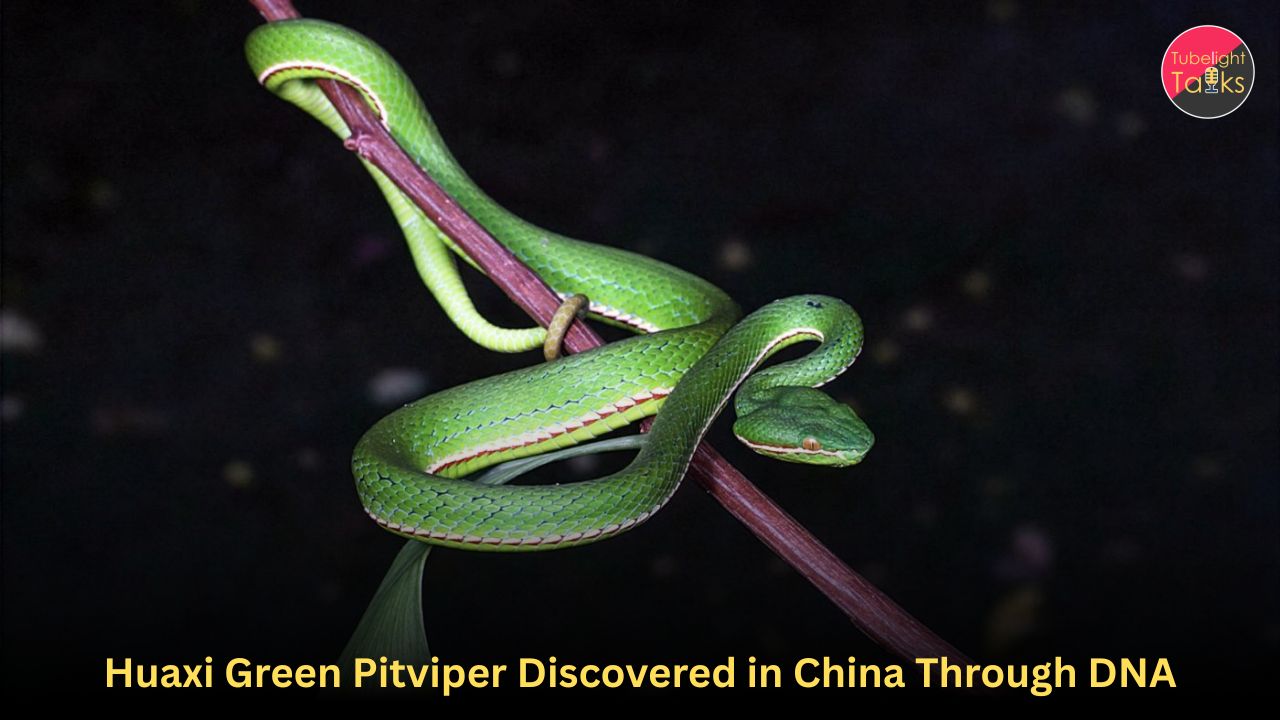
Hidden DNA Species: Scientists Identify New Huaxi Green Pitviper in China
Scientists have identified a previously hidden pitviper species in China after DNA analysis proved that the snake was not the common bamboo pitviper it had long been mistaken for. The newly named Huaxi Green Pitviper, scientifically called Trimeresurus lii, was found in the misty mountains of western Sichuan. Researchers from the Chengdu Institute of Biology and the Giant Panda National Park used genetic sequencing and physical examination to confirm that the population forms a distinct evolutionary branch.
A Snake Hidden in Plain Sight
The Huaxi Green Pitviper is bright grass-green, blends easily into forest vegetation, and has striking eye coloration. Because it looks similar to the bamboo pitviper, scientists had overlooked it for decades. The discovery shows how modern DNA tools can reveal new species even in regions already studied by researchers.
DNA Sequencing Confirmed the Difference
The key breakthrough came through genetic testing. Researchers found that this population was not merely a local variation of a known species but a separate lineage. Physical differences, including smooth head scales and distinct male-female coloration patterns, supported the DNA evidence.
Also Read: Gitchak nakan: The Blind Fish Discovery in a Village Well
Named After Laozi
The species name lii honors Li Er, better known as Laozi, the ancient Chinese philosopher. Researchers said the name reflects the idea of harmony between humans and nature, fitting the conservation mission of the Giant Panda National Park where the snake was discovered.
Why the Discovery Matters
New species identification is not just a scientific achievement. It directly affects conservation, habitat protection, venom research, and public safety. Since the Huaxi Green Pitviper is venomous and lives in mountainous areas that may overlap with human activity, accurate identification can also help local communities and medical professionals understand snakebite risks better.
Protecting the Hidden Wonders of Creation
The discovery of a hidden species reminds us that nature still holds mysteries beyond human knowledge. Sant Rampal Ji Maharaj’s teachings emphasize humility, compassion, and living in harmony with God’s creation. True spiritual knowledge guides humans away from destructive behavior and toward protection of living beings, reminding us that every creature has a place in the divine order. His official teachings stress scripture-based devotion, discipline, and righteous living as the path to true welfare. (jagatgururampalji.org)
Call to Action
Support Biodiversity Research
Governments, universities, and conservation bodies should invest in field surveys, DNA sequencing, and habitat protection.
Respect Wildlife, Stay Safe
People in biodiversity-rich regions should avoid disturbing venomous snakes and report sightings to trained wildlife experts.
FAQs: Huaxi Green Pitviper Discovered in China Through DNA
1. What is the new pitviper species called?
It is called the Huaxi Green Pitviper, scientifically named Trimeresurus lii.
2. Where was it discovered?
It was discovered in the misty mountains of western Sichuan, China.
3. How was it identified as a new species?
DNA sequencing and physical trait analysis showed it was distinct from the bamboo pitviper.
4. Is the Huaxi Green Pitviper venomous?
Yes. Like other members of the Trimeresurus genus, it is venomous.
5. Why is this discovery important?
It improves biodiversity knowledge, supports conservation planning, and may help with snakebite awareness.
Related Stories










Discussion (0)