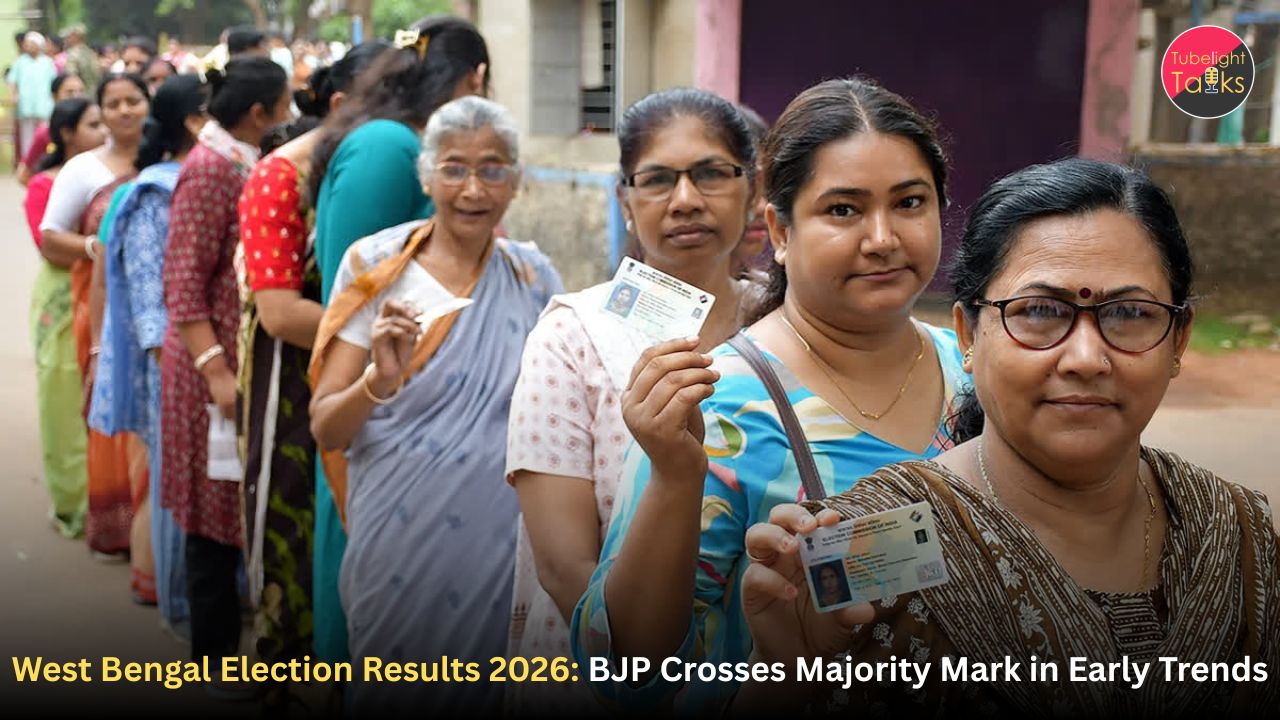
West Bengal Trends Signal Possible Political Realignment as BJP Takes Early Lead
West Bengal is witnessing one of the most closely observed electoral contests in recent years, with early counting trends suggesting a strong performance by the Bharatiya Janata Party. As the party crosses the halfway mark in initial leads, political observers are beginning to discuss the possibility of a structural shift in the state’s political landscape. However, with multiple rounds of counting still underway, the situation remains fluid, and experienced analysts are cautious about drawing definitive conclusions at this stage.
The ruling Trinamool Congress has responded with a measured tone, urging both supporters and observers to avoid premature conclusions. The party maintains that later rounds of counting, particularly from rural and interior constituencies, could significantly alter the current trends. This tension between early numerical leads and final outcome uncertainty is shaping the narrative of the election day.
Early Trends Reflect Widespread Momentum
What makes the current trend particularly significant is not just the number of seats where BJP is leading, but the geographic spread of those leads. Early data indicates gains across districts that have historically been considered strongholds of the Trinamool Congress. This suggests that the shift, if sustained, is not localized but rather reflects a broader change in voter sentiment across different regions of the state.
Political analysts note that such patterns often emerge when voter preferences evolve due to a combination of local governance issues, national political narratives, and changing demographic priorities. If these trends hold, they may signal a deeper political realignment rather than a routine electoral swing.
TMC’s Grassroots Strength Still a Factor
Despite the early trends, the Trinamool Congress continues to rely heavily on its well-established grassroots network. Over the years, the party has built a strong presence at the local level through welfare programs, community engagement, and organizational depth. These factors often play a crucial role in later counting rounds, especially in rural areas where ground mobilization significantly influences results.
Party leaders have emphasized that their voter base remains intact and that early leads do not necessarily reflect the final outcome. Historically, West Bengal elections have seen shifts during counting phases, making caution a key part of the political response strategy.
Also Read: Election Commission Removes 170 Police Station Heads in West Bengal to Ensure Neutrality
Urban vs Rural Divide Becoming Visible
One of the most critical dynamics emerging from the early trends is the apparent divide between urban and rural voting patterns. Urban constituencies appear to be showing stronger support for BJP, reflecting changing aspirations, economic concerns, and exposure to national political narratives.
On the other hand, rural areas, which have traditionally supported TMC, are yet to fully reflect their voting trends in the counting process. The eventual balance between these two segments will be decisive in determining whether the early lead consolidates into a final victory or narrows into a competitive finish.
Role of High Voter Turnout
The election witnessed significant voter participation across multiple districts, which has added complexity to the counting trends. High turnout often indicates heightened political engagement and can lead to unpredictable outcomes, as it brings in segments of voters who may not consistently participate in elections.
This increased participation could reflect voter desire for change or reinforcement of existing preferences. Analysts are closely studying turnout patterns to understand how they correlate with emerging trends.
Key Battleground Constituencies
Several constituencies are emerging as decisive battlegrounds where margins remain extremely narrow. These seats are likely to determine the final composition of the assembly, especially if the overall contest tightens in later rounds.
Political parties have concentrated significant resources and campaign efforts in these constituencies, recognizing their strategic importance. The results from these areas will be closely watched as counting progresses.
Governance, Welfare, and Political Messaging
The election outcome is being shaped by a combination of governance performance, welfare delivery, and political messaging. Issues such as infrastructure development, employment opportunities, and social welfare schemes have influenced voter decisions across different regions.
At the same time, political narratives at both the state and national level have played a role in shaping public perception. The interplay between these factors will ultimately determine which party’s message resonated more effectively with voters.
National Implications of the Result
West Bengal elections are not just a state-level event; they carry significant national implications. A strong performance by BJP could strengthen its position in eastern India and influence future electoral strategies. Conversely, a TMC recovery could reinforce the importance of regional parties in India’s political landscape.
The outcome will be closely analyzed by political stakeholders across the country as an indicator of evolving voter preferences and political alignments.
Counting Process and Transparency Measures
Election authorities have implemented strict procedures to ensure transparency and accuracy in the counting process. Multiple layers of verification, digital tracking systems, and security arrangements are in place to maintain the integrity of the results.
Observers from various political parties are present at counting centers, ensuring that the process remains credible and free from disputes. This level of oversight is essential in maintaining public trust in the electoral system.
What Lies Ahead as Counting Continues
As counting progresses through successive rounds, trends are expected to stabilize, providing a clearer picture of the final outcome. Whether the early BJP lead translates into a decisive mandate or evolves into a closer contest remains uncertain.
The next few hours will be crucial in determining the political future of West Bengal. Regardless of the outcome, the election is already shaping up to be a defining moment in the state’s political history.
FAQs: West Bengal Election Results 2026
1. Who is leading in West Bengal elections?
BJP is leading in early trends with over 148 seats.
2. Are these final results?
No, counting is still ongoing and trends may change.
3. What is the majority mark?
Around 147 seats in the 294-member assembly.
4. Why is TMC urging caution?
Because later counting rounds can significantly alter trends.
5. Why is this election important?
It could lead to a major political shift with national implications.
Related Stories







Discussion (0)