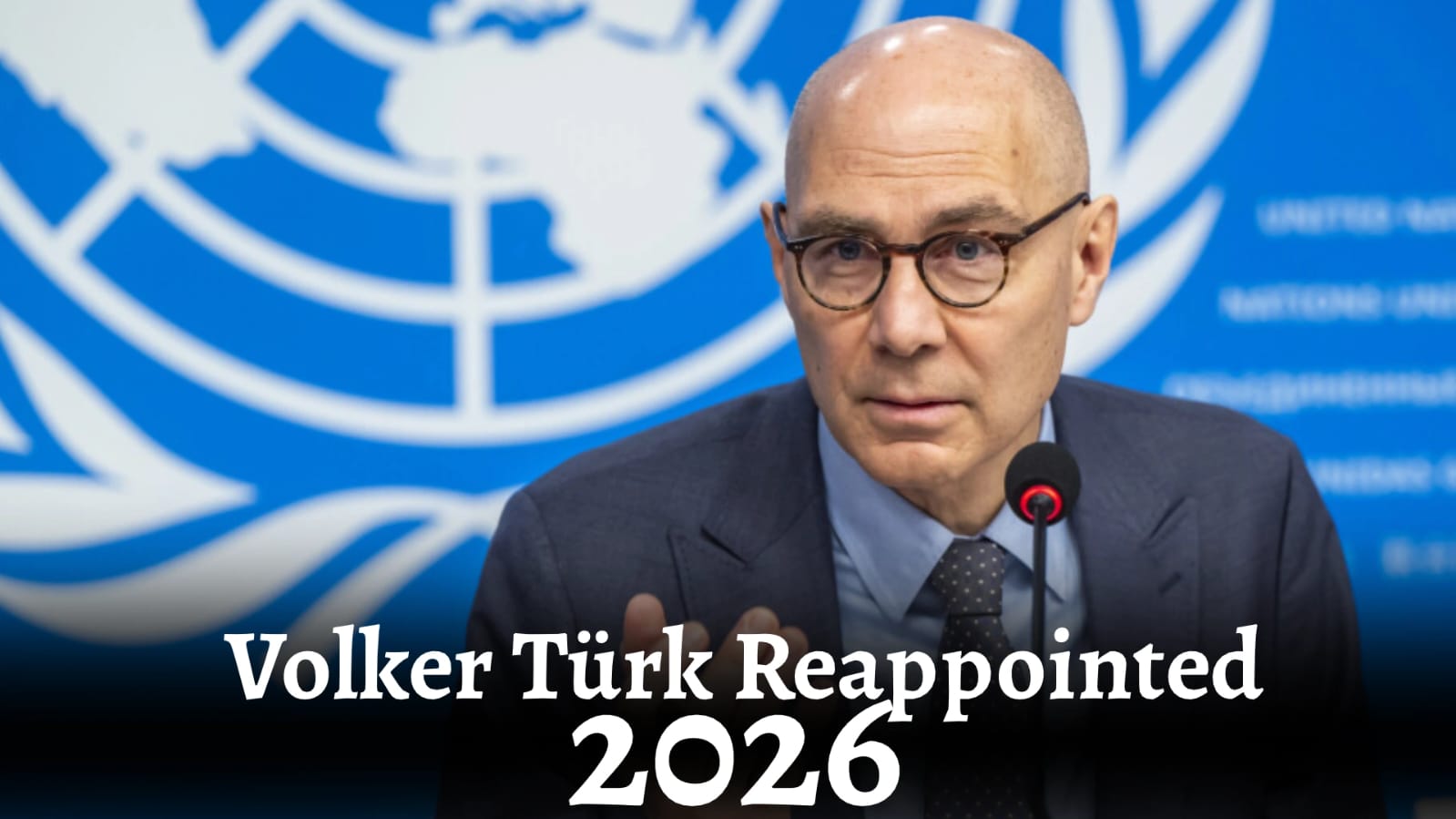
Volker Türk Reappointed: A Decisive 2026 UN Vote
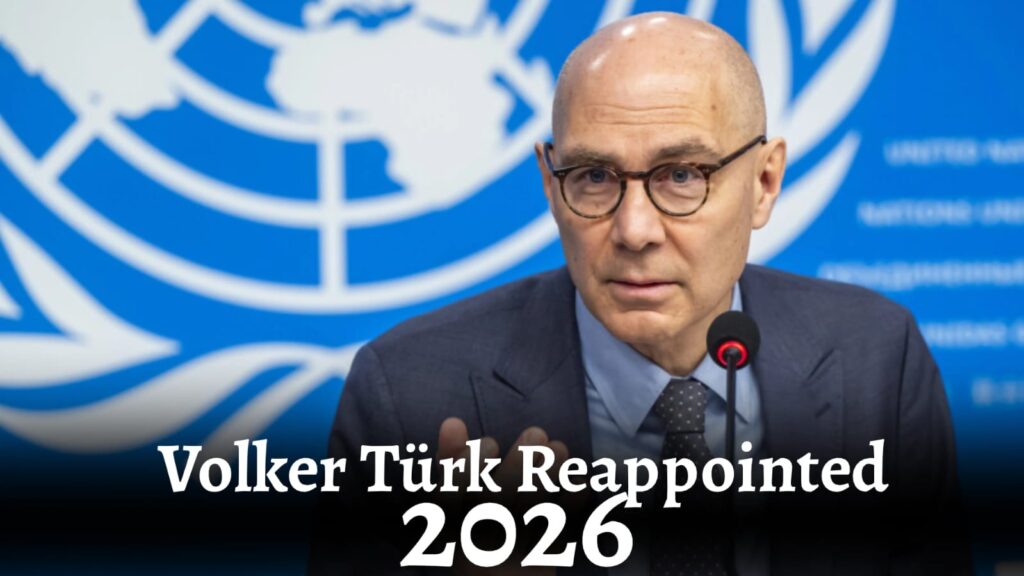
On July 24, 2026, the United Nations General Assembly (UNGA) voted overwhelmingly, with Volker Türk reappointed as the UN High Commissioner for Human Rights for a second four-year term. This new mandate will run from October 12, 2026, to October 11, 2030.
The decision was backed by 144 Member States. This overwhelming support secures his leadership through ongoing global geopolitical conflicts and complex human rights challenges.
Voting Breakdown and Global Opposition | Volker Türk reappointed
The UN General Assembly approved the proposal submitted by UN Secretary-General António Guterres during its plenary session. The voting breakdown revealed a clear majority: out of 167 participating member nations, 144 voted in favor, 10 voted against, and 13 abstained.
Despite this, key nations including the United States, the Russian Federation, and Israel expressed strong opposition to the four-year extension. Procedural motions by the U.S. to postpone the vote, and by Russia to limit the extension to late 2026, were both defeated.
Volker Türk is an Austrian lawyer who assumed office in October 2022. He has consistently advocated for universal human rights across various conflict zones, including Ukraine, Gaza, Sudan, and Myanmar. Despite rising political friction among major global powers, the overwhelming majority reaffirmed confidence in his mandate to safeguard fundamental freedoms worldwide.
Also Read : UN General Assembly President Annalena Baerbock Announces Visit to New Delhi and Beijing
Procedural Friction and Diplomatic Pushback | Volker Türk reappointed
The reappointment process triggered intense debate inside the General Assembly hall. Representatives from the United States and Israel criticized the timing and handling of the nomination. They argued that Secretary-General Guterres, whose own tenure ends in December, should have left the selection of the next High Commissioner to his successor.
US Deputy Ambassador Jeff Bartos voiced strong objections before the vote. He alleged that the nomination was brought forward without adequate public debate or review. Russia’s delegation similarly accused the Office of the High Commissioner of maintaining political bias and favoring Western interests.
Russia introduced a counter-proposal to limit the extension only through December 31, 2026, but the motion was decisively rejected by the assembly. In response to the procedural criticisms, UN spokesperson Stéphane Dujarric affirmed that the Secretary-General acted strictly within his official authority. He noted this was done in accordance with established UN rules, having conducted prior consultations with regional groups.
Broad International Support for the Mandate | Volker Türk reappointed
Despite objections from select nations, Türk received strong backing from a broad coalition of states. Representatives from the European Union praised his objective approach to global human rights crises.
French Ambassador Jérôme Bonnafont praised Türk as a “voice of conscience.” He noted that Türk has consistently maintained independence and integrity across complex conflicts.
Volker Türk is an Austrian jurist who previously held senior UN positions in refugee protection and strategic policy. He has served as High Commissioner since October 2022. His first term has been defined by active engagement on crises in Ukraine, Gaza, Sudan, Myanmar, and Nicaragua. He has also been a strong advocate for global climate justice and digital rights.
With the assembly’s mandate secured, Türk will continue leading the Office of the High Commissioner for Human Rights (OHCHR) from its headquarters in Geneva, Switzerland.
Major News and Developments (July 2026) | Volker Türk reappointed
1. UN General Assembly Reappointment for a Second Term
On July 24, 2026, the UN General Assembly voted to extend Volker Türk’s mandate for a second 4-year term, covering October 12, 2026, through October 11, 2030. The vote result was 144 in favor, 10 opposed, and 13 abstentions.
Key opposition came from ten countries: the United States, Russia, Israel, Argentina, North Korea, Burkina Faso, Mali, Nicaragua, Niger, and Trinidad & Tobago.
The procedural controversy centered on the United States and Israel criticizing UN Secretary-General António Guterres for putting forward the nomination without extensive open debate right before his own tenure ends. US representatives warned that the procedure bypasses review, while Israel argued the decision should have been left to the incoming Secretary-General. Russia proposed limiting the term extension only to December 31, 2026, which was overwhelmingly defeated. Conversely, France and other EU member states strongly backed Türk, praising his integrity and leadership amid complex geopolitical crises.
Key Human Rights Statements and Actions
Nicaragua Political Freedoms (July 22, 2026): Türk issued a major statement condemning new actions by the Nicaraguan regime. He criticized efforts to dismantle civic space, revoke credentials from independent lawyers, and arbitrarily detain political opposition members ahead of planned electoral changes.
62nd Session of the UN Human Rights Council (June 15 – July 8, 2026): Over the session in Geneva, Türk and his office presented comprehensive reports addressing human rights conditions across 20 countries. This led to 28 adopted resolutions, including urgent measures and inquiries into escalating violence in El Obeid, Sudan.
External Resource: Official OHCHR Reports and Resolutions
Conclusion: The Spiritual Dimension of Global Leadership
While global leaders debate procedural mandates, geopolitical biases, and the administration of worldly justice, true leadership is ultimately rooted in selfless service and divine righteousness. According to the spiritual knowledge imparted by Tatvadarshi Saint Rampal Ji Maharaj, worldly positions, political power, and institutional authority are temporary.
True peace and universal justice can only be established when leaders govern with absolute humility, ethical conduct, and devotion to the Supreme God Kabir. Saint Rampal Ji Maharaj teaches that genuine welfare for humanity arises not from political maneuvering or institutional mandates, but from adhering to eternal, scripture-based truth. This divine knowledge protects the soul, fosters universal compassion, and guides humanity toward lasting harmony beyond the confines of temporal governance.
FAQs on Volker Türk’s Reappointment
Q1: Why was Volker Türk reappointed as UN Human Rights Chief in 2026?
Volker Türk reappointed for a second term because the UN General Assembly voted overwhelmingly (144-10) to extend his mandate, reaffirming confidence in his leadership amid ongoing global human rights challenges.
Q2: What was the result of the General Assembly vote that kept Volker Türk reappointed?
Out of 167 participating member nations, 144 voted in favor, 10 voted against, and 13 abstained, ensuring Volker Türk reappointed for a full four-year term.
Q3: When does Volker Türk’s second term begin and end?
His second term officially begins on October 12, 2026, and will conclude on October 11, 2030.
Q4: Which countries voted against the renewal?
Ten countries voted against: the United States, Russia, Israel, Argentina, Burkina Faso, Mali, Nicaragua, Niger, North Korea, and Trinidad & Tobago.
Q5: Where is the headquarters of the UN Human Rights office located?
The Office of the High Commissioner for Human Rights (OHCHR) is headquartered at the Palais des Nations in Geneva, Switzerland.
Related Stories


Discussion (0)