Chandipura Virus Outbreak 2026: Devastating Monsoon Health Crisis Strikes India as Cases Rise
The sudden escalation of the dangerous Chandipura virus across western India during the 2026 monsoon season has triggered an emergency public health alert across the nation. State health departments, medical professionals, and local sanitization authorities are working continuously to control sandfly vector populations, set up dedicated pediatric intensive care units, and educate rural and semi-urban communities about early diagnostic signs to protect young lives.
As heavy seasonal rains create ideal breeding grounds for arthropod vectors, central and state medical teams are conducting active surveillance, laboratory testing, and emergency vector suppression drives. With 22 confirmed pediatric fatalities reported during the current monsoon wave, medical experts stress that early detection within the first few hours of high fever and neurological distress is essential for saving infected children.
Key Takeaways
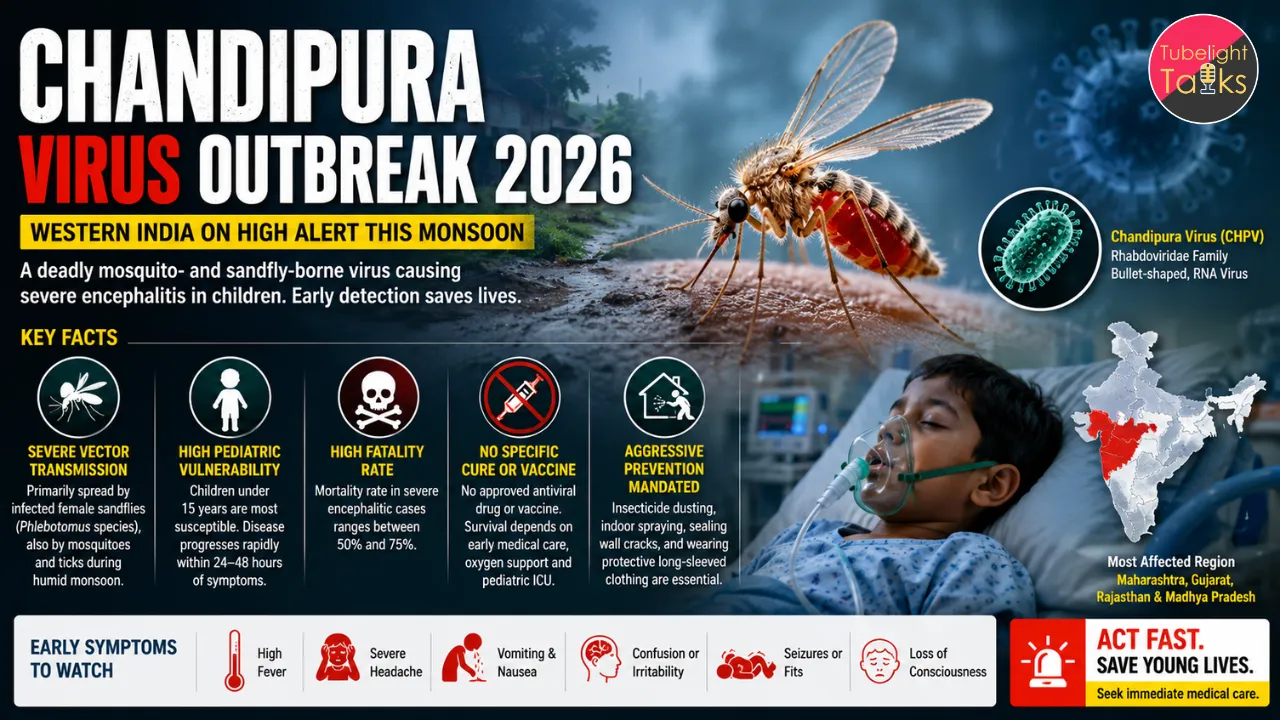
- Severe Vector Transmission: The Chandipura virus is primarily transmitted through the bites of infected female sandflies (Phlebotomus species), as well as mosquitoes and ticks during humid monsoon months.
- High Pediatric Vulnerability: Children under 15 years of age are most susceptible to severe illness, with rapid disease progression occurring within 24 to 48 hours of initial symptom onset.
- High Fatality Rate: Historically and in acute outbreaks, the illness exhibits high mortality rates ranging between 50% and 75% in severe encephalitic cases.
- No Specific Cure or Vaccine: There is no approved antiviral drug or vaccine for CHPV; survival depends entirely on early medical care, oxygen support, and pediatric ICU intervention.
- Aggressive Prevention Mandated: Health authorities recommend insecticide dusting, indoor residual spraying, sealing house wall cracks, and wearing protective long-sleeved clothing.
Understanding the Chandipura Virus: Origins and Biological Profile
The Chandipura virus (CHPV) represents an aggressive pathogen threat within the Rhabdoviridae viral family, belonging to the genus Vesiculovirus. First isolated in 1965 from blood samples of patients during an outbreak in Chandipura village, Maharashtra, the pathogen features a bullet-shaped structural morphology containing a negative-sense single-stranded RNA genome.
Its molecular core codes for five essential structural proteins—nucleocapsid (N), phosphoprotein (P), matrix protein (M), glycoprotein (G), and large polymerase protein (L)—which together facilitate rapid cellular invasion.
| Taxonomic Rank | Classification Detail |
| Phylum | Negarnaviricota |
| Order | Mononegavirales |
| Family | Rhabdoviridae |
| Genus | Vesiculovirus |
| Species | Vesiculovirus chandipura |
Upon entering human host tissue via an insect vector bite, the Chandipura virus exhibits intense neurotropic characteristics, enabling it to rapidly target central nervous system tissues. The glycoprotein G plays a pivotal role in mediating cell entry by binding to host receptors, allowing the virus to breach the blood-brain barrier efficiently.
Once inside cerebral tissue, CHPV induces acute microglial activation, triggering intense cellular death, neuronal degeneration, and rapid severe brain swelling (cerebral edema) before effective systemic humoral immune responses can mount neutralizing antibodies.
Epidemiological Dynamics of the 2026 Outbreak
The 2026 monsoon season in western India has witnessed a surge in acute encephalitis cases linked directly to the Chandipura virus. High humidity combined with seasonal rains creates ideal breeding environments for sandfly vectors. Rural and semi-urban localities with standing water, unpaved floors, and cracked mud walls face increased transmission risks.
Outbreak Data and Patient Statistics
| Parameter / Metric | 2026 Outbreak Data Points | Clinical Significance |
| Suspected Encephalitis Cases | 184 reported cases | Reflects regional vector activity during monsoon. |
| Laboratory Confirmed Cases | 35 positive for CHPV | Verified via laboratory blood tests. |
| Confirmed Mortality Count | 22 pediatric fatalities | Highlights severe case fatality in young children. |
| Primary Age Demographic | Children under 15 years | Immune system vulnerability accelerates disease. |
| Primary Transmission Vector | Phlebotomus sandflies | Crevice-dwelling vector active in humid weather. |
| Case Fatality Rate (CFR) | Estimated 50%–75% | High mortality necessitates immediate ICU care. |
Health monitoring networks in affected regions have placed civil hospitals on high alert. Central health agencies have deployed national response teams to support local authorities in vector control, laboratory diagnostics, and clinical ICU management.
Vector Mechanics and Modes of Transmission
Understanding vector behavior is essential for controlling the spread of the Chandipura virus. Unlike airborne pathogens, CHPV relies on arthropod vectors for transmission to human hosts. While mosquitoes and ticks can carry the virus, sandflies of the genus Phlebotomus serve as the primary vector.
Transmission Cycle
| Transmission Stage | Biological & Ecological Process |
| Vector Breeding | Female sandflies lay eggs in moist soil, mud cracks, and organic refuse. |
| Viral Acquisition | Sandflies contract CHPV from blood feeds or transovarial transmission. |
| Human Vector Bite | Infected sandflies bite humans during twilight and nighttime hours. |
| Pathogen Invasion | Virus enters local tissues and rapidly breaches the blood-brain barrier. |
| Clinical Onset | Rapid progression to acute viral encephalitis and cerebral edema. |
Female sandflies acquire the virus while feeding on host blood or through transovarial transmission. These insects breed in dark, humid environments such as mud wall cracks, animal shelters, storage rooms, and organic waste piles. Because sandflies are small, fly low to the ground, and bite quietly, their presence often goes unnoticed.
Epidemiological data confirms that direct human-to-human transmission of the Chandipura virus does not occur. Physical contact with an infected patient poses no contagious risk to healthcare workers or family members, meaning outbreak containment relies entirely on vector suppression and protective measures.
Clinical Symptoms and Rapid Progression Phases
The clinical progression of the Chandipura virus infection in children is remarkably swift. While adults in endemic zones may remain asymptomatic or experience mild illness, non-immune children face severe health risks.
Symptom Progression Timeline
| Timeframe Post-Infection | Clinical Manifestations & Symptoms |
| 0 to 12 Hours | Sudden high fever (>101°F), severe chills, and intense headache. |
| 12 to 24 Hours | Gastrointestinal distress, persistent vomiting, and severe diarrhea. |
| 24 to 48 Hours | Altered sensorium, restlessness, lethargy, and mental confusion. |
| 48 to 72 Hours | Generalized seizures, loss of consciousness, coma, and organ failure. |
Key Clinical Signs to Monitor
- Hyperpyrexia: Sudden, high-grade fever exceeding 101°F (38.3°C) that fails to drop with standard antipyretics.
- Gastrointestinal Complications: Persistent, intractable vomiting and severe watery diarrhea leading to dehydration.
- Neurological Changes: Rapid onset of drowsiness, confusion, unusual irritability, and photophobia.
- Convulsions: Sudden onset of focal or generalized tonic-clonic seizures due to acute cortical inflammation.
- Loss of Consciousness: Quick transition from stupor to deep coma, often accompanied by respiratory irregularity.
Immediate medical evaluation within hours of symptom onset is vital to prevent severe neurological damage.
Medical Management and ICU Protocols
In the absence of a specific antiviral drug or protective vaccine, medical care for the Chandipura virus focuses on intensive supportive therapy. Primary treatment objectives include stabilizing vital functions, controlling brain swelling, and managing high fever.
| Clinical Focus Area | Emergency Intervention Protocol |
| Airway & Ventilation | Early intubation for patients with low Glasgow Coma Scale (GCS) scores. |
| Intracranial Pressure | Osmotherapy (Mannitol or hypertonic saline) to reduce cerebral edema. |
| Seizure Management | Intravenous anticonvulsants (Fosphenytoin/Midazolam) to stop convulsions. |
| Hemodynamic Stability | Balanced fluid resuscitation and inotropic support to maintain blood pressure. |
| Temperature Control | Active cooling measures and antipyretic administration to manage fever. |
Pediatric Intensive Care Units (PICUs) utilize continuous neuro-monitoring to detect cerebral edema early. Maintaining adequate cerebral perfusion pressure while avoiding fluid overload is a delicate balance required during the acute phase of encephalitis. Medical centers are advised to stock essential anti-seizure medications, mechanical ventilators, and intravenous electrolyte solutions throughout endemic outbreak zones.
Also read: Nipah Virus Detected in West Bengal: Two Healthcare Workers Infected, Government on High Alert
Community Prevention and Environmental Control Strategies
Preventing sandfly bites remains the primary defense against the Chandipura virus. Public health agencies recommend a combination of personal protection and community sanitation measures.
Preventive Action Matrix
| Prevention Domain | Action Items & Methodologies | Target Objective |
| Vector Dusting | Apply Gammaxine or Malathion powder near wall cracks and cattle sheds. | Eliminate resting adult sandfly populations. |
| Chemical Spraying | Conduct Indoor Residual Spraying (IRS) on interior house walls. | Reduce indoor sandfly vector survival rates. |
| Structural Repairs | Plaster and seal cracks in mud and brick residential walls. | Remove primary breeding crevices near living spaces. |
| Personal Protection | Dress children in long-sleeved clothing and trousers. | Prevent sandfly skin exposure during peak hours. |
| Physical Barriers | Use permethrin-treated fine-mesh bed nets over sleeping spaces. | Prevent low-flying sandflies from reaching children. |
| Environmental Hygiene | Clear decaying organic refuse and eliminate standing water collections. | Disrupt sandfly larvae development cycles. |
In a World Beset by Unseen Hazards, True Security Lies in Eternal Wisdom
The recurring challenge of public health crises like the Chandipura virus serves as a stark reminder of human vulnerability to natural hazards and physical illness. Despite modern scientific advancements and medical infrastructure, humanity frequently faces unexpected health threats, climate disruptions, and seasonal diseases. While physical precautions, medical treatments, and vector control measures are vital for temporary relief, material security alone cannot protect human life from ultimate physical decay and emotional distress.
True peace, safety, and ultimate protection from worldly suffering can be achieved through spiritual enlightenment and devotion to the Supreme Being. The respected spiritual leader Sant Rampal Ji Maharaj explains that the physical world is inherently transient, filled with physical trials, diseases, and hardships. By gaining true spiritual knowledge (Tattvagyan) and practicing authentic worship of the Supreme God (Satpurush), a person gains inner strength, divine grace, and freedom from the endless cycle of suffering. To explore genuine spiritual wisdom and discover the path toward ultimate peace, visit the Official YouTube Channel of Sant Rampal Ji Maharaj.
FAQs: Chandipura Virus
Q1. What causes the Chandipura virus infection in humans?
The Chandipura virus is an RNA virus transmitted to humans primarily through bites from infected female sandflies, as well as mosquitoes and ticks during monsoon months.
Q2. What are the early symptoms of Chandipura virus?
Early symptoms include a sudden high-grade fever, severe headache, vomiting, diarrhea, lethargy, and rapid progression to seizures or loss of consciousness.
Q3. Who is most vulnerable to Chandipura virus infection?
Children under 15 years of age, particularly those living in rural or semi-urban areas with sandfly vector activity, face the highest risk.
Q4. Is there a specific cure or vaccine for Chandipura virus?
There is no specific antiviral treatment or vaccine available for the Chandipura virus. Hospital management relies entirely on emergency supportive ICU care and oxygen therapy.
Q5. How can families prevent sandfly bites at home?
Families should use fine-mesh bed nets, apply insect repellent, dress children in long sleeves, fill cracks in walls, and apply insecticide dusting around homes.
Related Stories










Discussion (0)