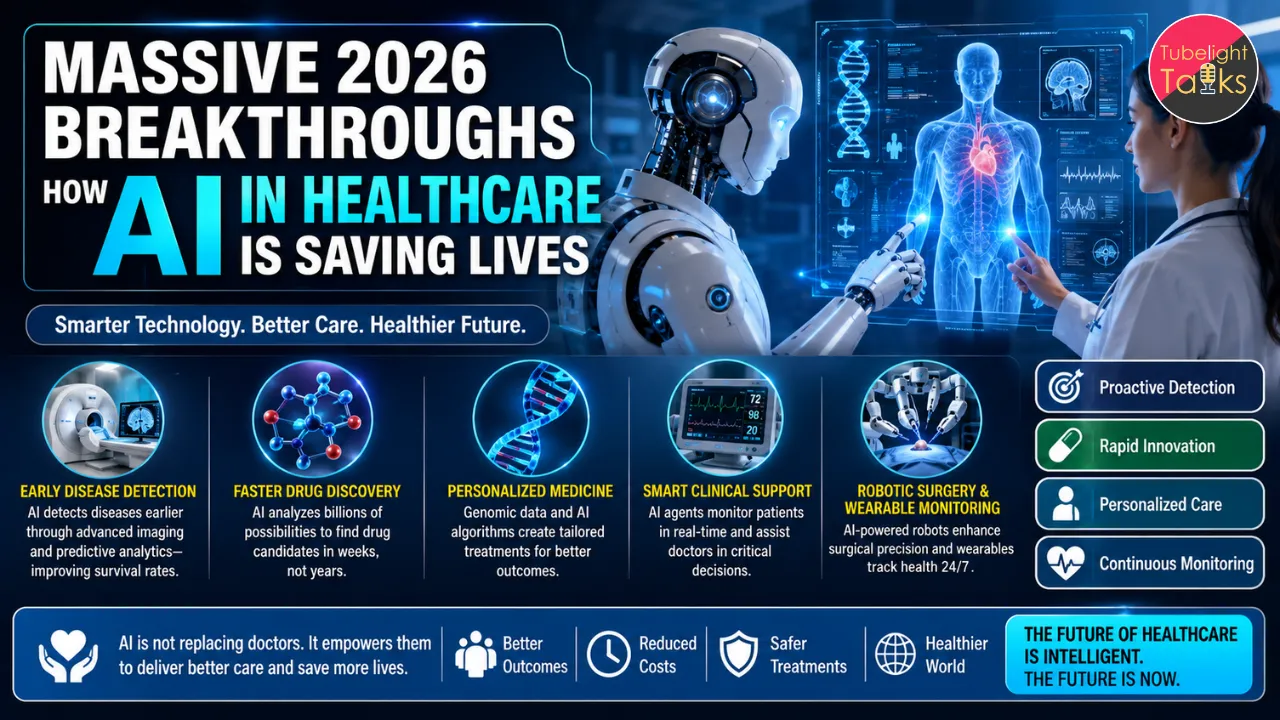
Massive 2026 Breakthroughs: How AI in Healthcare is Saving Lives
Artificial Intelligence has officially crossed the boundary from experimental computer science into a life-saving medical reality. Across the globe, AI in healthcare is fundamentally reshaping how illnesses are diagnosed, treated, and prevented in 2026. By processing massive biological datasets and analyzing diagnostic scans in milliseconds, algorithms predict health risks before symptoms arise. Clinicians and modern hospitals leverage these breakthroughs to deliver personalized medicine, accelerate drug development, and improve patient outcomes. Explore how artificial intelligence is driving innovations and saving human lives daily.
Ultra-Early Disease Detection and Advanced Medical Imaging
One profound achievement of modern medicine is its ability to spot early indicators of disease before traditional clinical methods detect them. Deep learning algorithms trained on millions of radiological scans—like X-rays, CT scans, and MRIs—identify micro-lesions and vascular changes with remarkable accuracy.
In oncology, AI-powered diagnostic systems help clinicians detect aggressive cancers at much earlier stages, improving surgical treatment opportunities. Beyond cancer, AI-assisted retinal imaging identifies early signs of diabetic retinopathy. It also provides predictive insights into cardiovascular risk factors and neurodegenerative conditions, supporting faster clinical assessments.
Accelerating AI-Powered Drug Discovery and Vaccine Development
Historically, bringing a new pharmaceutical drug from laboratory discovery to pharmacy shelves took a decade and cost billions. Today, AI-powered drug discovery is dramatically accelerating the early stages of identifying promising drug candidates in just weeks. While clinical development requires years, the initial discovery phase is permanently revolutionized.
By deploying generative AI models, biological researchers test billions of chemical interactions virtually. AI systems predict how protein structures fold and how candidate molecules bind to specific disease targets. This rapid digital pipeline accelerates therapies for rare genetic diseases, autoimmune conditions, and dangerous antibiotic-resistant superbugs.
Precision Healthcare: How AI in Healthcare Drives Personalized Medicine
No two human bodies are identical, yet traditional medicine long relied on standardized treatment models. The rise of personalized medicine changes this dynamic, ensuring therapies match the exact biological makeup of the patient. Sophisticated algorithms process genomic sequencing, electronic health records, and biomarker data to tailor specific therapeutic regimens.
In modern cancer management, precision healthcare platforms deeply analyze a tumor’s unique genetic profile. This allows oncologists to recommend highly targeted immunotherapies, minimizing harmful toxic side effects while maximizing overall therapeutic efficacy for the patient.
Agentic AI and Clinical Decision Support Systems
Modern medical facilities are integrating autonomous agentic AI models directly into intensive bedside workflows. These intelligent software assistants continuously monitor patient vital signs in Intensive Care Units (ICUs). They identify patients who may be at increased risk of severe sepsis, sudden cardiac complications, or acute respiratory deterioration earlier than traditional methods detect.
Simultaneously, natural language processing (NLP) systems handle real-time clinical documentation. This digital automation drastically cuts physician burnout rates, freeing up valuable hours so doctors can dedicate more face-to-face attention to direct human care.
Robotic Surgery and Continuous Wearable Health Monitoring
Surgical procedures have reached new levels of safety through AI-enhanced robotic surgery systems. These high-precision instruments seamlessly assist surgeons by compensating for human micro-tremors and mapping sub-millimeter surgical boundaries in real-time. This advanced robotic integration enables minimally invasive operations, contributing to significantly shorter recovery times.
Outside hospital walls, smart digital health wearables continuously track irregular heart rhythms, glucose levels, and vital blood oxygen. These advanced wearable devices feed real-time data directly to predictive machine learning algorithms, enabling proactive medical intervention before acute, life-threatening medical emergencies take place.
| Feature | Traditional Care | AI-Enhanced Care |
| Detection | Reactive symptoms | Proactive algorithms |
| Drugs | 10+ years | Months virtually |
| Treatment | Generalized plans | Personalized genomes |
| Monitoring | Manual nursing | Continuous IoT devices |
The Eternal Wisdom Behind Healing and True Well-Being
While scientific advancements like artificial intelligence are remarkable tools created to relieve physical suffering and extend human life, true freedom from disease, suffering, and mortality requires a deeper spiritual understanding.
According to the sacred teachings of Sant Rampal Ji Maharaj, human life is a rare opportunity given to souls to perform true spiritual worship (SatBhakti). Physical ailments and afflictions in this world are ultimately the result of past karmic accounts. While modern medical science provides physical and temporary relief to the body, spiritual devotion guided by a genuine enlightened Guru cleanses deep-rooted karmic debts and bestows permanent health, peace, and ultimate liberation (Moksha).
Sant Rampal Ji Maharaj teaches that Supreme God Kabir is the true Healer (Sukh Sagar and Rognashak) who possesses the divine power to eradicate even incurable diseases when one follows authentic, scripture-based devotion. As recorded in holy scriptures like the Holy Vedas, Gita, and Quran, true worship restores complete physical and spiritual well-being. Modern technology and divine worship work in harmony when humanity uses science for selfless service while anchoring their souls in eternal spiritual truth. Click this link to order your completely free copy of the sacred book ‘Gyan Ganga’ by Sant Rampal Ji Maharaj.
FAQ: The Future of AI in Healthcare
1. How exactly does AI in healthcare save lives on a daily basis?
AI in healthcare enables ultra-early disease detection, accurately predicts ICU patient decline, drastically speeds up life-saving drug discovery, and assists surgeons in high-precision operations. By analyzing data faster than humanly possible, it allows for immediate, life-saving interventions.
2. Can artificial intelligence eventually replace human doctors?
No. Artificial intelligence is a powerful supplementary tool assisting medical professionals with complex data analysis. It cannot replace human judgment, nuanced clinical expertise, or the essential empathy required for genuine patient healing.
3. How does AI improve early disease diagnosis in modern hospitals?
Smart algorithms analyze complex medical images like X-rays, MRIs, and CT scans to help clinicians identify microscopic abnormalities. This happens much earlier and with incredibly high accuracy when used alongside expert medical interpretation.
4. Why is AI in healthcare considered critical for drug discovery?
AI in healthcare analyzes complex biological molecules in virtual environments. This helps researchers identify promising drug candidates faster, effectively reducing the highly expensive early discovery phase from several years to mere weeks.
Related Stories










Discussion (0)