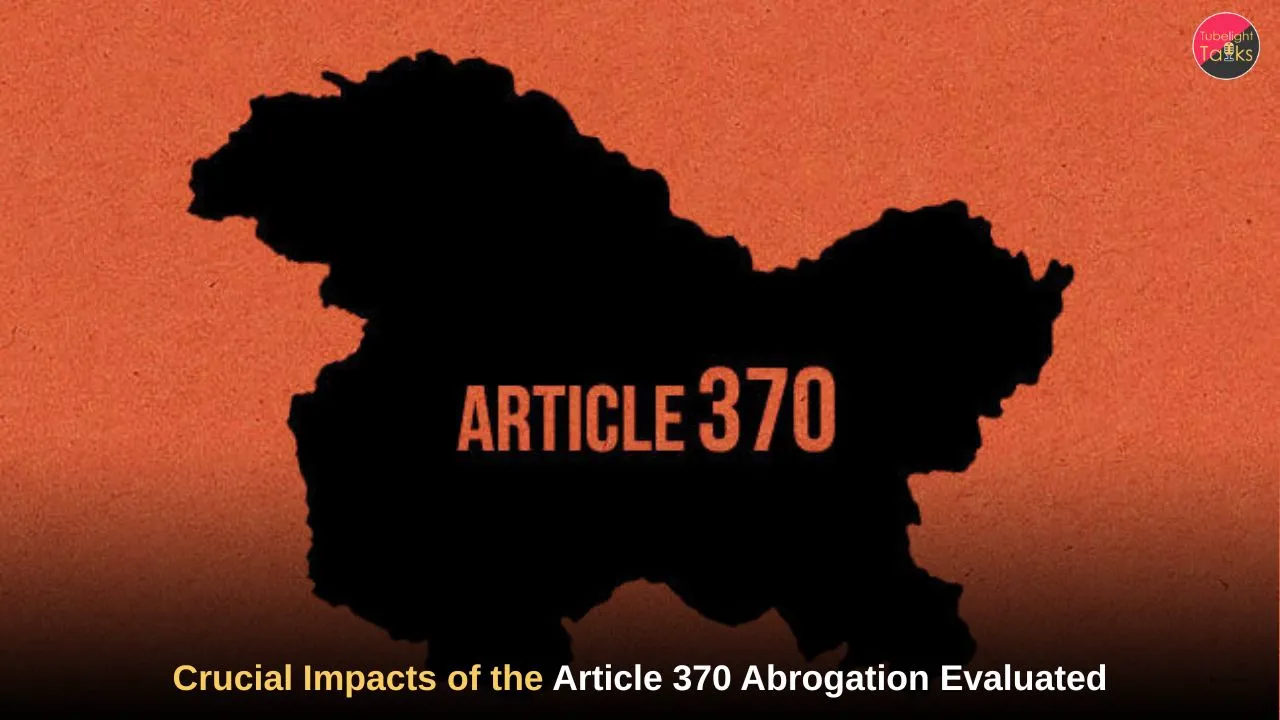
Introduction to the Historic Shift: Article 370 Abrogation
The Article 370 Abrogation remains one of the most defining constitutional maneuvers in the modern political history of India. Executed on August 5, 2019, by the Government of India under the leadership of Prime Minister Narendra Modi and Home Minister Amit Shah, the move stripped the erstwhile state of Jammu and Kashmir (J&K) of its special autonomous status.
Now, seven years later in 2026, policy experts, tech enthusiasts, and general observers are thoroughly analyzing the long-term impacts of this sweeping legislative action. By dismantling the constitutional barrier, the central government aimed to fully integrate the region with the rest of the Indian Union, promising enhanced security, economic development, and equal application of federal laws.
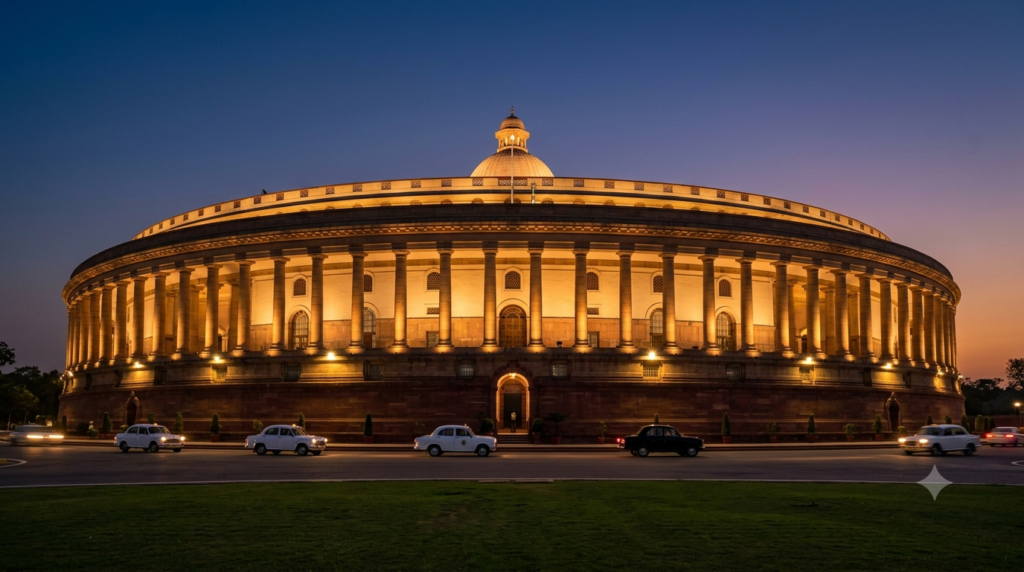
The Geopolitical Landscape Following the Article 370 Abrogation
Following the revocation, the region was officially bifurcated into two distinct Union Territories: Jammu & Kashmir (with a legislature) and Ladakh (without a legislature). This geographical and administrative restructuring fundamentally altered the security apparatus and governance models in the highly sensitive border regions.
Also Read: Kulgam Terror Attack: 2 Migrant Labourers Killed, Security Tightened as Search Operation Continues
For general readers and policy analysts alike, the primary focus has been on the shifting security dynamics. The central administration deployed extensive technological surveillance and robust security grids to mitigate cross-border terrorism. Over the years, official data indicates a measurable decline in stone-pelting incidents and organized militant activities, allowing civilian life and tourism to slowly regain momentum
Comparative Analysis: J&K Before and After
To understand the sheer magnitude of the legislative changes, it is essential to look at the legal and civic framework that shifted overnight. The integration allowed for the application of over 800 central laws that were previously entirely absent or heavily restricted in the region.
| Parameter | Before Article 370 Abrogation | After Article 370 Abrogation (Present Day) |
|---|---|---|
| Statehood Status | Special Autonomous State | Two Union Territories (J&K, Ladakh) |
| Constitution & Flag | Separate State Constitution and Flag | One Nation, One Constitution, Tricolor Flag |
| Citizenship | Dual Citizenship for residents | Single Indian Citizenship |
| Land Ownership | Restricted to permanent state residents only | Open to all Indian citizens (subject to UT rules) |
| RTI & Education Acts | Not fully applicable | Fully applicable across the UTs |
| Minority Reservations | Non-existent or severely limited | Implemented as per Central Government norms |
Also Read: Jammu-Srinagar Rail Link: Direct Vande Bharat Connectivity Improves Trade and Passenger Travel
Technological Advancements and Economic Integration
For tech enthusiasts and corporate investors, the Article 370 Abrogation opened up a previously locked frontier. Without the restrictive land and business ownership laws, major Indian conglomerates and international tech firms have begun exploring the region for setting up IT parks, agricultural tech hubs, and renewable energy projects.
The expansion of 5G infrastructure across the Kashmir valley and the high-altitude terrain of Ladakh has bridged the digital divide. E-governance platforms have been heavily integrated into local administration, ensuring transparency and reducing localized corruption.
The Prime Minister posted on X:
Seven years ago, on this day, Articles 370 and 35(A) became history, marking a decisive new chapter in the journey of Jammu and Kashmir as well as Ladakh.
Since then, the lives of the people of J&K and Ladakh have witnessed wide-ranging transformation. Infrastructure has expanded, opportunities in areas such as education, healthcare, entrepreneurship and sports have grown. Be it the women or the marginalised communities, those who were denied their basic constitutional rights for decades have been empowered thanks to the full application of the Constitution of India.
5th August this year assumes even greater significance as this is the year our nation commemorates the 125th birth anniversary of Dr. Syama Prasad Mookerjee. His lifelong commitment to national unity continues to inspire generations. What he envisioned decades ago found historic fulfilment on 5th August 2019.
We reaffirm our commitment to the progress of Jammu and Kashmir as well as Ladakh and to ensure that every citizen has the opportunity to dream big, achieve and contribute to the making of a Viksit Bharat.
#Article370Abrogation
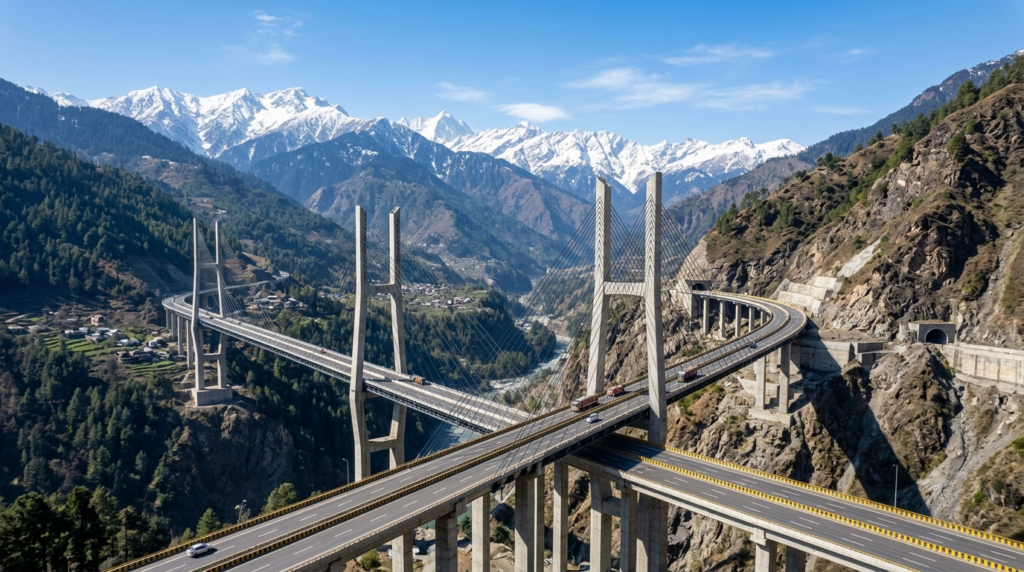
Supreme Court Validation and Legal Finality
A critical milestone in the timeline of the Article 370 Abrogation occurred in December 2023. A five-judge Constitution Bench of the Supreme Court of India, led by Chief Justice DY Chandrachud, unanimously upheld the constitutional validity of the abrogation.
The apex court clarified that Article 370 was a temporary, transitional provision and that the President of India held the rightful authority to revoke it. This verdict provided the final legal seal, shifting the national focus entirely from constitutional debates toward on-ground economic execution, grassroots democratic elections, and regional stability.
Finding Everlasting Peace Beyond Political and Territorial Divides
To find everlasting peace beyond political and territorial divides, one must first understand the fundamental reality of our existence: this world is not our true home.
The borders that divide nations, the politics that breed hatred, and the religions that separate humanity are all creations of Kaal (Brahm), the ruler of these twenty-one perishable universes. His ultimate motive is to keep souls entangled in a constant web of karma, conflict, and the endless cycle of birth and death. As long as we identify ourselves by our nationality, our political affiliations, or our man-made religions, true peace will remain an unattainable mirage.
(Our race is living being, Mankind is our religion.
Hindu, Muslim, Sikh, Christian, there is no separate religion.)
Today, Sant Rampal Ji Maharaj is providing that exact authentic spiritual knowledge, uniting humanity far beyond geographical and political divisions.
To explore these profound spiritual truths and find the ultimate purpose of human life must click this link to take initiation by Sant Rampal Ji Maharaj
FAQs on Article 370 abrogation
- When exactly did the Article 370 abrogation take place? The Government of India officially revoked the special status of Jammu and Kashmir under Article 370 on August 5, 2019, through a Presidential Order backed by parliamentary resolution.
- Did the Supreme Court of India uphold the abrogation? Yes, in December 2023, a five-judge Constitution Bench of the Supreme Court unanimously upheld the abrogation, ruling that Article 370 was merely a temporary provision in the Constitution.
- How was the state geographically restructured after the revocation? Following the abrogation, the erstwhile state was bifurcated into two separate Union Territories: Jammu & Kashmir (which retains a legislative assembly) and Ladakh (which does not have a legislative assembly).
- Can non-residents now purchase property in Jammu and Kashmir? Yes, with the removal of Article 35A, which occurred concurrently with the abrogation, Indian citizens from other states are now legally permitted to purchase land and property in the region, subject to specific UT regulations.
- Are central laws like the Right to Information (RTI) now applicable in the region? Yes. Following the complete constitutional integration, hundreds of central laws, including the Right to Education and the Right to Information Act, are now fully applicable in both Jammu & Kashmir and Ladakh.
Related Stories



Discussion (0)