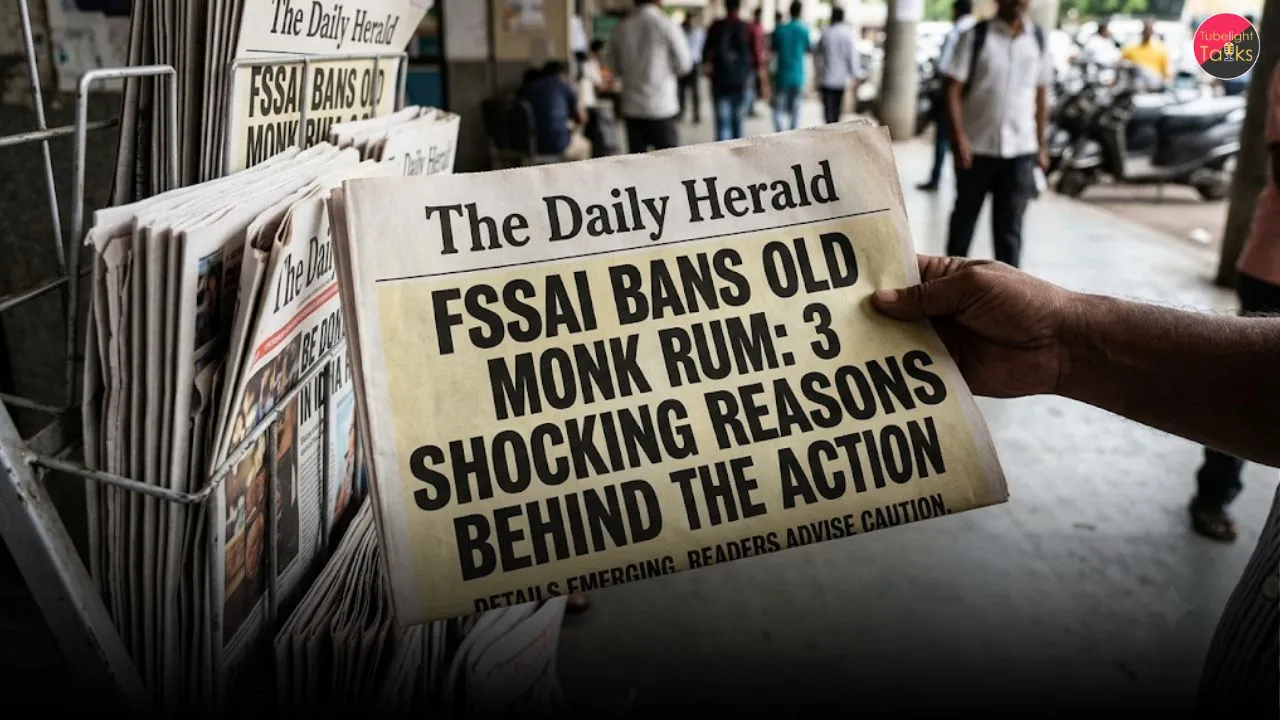
Why FSSAI Bans Old Monk Rum in 2026 – Nationwide Crackdown
When news broke that FSSAI bans Old Monk rum, millions of consumers across India were left completely shocked. The Food Safety and Standards Authority of India took strict action against specific variants of this legendary dark rum alongside several prominent liquor brands. Lab tests revealed that manufacturers were using external synthetic aroma chemicals instead of authentic aging processes.
The regulatory body pointed out that adding artificial rum flavor to rum violates basic food safety rules. When distilled spirits are made correctly, their organic compounds react over time inside wooden casks to form complex natural flavors. Masking raw, unaged alcohol with laboratory-synthesized flavorings misleads consumers about what they are actually drinking.
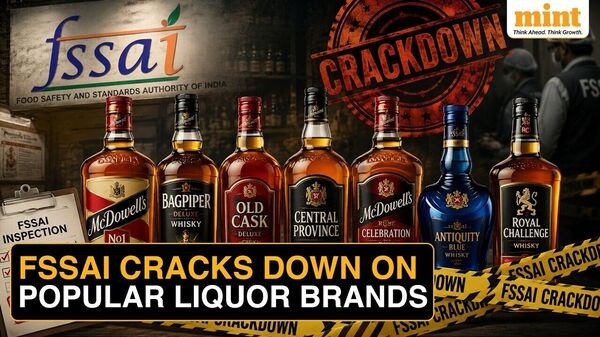
Source : Mint
The Chemistry of Rum: Why Neutral Alcohol Is Not Aged Spirits
From a basic chemistry perspective, pure rum is produced by fermenting sugarcane juice or sugarcane molasses. During fermentation, yeast breaks down sucrose (C12H22O11 ) into ethyl alcohol (C2H5OH) and carbon dioxide (CO2). The mixture is then distilled to separate volatile aromatic compounds, giving traditional rum its rich vanilla and caramel notes.
In stark contrast, neutral alcohol is a highly rectified ethyl alcohol distilled to 95% or higher purity. It retains almost zero chemical congeners, aroma, or characteristic flavor of its original plant source. Neutral alcohol is cheap to produce, but it lacks the chemical transformation that happens when spirit sits inside oak barrels for years.
Also Read: Delhi High Court Stays FSSAI Ban on Sugary ORSL Drinks, Allows ₹180 Crore Stock Sale
Instead of letting oak barrels slowly create natural ester compounds, certain manufacturers took neutral alcohol and mixed in synthetic “rum flavor” molecules. FSSAI stated clearly that no international standard allows adding artificial rum flavor to rum itself. Synthetic additives alter the molecular composition of the spirit, rendering the product substandard under current regulations.
Complete List of Banned Alcohol Variants and Manufacturers
The regulatory crackdown did not target a single brand in isolation. Multiple popular whiskies and rums failed analytical laboratory evaluations due to illegal flavouring additions and deceptive bottle labels.
| Brand Name | Affected Variant | Manufacturer / Distiller | Reason for Regulatory Action |
| Old Monk | The Legend, Gold Reserve, XXX Matured Rum | Mohan Rocky Springwater (Khopoli Unit) | External artificial flavours; false 7-year age claim |
| McDowell’s | No. 1 Rum, Celebration Rum | United Spirits (Baramati & MP Facilities) | Substandard rating due to nature-identical flavours |
| Bagpiper | Deluxe Whisky | INBREW Beverages (Madhya Pradesh) | Artificial flavouring added to neutral spirit |
| Old Cask | Deluxe XXX Rum | INBREW Beverages (Madhya Pradesh) | Non-compliant flavouring substances detected |
| Royal Challenge | Deluxe Whisky | United Spirits (Madhya Pradesh Facility) | Synthetic whisky flavouring added to neutral alcohol |
| Antiquity Blue | Premium Whisky | United Spirits (Madhya Pradesh Facility) | Substandard composition masking natural flavor |
Official public release statement by FSSAI regarding enforcement actions against substandard alcoholic beverage manufacturers.
Deceptive Labeling Exposed: The 7-Year Blend Fallacy
One of the most concerning findings in the lab reports involved misleading age claims printed on bottle labels. For example, the popular Old Monk XXX Rum variant prominently claimed to be “7 years blended”. However, chemical composition analysis showed that aged rum spirit made up less than 5% of the total volume.
The remaining 95% of the liquid consisted of unaged neutral alcohol mixed with artificial flavor additives. Under the Food Safety and Standards (Alcoholic Beverages) Regulations, 2018, any age statement printed on a bottle must strictly reflect the age of the youngest spirit used in that blend. Selling unaged neutral spirit under the guise of vintage aged rum is a direct breach of consumer trust.
How FSSAI Bans Old Monk Rum Due to Chemical Labeling Violations
When the government announced how FSSAI bans Old Monk rum , it clarified that entire product lines are not permanently erased from existence if companies comply with food safety laws. Instead, the regulator ordered an immediate halt on selling these specific substandard batches.
Manufacturers are legally required to state the exact identity of their chemical products. If a distillery chooses to mix neutral ethanol with artificial flavoring compounds, it cannot legally label the final mixture as pure “Rum” or “Whisky”. It must prominently print “Flavoured Spirit” or “Premix Spirit” on the front display panel so buyers know exactly what compounds they are ingesting.
Regulatory Action and Market Impact on Distilleries
The Ministry of Health and Family Welfare alongside FSSAI has issued clear guidelines for existing stock and future manufacturing. Distillers holding existing inventory have been granted conditional permission to clear stock only after sticking corrected labels on the front packaging. These labels must clearly disclose the presence of added flavorings and neutral spirits.
- Immediate Sales Ban: Halting sales of non-compliant batches across retail outlets and bars.
- Strict Labeling Overhaul: Mandating clear front-of-pack declarations such as “Rum-Flavoured Spirit”.
- Zero Artificial Flavors in Standard Spirits: Complete prohibition on adding external rum or whisky flavors to standard products during future production runs.
- Legal Battles: Major corporate liquor manufacturers have approached high courts to challenge these regulatory interpretations.
Beyond Chemical Illusions: Seeking True Purity and Liberation Through Divine Knowledge
The recent news that authorities took action because manufacturers added artificial chemical flavorings to cheap neutral alcohol exposes a deeper reality about human society. Commercial producers frequently use synthetic additives, ethanol blends, and deceptive packaging to trick consumers into buying low-quality products. In a similar way, human beings often seek happiness in temporary worldly pleasures like alcohol, oblivious to the fact that toxic chemical substances destroy physical health, damage liver cells, ruin mental clarity, and shatter peaceful family life.
Alcohol and chemical intoxicants offer nothing more than a fleeting illusion of joy while secretly binding human souls to suffering, disease, and spiritual degradation. True satisfaction, eternal peace, and freedom from toxic addictions cannot be found inside a glass bottle or through artificial material fixes. Real peace is attained only when a person turns toward genuine spiritual wisdom and understands the true purpose of human life.
Spiritual Leader Sant Rampal Ji Maharaj imparts supreme spiritual knowledge (Tatvagyan) based on sacred scriptures. His teachings show humanity how to break free from destructive habits, chemical dependence, and worldly deception. Millions of people across the world have permanently abandoned alcohol, drugs, and dishonest living after coming into the sanctuary of Sant Rampal Ji Maharaj. By practicing authentic spiritual devotion, one gains everlasting health, mental tranquility, and ultimate salvation.
To learn the true path of life and overcome harmful physical and mental addictions, watch the spiritual discourses available on the YouTube Channel of Sant Rampal Ji Maharaj .
FAQs on FSSAI Bans Old Monk Rum
Q1. Has FSSAI completely banned all Old Monk rum in India?
No, FSSAI has not banned the entire Old Monk brand across India. The ban applies specifically to three variants—The Legend, Gold Reserve, and XXX Matured Rum—manufactured at specific facilities that violated flavoring and labeling rules.
Q2. Why did FSSAI object to artificial flavors in Old Monk rum?
FSSAI stated that adding synthetic rum flavor to neutral alcohol to mimic natural barrel aging is a deceptive practice. Standard rum must derive its characteristic aroma and taste naturally from molasses fermentation and wooden cask maturation.
Q3. Which other major liquor brands were included in the FSSAI action?
Apart from Old Monk, variants of McDowell’s No. 1 Rum, Bagpiper Deluxe Whisky, Royal Challenge Whisky, Antiquity Blue Whisky, and Old Cask Deluxe XXX Rum faced regulatory action for similar violations.
Q4. What is the issue with Old Monk’s “7 years blended” age claim?
Laboratory testing revealed that matured rum spirit accounted for less than 5% of the blend, while unaged neutral spirit made up over 95%. Food safety guidelines state that age claims must reflect the youngest spirit present in the beverage.
Q5. Can distilleries continue to sell their existing stock of these drinks?
Distilleries have been given conditional permission to clear existing inventory only if they apply corrected labels on the front of packs. The labels must clearly declare the product as a “flavoured spirit” rather than standard rum or whisky.
Related Stories









Discussion (0)