India Bans New Renewable Projects Near Borders: Complete 2026 Guidelines
India Bans New Renewable Projects Near Borders under sweeping national security guidelines issued by the Ministry of Home Affairs (MHA). The Internal Security wing of the MHA notified a strict framework prohibiting any new solar, wind, or hybrid energy infrastructure within 1 kilometer of the nation’s sensitive frontiers. This major policy shift addresses growing intelligence concerns surrounding espionage, illegal foreign surveillance, and physical security threats to critical national energy grids situated near sensitive international boundary lines.
The decisive policy directive comes after a sharp surge in commercial applications submitted to the Ministry of New and Renewable Energy (MNRE) for constructing clean energy parks in border districts. Under the revised protocol, land stretching from 1 km to 50 km from the International Border (IB), Line of Control (LoC), and Line of Actual Control (LAC) is now designated as a sensitive area requiring mandatory central security clearances.
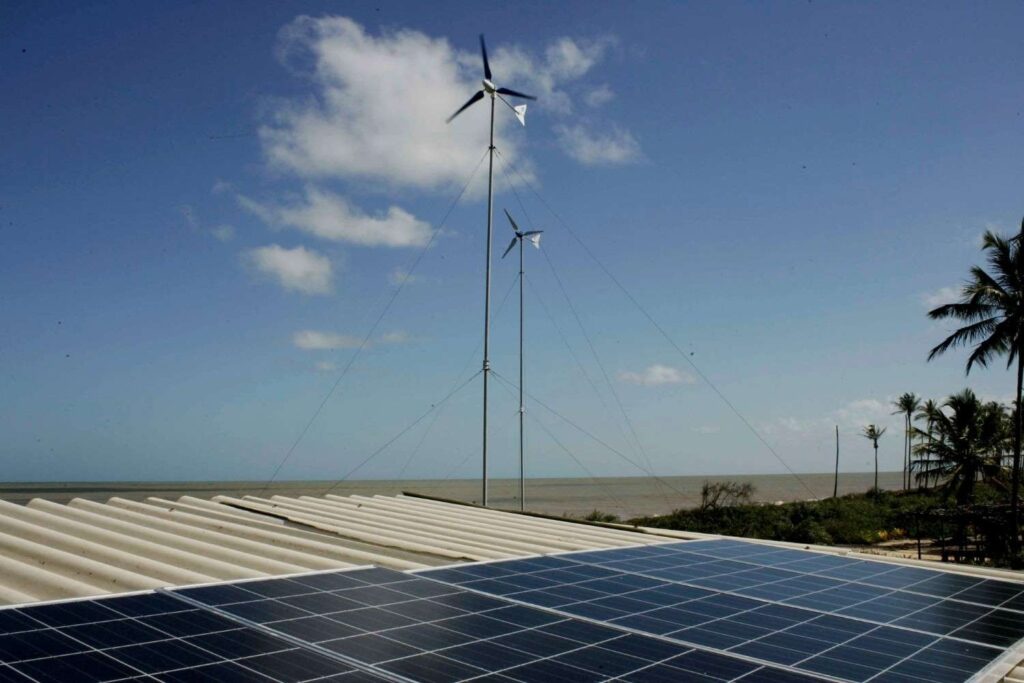
Why India Bans New Renewable Projects Near Borders
To prevent adversarial exploitation of strategic land, the central government divided the frontier region into multi-tiered operational security buffers. The primary tier creates a complete 1 km restricted zone parallel to the border where no renewable project construction or commercial development is permitted under any circumstances.
The secondary tier extends from 1 km out to 50 km, establishing a rigorous clearance process overseen jointly by security agencies, the Ministry of Home Affairs, and the Ministry of Defence. Furthermore, any solar, wind, or hybrid facility planned within 20 km of the International Border must obtain an explicit No Objection Certificate (NOC) directly from the Ministry of Defence before breaking ground.
Security Buffers and Clearance Framework
| Security Tier | Zone Distance from Frontier | Mandatory Clearance Requirement | Regulatory Authority |
| Restricted Zone | Within 1 km of IB, LoC, LAC | Total Ban (No project activity allowed) | Ministry of Home Affairs (MHA) |
| Defense Sensitivity Zone | 1 km to 20 km from IB | Security Clearance + Defense NOC | MHA & Ministry of Defence (MoD) |
| Sensitive Buffer Zone | 1 km to 50 km from IB, LoC, LAC | Case-by-case Security Clearance | Ministry of Home Affairs (MHA) |
| Foreign Investment Zone | Applicable to all sensitive areas | Separate Foreign Direct Investment approval | DPIIT & Ministry of Commerce |
India Bans New Renewable Projects Near Borders: Key MHA Directives
The new Standard Operating Procedure (SOP) radically alters how private developers acquire land and execute clean energy projects in border states. Commercial applicants can no longer approach security agencies or state governments independently to seek approvals. All project proposals must be submitted exclusively through the Ministry of New and Renewable Energy (MNRE), which will route the exact geographic coordinates (latitude and longitude) to defense authorities.
The official guidelines stipulate that land allocation must be structured so that project constructions do not extend over long distances parallel to international boundary lines. This measure ensures that border patrol forces maintain unobstructed sightlines and operational mobility along strategic corridors. Existing operational projects that received MHA or MoD clearance prior to the notification will not be required to reapply, though they remain subject to updated security audits.
As key Home Ministry directives clarify:
NO NEW solar, wind, or hybrid renewable energy projects will be allowed within 1 km of the International Border, LoC, or LAC. Areas up to 50 km have been classified as sensitive, requiring mandatory security clearance from the Ministry of Home Affairs.
Also Read: India’s Renewable Energy Mission 2030: Complete Guide to New Solar & Wind Targets
Restricted States, Union Territories, and Strategic Perimeters
The comprehensive security guidelines cover key northern and western frontier territories where cross-border tensions and espionage risks remain highly elevated. State governments across these zones must enforce strict compliance with central directives before issuing preliminary land allotments.
- Western Sector: Covers critical desert and marshland border belts across Rajasthan and Gujarat.
- Northern Sector: Applies across Punjab, Himachal Pradesh, Uttarakhand, and sensitive Himalayan stretches in Ladakh.
- Line of Control & LAC: Imposes immediate restrictions across Jammu and Kashmir as well as border belts in Arunachal Pradesh.
Strict Staffing Rules and Foreign Investment Oversight
Beyond physical geographical restrictions, the MHA framework introduces stringent personnel protocols aimed at curbing foreign infiltration and data harvesting. Project developers are explicitly barred from engaging engineers, technical staff, employees, or construction labourers from land-border sharing countries—specifically targeting Pakistan, China, and Bangladesh—without prior written authorization from the central government.
Furthermore, developers cannot transfer project land or sell corporate equity to foreign companies without obtaining formal MHA security clearances. Where foreign investment is involved, project sponsors must lodge a separate submission with the Department for Promotion of Industry and Internal Trade (DPIIT) under official Foreign Direct Investment (FDI) regulations.
Also Read: Cooperative Federalism Milestone: Four States Resolve 50-Year Narmada Project Dispute
Mandatory Security Upgrades and Anti-Drone Infrastructure
To ensure long-term site integrity, project proponents are legally required to fund and integrate comprehensive physical and electronic security systems. Clean energy facilities situated within sensitive zones must install advanced anti-drone equipment and counter-surveillance technologies:
- Anti-Drone Systems: Comprehensive counter-UAV technology must be deployed, with operational control managed directly by the Central Industrial Security Force (CISF) or state police forces.
- Dedicated Police Posts: Projects must feature onsite security outposts attached to local law enforcement to continuously monitor personnel and ongoing construction.
- Foreign Visitor Tracking: Strict logbooks and mandatory reporting frameworks are established to monitor all foreign nationals entering project zones.
The full financial burden for installing and maintaining these state-of-the-art security installations rests entirely on the project developer.
Navigating Geopolitical Vulnerabilities in Pursuit of True Stability
The enactment of stringent security protocols along national frontiers highlights humanity’s perpetual struggle against insecurity, conflict, and geopolitical vulnerability. Nations invest immense resources, construct physical barriers, and draft rigid laws to protect physical territories from external threats and unexpected disruption. Yet, despite advanced technology and military vigilance, earthly security remains inherently fragile, leaving human societies in a state of continuous apprehension, fear, and worldly friction.
According to the profound spiritual wisdom of Sant Rampal Ji Maharaj, material defenses and territorial boundaries can only offer temporary, superficial protection in a perishable world. Real, everlasting security and absolute safety cannot be engineered through human politics or physical fortresses. True peace is attained solely through genuine spiritual knowledge (Tatvagyana) and pure devotion (SatBhakti) directed toward the Supreme Almighty, Supreme Father KavirDev (Kabir Sahib). By seeking refuge in authentic spiritual teachings and embracing true worship, human souls transcend the anxieties of earthly strife and reach the eternal, sorrow-free realm of Satlok.
To explore the path of true peace and spiritual liberation for all humanity, must the holy book Way of living. To get this book free of cost must click this link and make your life easier and finally way to Satlok
Frequently Asked Questions (FAQs)
1. Why India Bans New Renewable Projects Near Borders under the new guidelines?
The central government imposed the ban due to national security concerns regarding potential cross-border espionage, foreign interference, and physical threats to critical power infrastructure situated near sensitive frontier areas.
2. What is the exact distance restriction when India Bans New Renewable Projects Near Borders?
The Ministry of Home Affairs created a blanket ban prohibiting any new solar, wind, or hybrid project within 1 kilometer of the International Border (IB), Line of Control (LoC), and Line of Actual Control (LAC).
3. What permissions are required for projects located between 1 km and 50 km from borders?
Projects in the 1 km to 50 km sensitive zone require national security clearance from the Ministry of Home Affairs, while projects within 20 km of the International Border additionally require a No Objection Certificate from the Ministry of Defence.
4. Are foreign workers permitted on renewable energy projects near border zones?
Engineers, technical staff, employees, and labourers from land-border sharing countries such as Pakistan, China, and Bangladesh are strictly barred from working on these projects without prior permission from the central government.
5. Who covers the cost of anti-drone systems and security infrastructure at these project sites?
The complete cost of installing and maintaining mandatory security equipment, including anti-drone systems operated by the CISF or state police, must be borne entirely by the project developer.
Related Stories









Discussion (0)