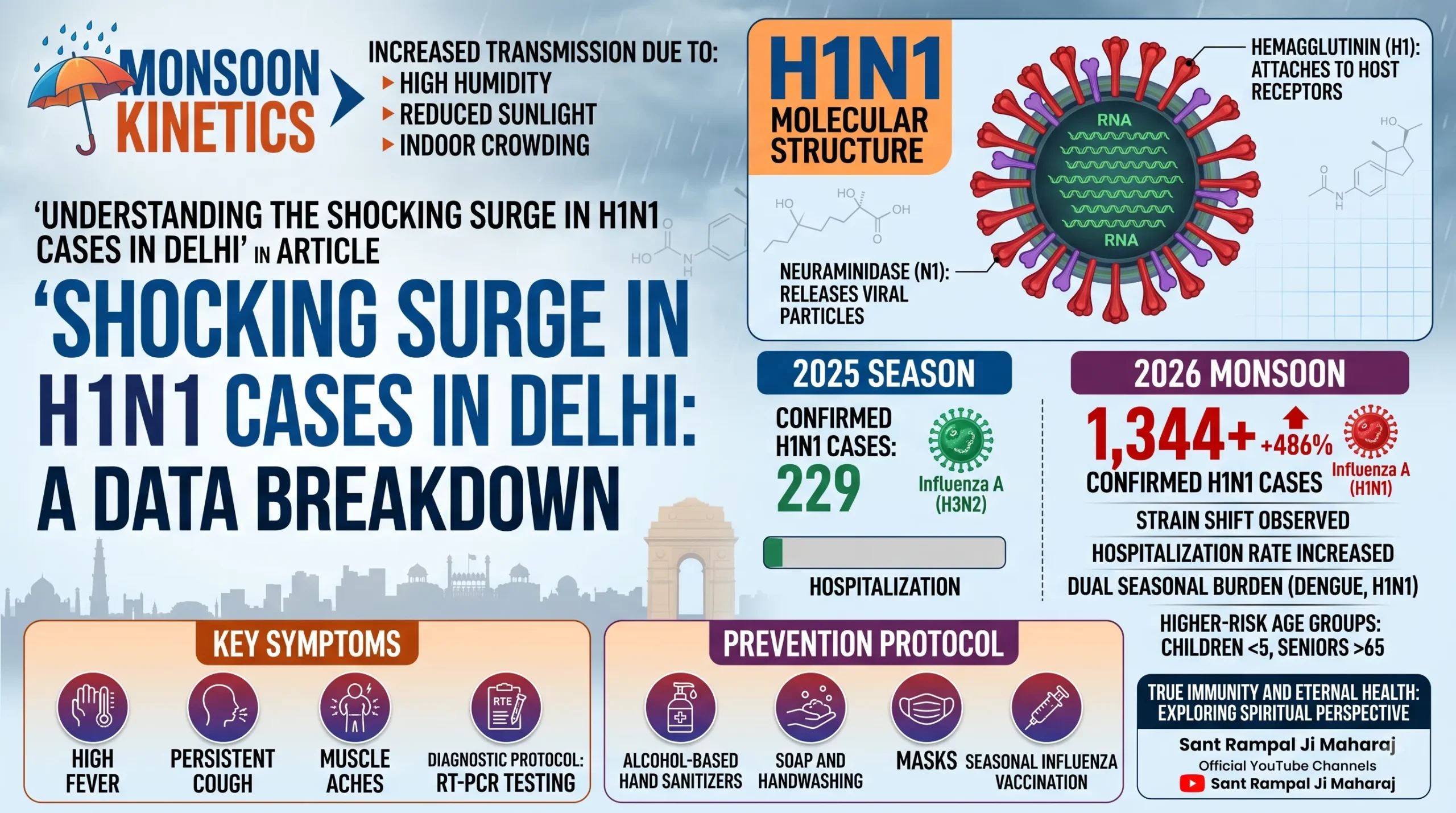
Understanding the Shocking Surge in H1N1 Cases in Delhi
The sharp rise in H1N1 cases in Delhi has sparked major health alerts across the National Capital Region (NCR), with more than 1,340 confirmed infections reported during the monsoon season.
From a chemistry perspective, viruses can be understood as biological structures composed primarily of proteins and nucleic acids. Their transmission is influenced by environmental conditions, respiratory droplets, aerosols, and human contact.
Health officials and hospitals across Delhi-NCR have reported a substantial increase in H1N1 infections compared with the previous year. Patients have commonly presented with symptoms such as high fever, persistent cough, and severe muscle aches.
Data Breakdown: Tracking H1N1 Cases in Delhi
The reported numbers show a significant increase in influenza cases during the 2026 monsoon season.
| Metric | 2025 Season | 2026 Monsoon | Change |
| Total confirmed H1N1 cases | 229 | 1,344+ | +486% |
| Dominant flu strain | Influenza A (H3N2) | Influenza A (H1N1) | Strain shift observed |
| Hospitalization rate | ~0.5–1.0% | ~1.0–2.0% | Moderate increase |
| Other tracked diseases | Dengue, seasonal cold | Dengue, H1N1 | Dual seasonal burden |
| Higher-risk age groups | Adults >60 | Children <5, seniors >65 | Increased vulnerability |
Government health facilities have reportedly been supplied with antiviral medicines, including Oseltamivir. While many mild infections may resolve with supportive care, people in high-risk groups require closer medical attention.
Molecular Structure of Swine Flu: Hemagglutinin and Neuraminidase
From a chemical perspective, Influenza A H1N1 is an enveloped RNA virus containing important surface glycoproteins.
The two major surface proteins are:
1. Hemagglutinin (H1)
Hemagglutinin helps the virus attach to receptors containing sialic acid on respiratory epithelial cells. This attachment is an important first step in viral entry into host cells.
2. Neuraminidase (N1)
Neuraminidase is an enzyme involved in the release of newly formed viral particles from infected cells. It cleaves bonds involving sialic acid, allowing new virus particles to spread to neighboring cells.
Key takeaway: The H and N designations in H1N1 refer to these two major viral surface proteins—Hemagglutinin (H1) and Neuraminidase (N1).
Monsoon Kinetics: Why H1N1 Cases in Delhi Spike in Rainy Weather
The increase in H1N1 cases in Delhi during the monsoon can be discussed in terms of environmental conditions and respiratory transmission.
High Humidity and Aerosols
Humidity can influence the behavior and persistence of respiratory droplets and aerosols, potentially affecting how respiratory viruses spread in indoor and outdoor environments.
Also Read: Massive 2026 Breakthroughs: How AI in Healthcare is Saving Lives
Reduced Sunlight
Cloudy weather reduces exposure to sunlight, including ultraviolet radiation that can damage viral genetic material under suitable conditions.
Increased Indoor Crowding
Rain often causes people to spend more time indoors. Poor ventilation and close proximity between individuals can increase opportunities for respiratory-virus transmission.
Together, these environmental and behavioral factors can contribute to increased transmission during seasonal outbreaks.
Key Symptoms and Diagnostic Protocols
H1N1 infection can produce symptoms similar to other influenza infections, although severity varies between individuals.
Common Symptoms
- High fever: Often developing relatively suddenly
- Persistent cough and sore throat: Common respiratory symptoms
- Muscle aches: Generalized myalgia can occur during influenza infection
- Gastrointestinal symptoms: Nausea, vomiting, or diarrhea may occur, particularly in children
How Is H1N1 Diagnosed?
Laboratories can use Reverse Transcription Polymerase Chain Reaction (RT-PCR) testing to detect influenza viral RNA in respiratory specimens.
Prevention Protocol: Disinfectant Chemistry and Hygiene Practices
Reducing the spread of H1N1 cases in Delhi involves basic infection-control measures.
1. Alcohol-Based Hand Sanitizers
Alcohol-based hand sanitizers can inactivate enveloped viruses when used at an appropriate concentration and according to product instructions.
2. Soap and Handwashing
Soap helps remove microorganisms and disrupt lipid-containing viral envelopes. Washing hands thoroughly with running water physically removes contaminants from the skin.
3. Masks
Appropriately fitted masks can reduce exposure to respiratory droplets and aerosols, particularly in crowded or poorly ventilated settings.
4. Seasonal Influenza Vaccination
Annual influenza vaccination is an important preventive strategy and can reduce the risk of influenza infection and severe disease.
Important: Follow current recommendations from qualified healthcare professionals and public-health authorities regarding vaccination, masks, testing, and treatment.
Beyond Biological Vulnerability: Discovering True Immunity and Eternal Health
The study of chemistry reminds us that the human body is a complex biological system composed of numerous chemical components. Despite advances in medicines, vaccines, and disinfectants, humans remain vulnerable to infection, aging, and physical disease.
The article’s spiritual perspective presents these limitations as a reason to explore questions beyond physical health.
According to the teachings of Sant Rampal Ji Maharaj, the soul is eternal while the physical body is temporary. His teachings emphasize SatBhakti and devotion to Supreme God Kabir as the path toward spiritual peace and liberation.
Readers interested in this spiritual perspective can explore the teachings and discourses of Sant Rampal Ji Maharaj through his official youtube channels.
Frequently Asked Questions on H1N1 Cases
Q1. What is causing the increase in H1N1 cases in Delhi?
The article associates the increase with seasonal monsoon conditions, indoor crowding, humidity, and increased opportunities for person-to-person respiratory transmission.
Q2. How do doctors test for H1N1?
RT-PCR testing of respiratory specimens can be used to detect influenza viral genetic material and confirm infection.
Q3. Who is most vulnerable to severe H1N1 complications?
Higher-risk groups include young children, older adults, pregnant women, and people with certain underlying medical conditions.
Q4. Is H1N1 treatable?
Antiviral medicines such as Oseltamivir may be prescribed by doctors for influenza. Treatment decisions should be made by a qualified healthcare professional.
Antibiotics do not treat viral infections unless there is a separate bacterial infection requiring them.
Q5. How can people reduce their risk of H1N1 infection?
Recommended preventive measures include:
- Getting recommended seasonal influenza vaccination
- Washing hands regularly
- Using alcohol-based sanitizer when appropriate
- Improving ventilation
- Avoiding close contact with people who are sick
- Wearing an appropriate mask in crowded or high-risk settings
Related Stories










Discussion (0)