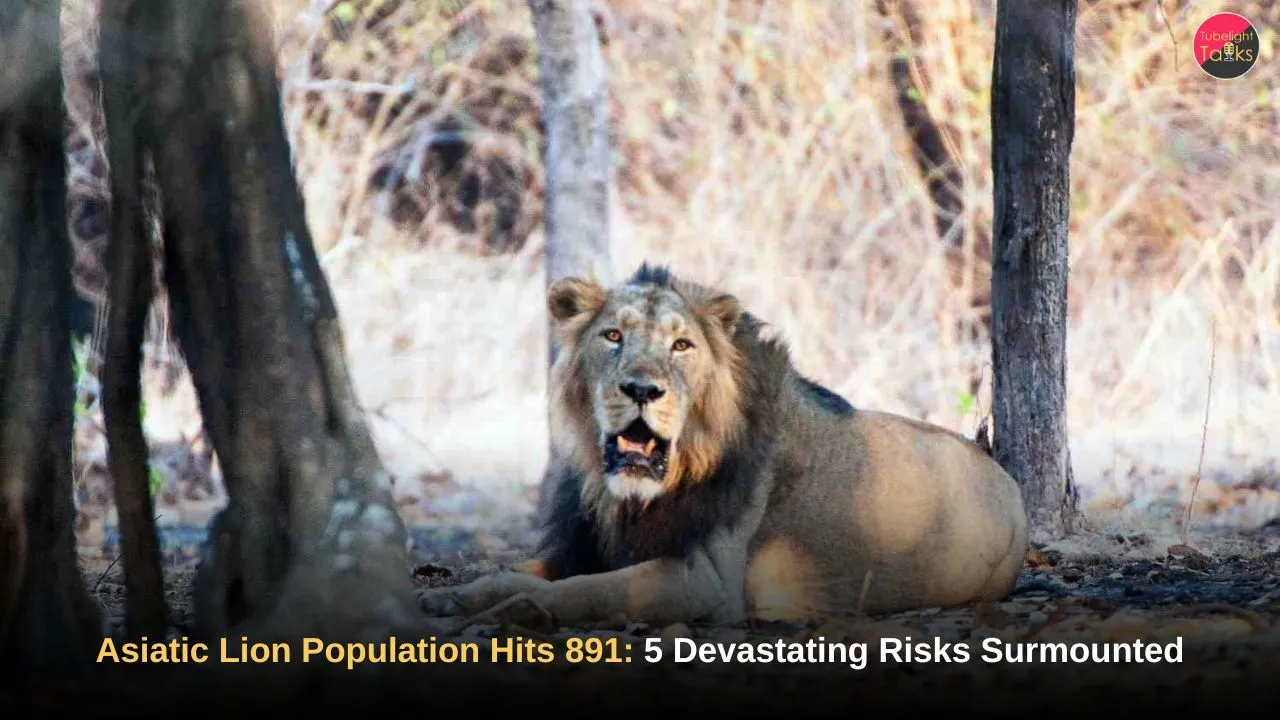
The Historic Comeback of the Asiatic Lion in Gujarat
The Asiatic lion (Panthera leo persica) has registered one of the most remarkable conservation turnarounds in modern wildlife history. Once pushed to the edge of extinction with barely a dozen surviving individuals at the turn of the 20th century, India’s pride has staged an extraordinary recovery in Gujarat’s Saurashtra region.
According to official survey figures, the population of the Asiatic lion grew to 891, marking a substantial 32.2% increase from the 674 lions recorded in 2020. Over the past decade, the total count has leaped by more than 70%, reflecting robust habitat protection, local community involvement, and technological tracking initiatives across western India.
Also Read: Global Tiger Day 2026: Statistics, Significance, and Conservation Efforts
The following data table breaks down the official population distribution:
| Demographic Category | Count recorded | Percentage of Total |
| Adult Females | 330 | 37.0% |
| Cubs | 225 | 25.3% |
| Adult Males | 196 | 22.0% |
| Sub-Adults | 140 | 15.7% |
| Total Asiatic Lion Population | 891 | 100.0% |
Understanding the Habitat Expansion Across Greater Gir
As the count of the Asiatic lion increases, the big cats are expanding beyond the core Gir National Park and Wildlife Sanctuary. Today, over half of the total population lives in satellite habitats spanning coastal belts, river corridors, and agricultural wastelands across Saurashtra.
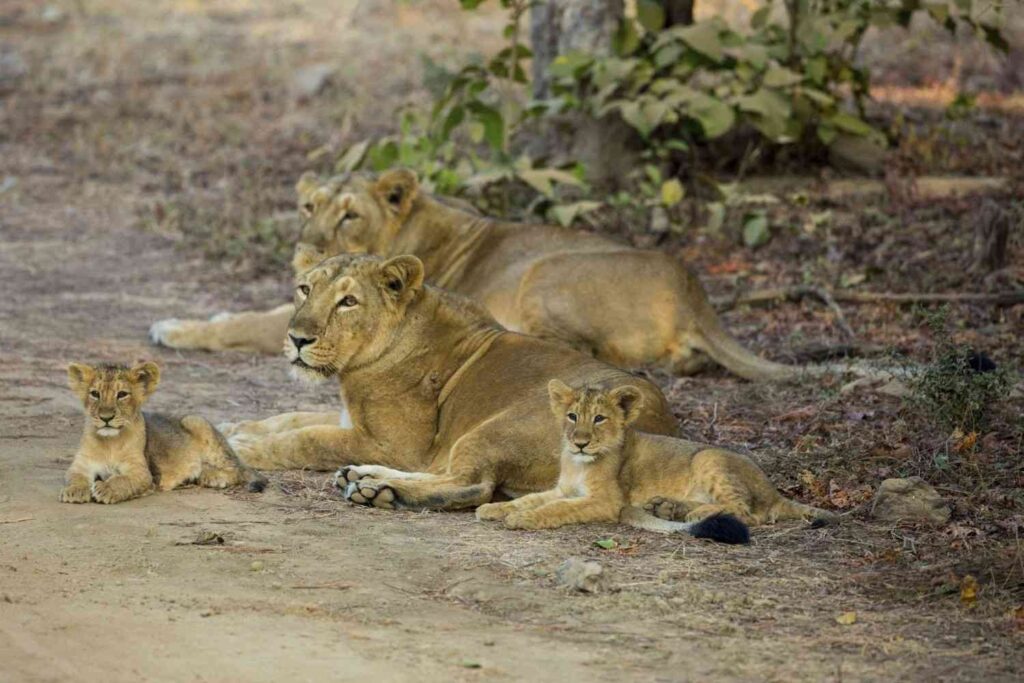
To secure additional natural grounds for dispersing prides, conservationists have developed the Barda Wildlife Sanctuary as a second home for the big cats. Safe migration corridors ensure genetic exchange between sub-populations while preventing isolated pockets of inbreeding.
A tweet shared by Prime Minister Narendra Modi
A remarkable comeback! India’s Asiatic lion population is thriving, with its habitat and range expanding.
The Government’s unwavering commitment to conservation, backed by strong community participation, is an inspiring example of protecting our wildlife and preserving the species for generations to come.
Read this informative piece by Union Minister Shri @byadavbjp.
Project Lion and Future Conservation for the Asiatic Lion
Launched on August 15, 2020, Project Lion has played a transformative role in driving modern ecological management. The initiative integrates high-tech surveillance with veterinary care to protect the Asiatic lion population against epidemic threats such as Canine Distemper Virus (CDV).
Advanced Technological Interventions
A dedicated Hi-Tech Monitoring Unit established at Sasan-Gir uses real-time radio telemetry and automated tracking to monitor pride movements 24/7. Satellite telemetry studies help map landscape utilization, identifying critical corridors before infrastructure developments disrupt them.
Prey Base and Habitat Improvement
Forest management programs focus on grassland restoration and prey base augmentation to sustain wild carnivore diets naturally. Elevated platforms (machans) and water hole management reduce animal movements into human-dominated farmlands.
Managing Human-Wildlife Conflict and Ecological Balance
With lions roaming across nearly 35,000 square kilometres, human-lion co-existence remains a central pillar of Gujarat’s conservation model. Local communities, traditionally known as Maldharis, have historically maintained a unique cultural bond with the big cats.
To minimize conflict, the state government engages local youth as Vanya Prani Mitras (Friends of Wildlife) and trackers. These community representatives warn villagers of predator movement, assist in rescue operations, and ensure rapid compensation for livestock losses.
Finding True Balance in Creation Beyond Physical Conservation Efforts
While humanity celebrates the rebound of magnificent species like the Asiatic lion, this ecological success story highlights a deeper reflection on our responsibility toward the natural world. Despite scientific advancements, global ecosystems face constant threats from habitat loss, climate unpredictability, and severe human conflict.
True balance in creation cannot be achieved through physical conservation efforts alone. Physical resources, material efforts, and mortal policies offer only temporary relief in this perishable world.
https://youtube.com/@satlokashramnewschannel?si=tlARoqK_pKHVi9q7
Universal harmony blossoms when humanity recognizes that all living beings share one spiritual identity: “Jeev hamari jaati hai,
Manav dharam hamara”.
By seeking refuge in a True Spiritual Master Tatvadarshi Sant
Gita Chapter 4, Shlok 34:
तद्विद्धि प्रणिपातेन परिप्रश्नेन सेवया।
उपदेक्ष्यन्ति ते ज्ञानं ज्ञानिनस्तत्त्वदर्शिनः॥
Evidence: The Gita explicitly instructs seekers to find Tatvadarshi Saints, bow down to them in humility, serve them, and ask sincere questions to receive authentic, scripture-based spiritual enlightenment (Tatvgyan).
and practicing scripture-certified worship of Supreme God Kabir Sahib, souls are cleansed of toxic ego, greed, and harm. This true devotion restores eternal equilibrium within creation and guides us home to Satlok.
FAQs on Asiatic lion
1.What is the current population of the Asiatic lion in India?
According to the official 16th census estimation, the current population of the Asiatic lion in Gujarat stands at 891. This reflects a 32.2% increase from the 674 lions counted in the year 2020.
2.Where do Asiatic lions live in the wild?
The Asiatic lion is found exclusively in the wild in the Saurashtra region of Gujarat, India. Their habitat encompasses the Gir National Park and Wildlife Sanctuary, as well as satellite habitats across 11 surrounding districts covering roughly 35,000 square kilometres.
3.How does the Asiatic lion differ from the African lion?
The Asiatic lion (Panthera leo persica) is slightly smaller than its African counterpart and features a characteristic longitudinal fold of skin running along its belly. Additionally, adult male Asiatic lions generally have shorter, darker manes that leave their ears exposed.
4.What is Project Lion and when was it launched?
Project Lion is a dedicated conservation initiative launched by Prime Minister Narendra Modi on August 15, 2020. It focuses on long-term habitat management, disease control, advanced veterinary care, and radio-telemetry tracking to secure the big cat’s future.
5.Which new sanctuary is being developed as a second home for Asiatic lions?
Barda Wildlife Sanctuary in Gujarat has been systematically developed as a second home for the Asiatic lion. This initiative provides safe corridors for natural population dispersal and mitigates risks associated with housing the entire population in a single ecosystem.
Related Stories









Discussion (0)