Decoding the Bangladesh Energy Crisis: Root Causes, Economic Impact, and Future Roadmaps
The Bangladesh energy crisis has plunged one of South Asia’s fastest-growing economies into literal darkness, severely testing the nation’s resilience. Following escalating geopolitical tensions in the Middle East and a massive global disruption in energy supply chains, rural areas surrounding the capital city of Dhaka are now facing punishing power outages lasting up to 10 hours a day.
As citizens express extreme outrage over grid failures amid sweltering heat waves, the Tarique Rahman government is scrambling to implement emergency rationing. However, energy experts and top officials acknowledge that a quick fix is completely off the table. Finance Minister Amir Khosru Chowdhury recently admitted that fully recovering from this devastating gridlock could take up to two long years.
To understand why this nation of 178 million people is struggling to keep the lights on, we must analyze the interconnected domestic failures and international flashpoints driving the catastrophe.
The Geopolitical Spark: Middle East Tensions and LNG Disruptions
The global energy market has been exceptionally volatile since the escalation of the US-Israel and Iran conflicts. This geopolitical instability triggered a massive surge in global oil and gas prices. For a heavily import-reliant country, these global shockwaves laid the foundation for the current Bangladesh energy crisis.
Bangladesh imports roughly 90% of its oil requirements and about 30% of its natural gas from Middle Eastern partners. The situation worsened drastically when Qatar—which historically supplies nearly half of Bangladesh’s imported gas—halved its supply volumes citing Western geopolitical unrest and the ongoing Strait of Hormuz crisis.
The Excelerate Energy Terminal Fire
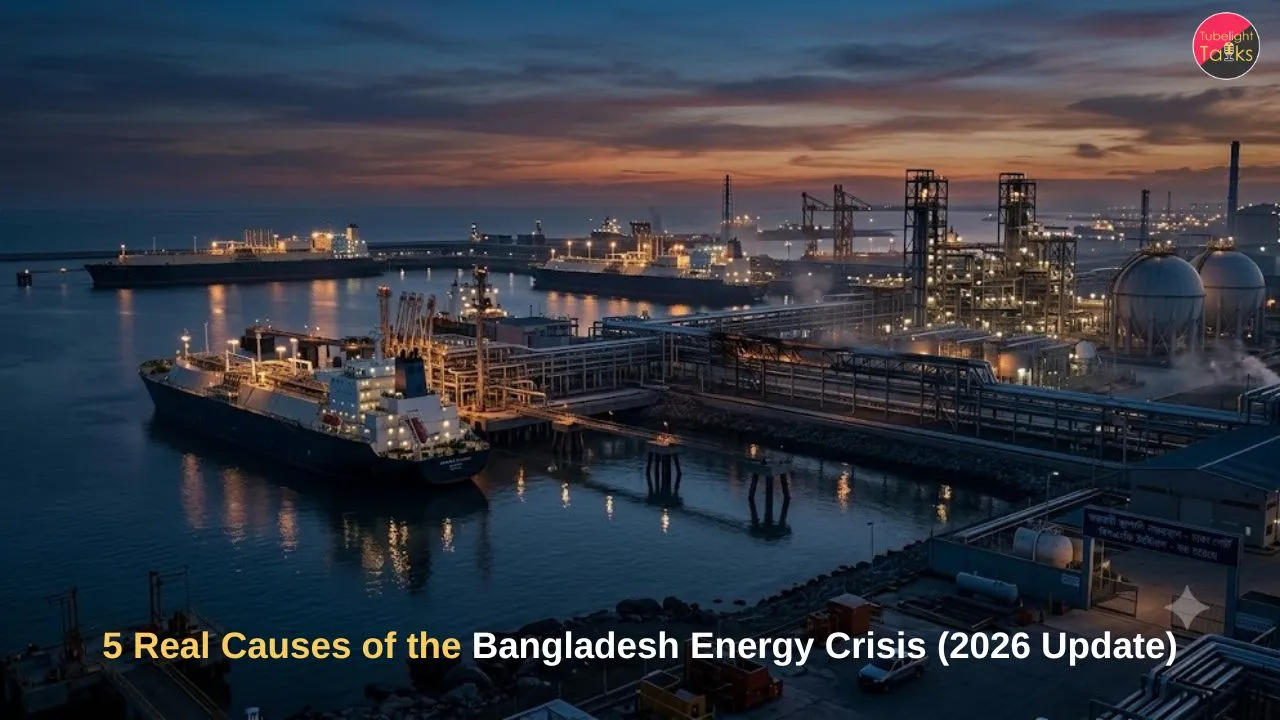
While global prices created immense financial strain, a domestic industrial accident triggered the immediate blackout sequence. On July 21, 2026, a massive fire broke out at the floating LNG terminal operated by the American firm Excelerate Energy.
This accident instantly crippled the domestic gas supply chain. Gas-powered electricity generation plants were forced to power down almost immediately. By mid-August, daily LNG production crashed to a mere 300 MMCFD against a towering national requirement of 3,800 MMCFD.
Also Read :Climate Change 2025: A Critical Turning Point for Global Environmental Action
Domestic Deficits: Failing Infrastructure and High Demand
The root causes of the Bangladesh energy crisis extend far beyond foreign wars and accidental fires. The crisis exposes a long-standing vulnerability in the nation’s domestic energy infrastructure. Despite having 29 natural gas fields, domestic yields have been shrinking rapidly over the past decade.
Between the fiscal years 2019-20 and 2025-26, domestic gas production crashed by 28%. Consequently, to feed the rapid industrial growth, the government aggressively increased its reliance on foreign energy. During this exact same period, expensive energy imports skyrocketed by an alarming 143%.
Data Overview: Bangladesh Energy Supply Chain Matrix
| Energy Metric / Resource | Pre-Crisis Benchmark | Current 2026 Status | Fluctuation / Impact |
| National LNG Requirement | 3,800 MMCFD | 3,800 MMCFD | Demand remains static |
| Current LNG Production | Varies | 300 MMCFD | Massive critical deficit |
| Domestic Gas Production | Baseline (2019) | August 2026 | Decreased by 28% |
| Gas Import Volume | Baseline (2019) | August 2026 | Increased by 143% |
| State Fertilizer Plants | 5 Fully Operational | 1 Operational | 4 plants completely shut |
Data accurately compiled from recent national energy audits and finance ministry statements.
Also Read: Diplomatic Milestone: Bangladesh Foreign Minister Begins Key New Delhi Visit
Economic Devastation: Textiles, Retail, and Food Security
The severe electricity deficit is sending catastrophic ripple effects across the most critical sectors of the Bangladeshi economy.
The Textile Sector Takes a Hit
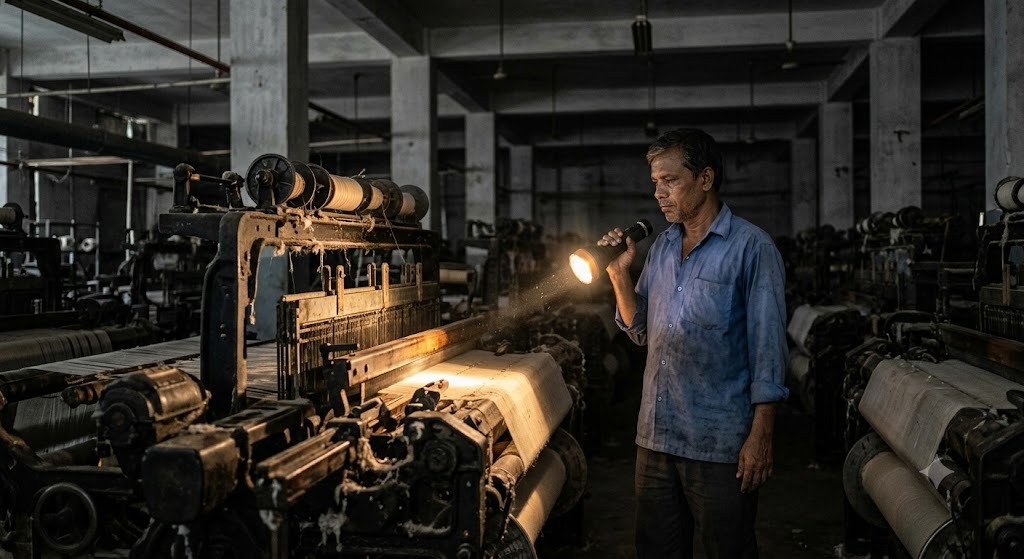
The readymade garments (RMG) industry forms the backbone of the nation’s export economy. The Bangladesh energy crisis has crippled production lines, leading to a sharp drop in output and a corresponding surge in operational costs. Factory owners are losing their competitive edge in the global market, risking mass order cancellations from Western retail giants.
Retail and Public Life Disrupted
To prevent total grid collapse, authorities have enacted draconian power-saving mandates. All shopping malls, commercial establishments, and retail markets are strictly ordered to shut down by 8:00 PM. The use of decorative lighting and electronic hoardings has been completely banned. Consequently, retail trade is suffering heavy financial losses.
The Threat to Agriculture and Food Security
Perhaps the most alarming consequence of the power deficit is its threat to national food security. To prioritize electricity for household and grid stability, the government completely shut down four of the five state-owned fertilizer factories.
This drastic measure triggered an immediate shortage of urea and essential agricultural fertilizers. Farmers are now bracing for heavily diminished crop yields in the upcoming harvest season, posing a direct threat to domestic food stability.
Government Countermeasures and International Aid
The Tarique Rahman administration has deployed several emergency protocols to navigate the public outrage and stabilize the grid.
- Educational Institutions Closed: Public and private university classes have been suspended or forced to close early to reduce campus power consumption.
- Fuel Rationing: To prevent chaos and long queues, strict daily fuel rationing has been implemented at petrol pumps across the country.
- Diplomatic Outreach: The government is aggressively holding diplomatic talks with Qatar to restore and possibly increase LNG supply lines.
- India’s Diesel Assistance: In a display of strong regional diplomacy, Bangladesh requested emergency diesel assistance from India. The Indian government has responded positively, initiating supply chains to help bridge the immediate fuel deficit.
VIDEO | Dhaka, Bangladesh: On the power crisis situation in Bangladesh, Centre for Energy Research, United International University Director and renewable energy expert Shahriar Ahmed Chowdhury says, “If we consider the surrounding countries like India, Pakistan, or Sri Lanka, even Bhutan and Nepal, though Bhutan and Nepal have hydropower plants, India, Pakistan and Sri Lanka have progressed a lot in terms of renewable energy, especially the available renewable energy sources, solar and wind. But in comparison to that, Bangladesh is lagging behind. I mean, we have around 6 per cent of our total generation coming from renewable energy…”
While international aid provides temporary relief, true recovery from the Bangladesh energy crisis requires structural overhauls. As experts note, the nation must pivot towards renewable energy sources and drastically reduce its overwhelming dependency on imported fossil fuels to protect its economic future. For more macro-economic data regarding global energy grids, readers can explore reports by the International Energy Agency (IEA).
Finding Eternal Light Amidst Worldly Darkness: A Spiritual Perspective
The escalating energy crisis, economic turmoil, and soaring inflation highlight a profound reality about human existence: worldly stability is incredibly fragile. Today, nations clash over finite resources like oil and gas, plunging millions into darkness, poverty, and anxiety. No matter how much infrastructure humanity builds, geopolitical chaos and natural disasters continuously remind us that this material world is devoid of permanent peace.
Every crisis we face—whether it is a struggle for electricity, financial collapse, or global warfare—stems from our deep entanglement in a temporary, illusionary world. True peace, security, and eternal light cannot be manufactured in power plants; they are attained only through spiritual awakening. Our soul, inherently divine, yearns for the eternal realm, Satlok, where there is no shortage, no suffering, and no darkness.
According to the profound spiritual teachings of Sant Rampal Ji Maharaj, recognizing the Supreme God, Kabir Ji, is the ultimate solution to the endless cycle of worldly distress. True worship, as guided by a completely enlightened Saint, breaks the chains of karma and grants us access to eternal salvation. When we align our lives with true spiritual devotion, the miseries of this transient world lose their grip on us.
To understand the true purpose of human life and find permanent liberation from worldly suffering, listen to the deeply factual and life-changing spiritual discourses of Sant Rampal Ji Maharaj on the spiritual YouTube Channel of Sant Rampal Ji Maharaj.
FAQs on Bangladesh Energy Crisis
1.What is the main cause of the Bangladesh energy crisis?
The crisis stems from a combination of global geopolitical tensions disrupting gas supplies, reduced LNG imports from Qatar, and a major fire at the Excelerate Energy LNG terminal on July 21, which drastically cut domestic power generation.
2.How bad are the power cuts in Bangladesh right now?
Rural areas around the capital city of Dhaka are experiencing severe power outages, often lasting up to 10 hours a day, causing widespread public anger amid extreme heat waves.
3.How is the crisis affecting the economy of Bangladesh?
The power deficit has crippled the nation’s critical textile industry, heavily reduced retail trade due to an 8:00 PM mandatory market shutdown, and forced four out of five government fertilizer factories to close, threatening food security.
4.How long will it take for Bangladesh to recover from the power shortage?
According to Finance Minister Amir Khosru Chowdhury, navigating the current economic and energy gridlock is complex, and full recovery could take up to two years.
5.Which countries are helping Bangladesh during this energy shortage?
The Bangladeshi government is actively negotiating with Qatar to restore gas supplies, and India has agreed to provide emergency diesel fuel to help mitigate the immediate crisis.
.
Related Stories




Discussion (0)