Indian Navy Encounters Severe Pakistan Ship Collision in Arabian Sea: MEA Summons Envoy
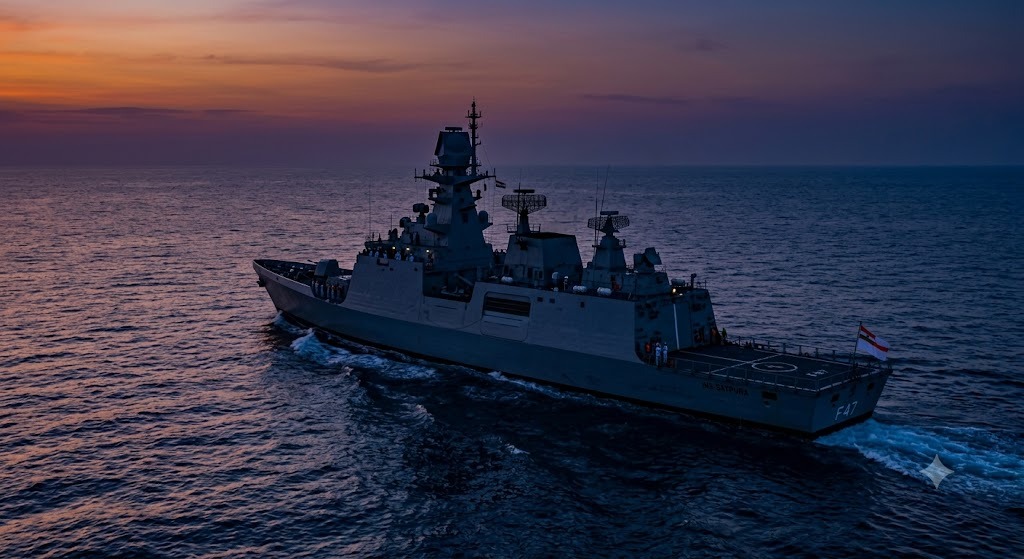
The Indian Navy has officially reported a highly concerning incident in international waters after a Pakistani vessel collided with an Indian naval unit in the Arabian Sea. Occurring on September 16, 2026, the collision has sparked immediate geopolitical tension between New Delhi and Islamabad. Authorities described the maneuvers by the Pakistani ship as highly unprofessional, escalating maritime security concerns in one of the world’s most critical strategic waterways.
As the Indian Navy immediately secured the damaged vessel, the diplomatic fallout reached the capital within hours. The Ministry of External Affairs (MEA) summoned Pakistan’s top envoy to lodge a strong protest against the aggressive posturing. This maritime clash highlights the fragile security dynamics operating beyond territorial waters and raises urgent questions regarding adherence to international maritime law.
Also read : https://tubelighttalks.com/indian-navy-escorts-lpg-tankers/
The Arabian Sea Incident: How the Indian Navy Vessel Was Struck
Tensions flared early Monday morning when an active Indian Navy unit, conducting routine surveillance operations in the Arabian Sea, encountered a Pakistani naval vessel. According to initial defense reports, the Pakistani ship altered its course abruptly, deliberately closing the distance between the two maritime assets. Despite standard radio warnings and visual signals deployed by the Indian crew to maintain a safe distance, the Pakistani vessel continued its hostile trajectory, ultimately causing a physical collision.
The Indian Navy maintains strict operational protocols governed by the United Nations Convention on the Law of the Sea (UNCLOS). Naval commanders on site executed evasive maneuvers, which prevented a catastrophic hull breach. However, the collision resulted in structural damage to the exterior framework of the Indian unit. No casualties have been reported among the Indian defense personnel, who demonstrated exceptional composure during the high-stress encounter.
Complete Timeline of the Maritime Collision
To understand the rapid escalation of events, defense analysts have reconstructed the timeline based on preliminary defense reports and official MEA briefings.
| Time (IST) | Event Description | Location Details | Action Taken |
| 06:15 AM | Indian Navy radar detects rapid approach of Pakistani vessel. | International Waters, Arabian Sea | Initial radio warnings broadcasted on VHF Channel 16. |
| 06:38 AM | Pakistani ship ignores warnings, breaches safe standoff distance. | Arabian Sea | Indian Navy unit initiates emergency evasive protocols. |
| 06:45 AM | Physical collision occurs between the two vessels. | Arabian Sea | Damage control teams activated on the Indian ship. |
| 08:30 AM | Naval Headquarters in New Delhi receives formal incident report. | New Delhi HQ | Strategic defense brief sent to the PMO and MEA. |
| 11:00 AM | MEA formally summons Islamabad’s top diplomatic envoy. | South Block, New Delhi | Demarche issued demanding accountability. |
Unprofessional Maneuvers in International Waters
Maritime experts emphasize that the open oceans rely heavily on navigational predictability and mutual respect among naval forces. The Indian Navy operates with a doctrine of deterrence and regional security, actively participating in anti-piracy and freedom-of-navigation missions. Deliberate collisions, known in naval terms as “shouldering” or aggressive blocking, violate international maritime conventions.
Defense analysts reviewing the radar trajectory data suggest the Pakistani vessel engaged in reckless brinkmanship. By ignoring internationally recognized distress and warning frequencies, the opposing crew bypassed standard Code for Unplanned Encounters at Sea (CUES) protocols. Leadership within the Indian Navy has condemned these actions, noting that such behavior endangers the lives of sailors and threatens the broader stability of global shipping lanes.
Diplomatic Uproar: MEA Summons Islamabad’s Top Envoy
The physical collision in the Arabian Sea triggered an immediate and severe diplomatic response. The Ministry of External Affairs (MEA) acted swiftly, summoning the highest-ranking Pakistani diplomat stationed in New Delhi. Through a formal demarche, the Government of India registered a strong protest against the hostile act.
Foreign policy experts view this immediate diplomatic escalation as a clear signal that India will not tolerate aggression against the Indian Navy. The MEA spokesperson addressed the media shortly after the meeting, characterizing the Pakistani vessel’s conduct as dangerous and unprofessional. The Indian government demanded an immediate, transparent investigation into the chain of command that authorized such hazardous maneuvers.
Strong Protest Lodged by New Delhi
During the closed-door summons, Indian officials presented preliminary radar data and communications logs recorded by the Indian Navy. These logs reportedly prove that the Indian crew issued multiple warnings that were blatantly ignored. The MEA categorically stated that the responsibility for avoiding such mid-sea crises lies heavily on vessel commanders adhering to international law.
The diplomatic note also warned Islamabad that any recurrence of such unprovoked hostility would yield severe strategic consequences. By formally establishing the unprovoked nature of the collision, India is solidifying its diplomatic stance ahead of potential discussions at international maritime forums.
Maritime Security and Geopolitical Repercussions
The Arabian Sea is a vital artery for global commerce, facilitating billions of dollars in daily trade, particularly energy resources moving from the Middle East to Asia. Any instability in this region naturally alerts global superpowers. The aggression faced by the Indian Navy forces defense strategists to re-evaluate regional naval deployments.
The Indian Navy has significantly expanded its footprint in the Arabian Sea over the last decade to counter piracy and secure vital sea lines of communication (SLOCs). A direct collision with a state actor like Pakistan complicates the security matrix. It forces the Indian armed forces to potentially increase escort operations and deploy advanced surveillance drones to monitor adversarial fleet movements continuously.
Implications for Arabian Sea Trade Routes
Commercial shipping conglomerates monitor military escalations closely. When naval units clash, maritime insurance premiums for commercial cargo vessels often spike due to the perceived risk of collateral damage. The Indian Navy plays a crucial role as a net security provider in the Indian Ocean Region. This incident requires India to reassure international trade partners that the shipping lanes remain safe and heavily guarded against unpredictable state or non-state actors.
Furthermore, international bodies like the International Maritime Organization (IMO) may be forced to review the incident if India presents its findings globally. The unprovoked nature of the collision provides the Indian Navy with substantial diplomatic leverage to highlight ongoing regional security threats. As investigations continue, defense ministries worldwide will watch closely to see how New Delhi balances its robust military readiness with diplomatic pressure.
Navigating the Turbulent Waters of Human Conflict and Finding Lasting Peace
The alarming collision involving the Indian Navy in the Arabian Sea serves as a stark reminder of the continuous friction and hostility that govern our physical world. Nations constantly battle over invisible borders, whether on land or in the vast, open oceans. This geopolitical strife, driven by ego, territorial dominance, and misunderstanding, creates an environment of perpetual anxiety for humanity. As we witness ships colliding and diplomats arguing, we must ask ourselves: is this endless cycle of conflict our ultimate destiny?
True peace cannot be engineered through treaties, demarches, or military deterrence alone. The unrest we see globally is a reflection of the unrest within the human soul. Spiritual enlightenment reveals that the borders dividing humanity are superficial illusions. According to the profound spiritual knowledge shared by Sant Rampal Ji Maharaj, the root cause of worldly suffering is our disconnection from the Supreme Creator. We are entangled in a temporary world, fighting over temporary possessions, forgetting our eternal spiritual home, Satlok (the eternal abode of peace).
Sant Rampal Ji Maharaj imparts the exact method of true worship based on all holy scriptures—be it the Vedas, the Quran, the Bible, or the Guru Granth Sahib. By taking refuge in the true spiritual master and dedicating ourselves to the devotion of Almighty God Kabir Ji, we can transcend the petty conflicts of this mortal realm. Spiritual knowledge eradicates the hatred and ego that lead to physical wars, replacing them with universal brotherhood and inner tranquility. When individuals find peace within through true worship, society at large naturally harmonizes. To understand the profound mysteries of human existence and the path to ultimate salvation, viewers are encouraged to explore these timeless teachings directly.
To discover the path of true devotion and lasting peace, watch the divine discourses on the spiritual website of Sant Rampal Ji Maharaj.
FAQs on Indian Navy
Q1. What exactly happened during the Indian Navy Pakistan ship collision?
Ans. An Indian Navy vessel conducting routine operations in the Arabian Sea was struck by a Pakistani naval ship. Despite repeated radio warnings from the Indian crew, the Pakistani vessel altered its course and deliberately closed in, resulting in a physical collision.
Q2. Where did the naval collision take place?
Ans. The incident occurred in the international waters of the Arabian Sea. This area is a critical global shipping route where the Indian Navy regularly conducts maritime security and surveillance operations.
Q3. Did the Indian Navy suffer any casualties or major damage?
Ans. No casualties were reported among the Indian Navy personnel. The Indian ship sustained structural damage to its exterior framework, but swift evasive maneuvers by the crew prevented a catastrophic hull breach.
Q4. How did the Indian government respond to the incident?
Ans. The Ministry of External Affairs (MEA) immediately summoned Pakistan’s top diplomatic envoy in New Delhi. The Indian government lodged a strong protest, demanding accountability and labeling the Pakistani vessel’s conduct as dangerous and unprofessional, reinforcing the defensive posture of the Indian Navy.
Q5. Will this collision affect commercial shipping in the Arabian Sea?
Ans. While the Indian Navy ensures the safety of the sea lanes, such military escalations can temporarily raise concerns among commercial shipping companies. The Indian Navy continues its patrols to maintain security and stability for global trade passing through the region.
Related Stories






Discussion (0)