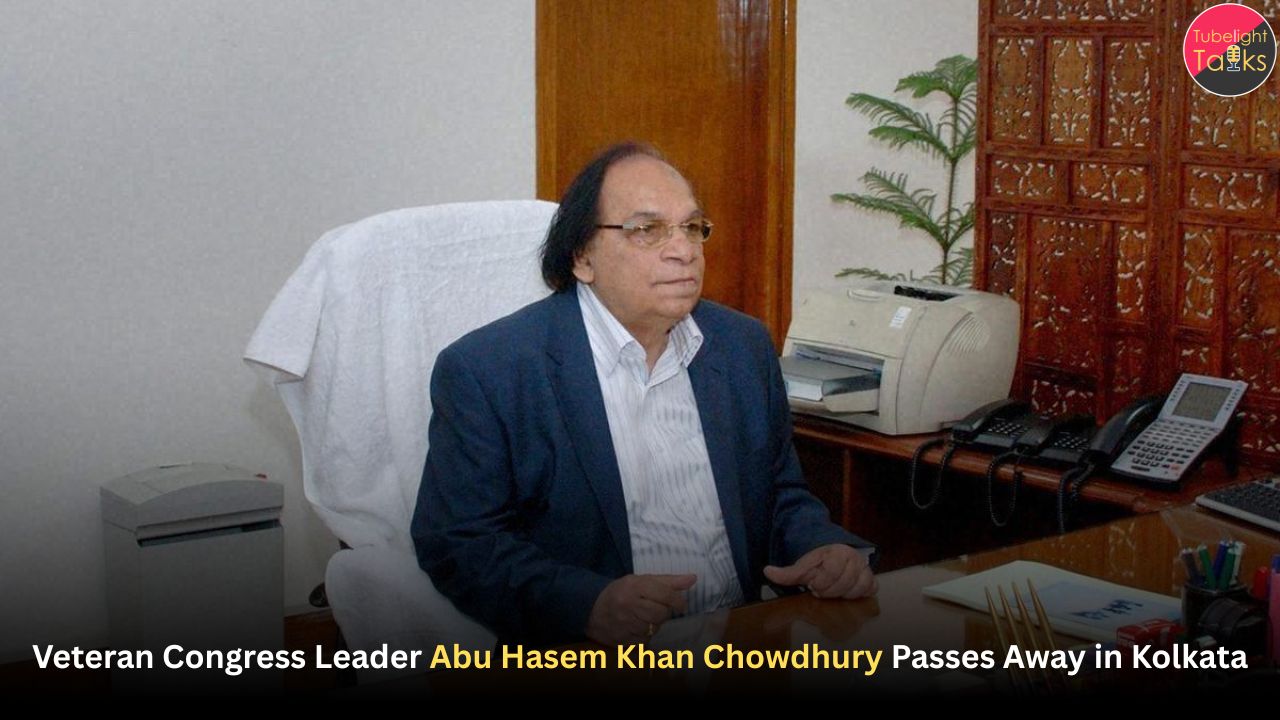
Dalu Babu Remembered as a Veteran of Bengal Congress Politics
Veteran Congress leader and former Union Minister of State for Health and Family Welfare Abu Hasem Khan Chowdhury, popularly known as Dalu Babu, has died in Kolkata after age-related illness, according to reports from West Bengal. He was a four-time Member of Parliament from the Malda region and remained a recognisable figure in the Congress tradition associated with that district.
Parliamentary biographical material identifies him as a long-serving public representative from West Bengal with a career spanning both the state assembly and the Lok Sabha.
His political legacy
Chowdhury’s career was tied closely to Malda’s political identity. He served as MLA before entering Parliament and later held ministerial responsibility in the Union government. His public image was shaped not by national television visibility alone, but by durable constituency-level influence in a region where Congress networks once defined the political landscape.
Why his passing matters
Obituaries are also political markers. The passing of a veteran leader reminds us how regional strongholds, party cultures and personal loyalties shape Indian democracy over decades. Dalu Babu represented a generation of leaders whose authority was built through local rootedness, not just media presence.
Also Read: Elections 2026: Voting Underway in Kerala, Assam and Puducherry
Dalu Babu’s Passing Marks the End of a Political Era
The death of Abu Hasem Khan Chowdhury, widely known as Dalu Babu, closes a significant chapter in West Bengal’s Congress history. Leaders like him belonged to a generation that built influence through long-term constituency relationships, local credibility and deep familiarity with district-level politics.
His public life was tied closely to Malda, a region that remained politically important for decades. His passing is therefore not only a personal loss for supporters and family, but also a moment of reflection for those who have watched Bengal’s political landscape evolve.
His Career Reflected the Strength of Regional Political Roots
Dalu Babu represented a style of politics grounded in sustained local presence rather than short-term national visibility. He moved through legislative and parliamentary roles while remaining identified with the political realities of his region. Such leaders often served as bridges between national party structures and local voter expectations. As Indian politics becomes increasingly media-driven, the memory of leaders like him also highlights the enduring importance of constituency engagement, organisational networks and personal public trust in shaping democratic life.
Impermanence and Sat Gyaan
Public life, reputation and power all pass away. Sant Rampal Ji Maharaj teaches that the body is temporary and worldly status cannot travel with the soul. What remains meaningful is righteous conduct, service and devotion. Obituaries remind us not only to honour a life, but also to reflect on our own.
Call to Action
Pay tribute with dignity, study their public work fairly, and let every passing remind us of the value of ethical service over temporary prominence.
FAQs: Veteran Congress Leader Abu Hasem Khan Chowdhury Passes Away in Kolkata
Q1. Who was Abu Hasem Khan Chowdhury?
He was a veteran Congress leader from West Bengal, a former Union minister and a multi-term MP from the Malda region.
Q2. What was he popularly known as?
He was widely known as Dalu Babu.
Q3. Which ministry did he serve in?
He served as Union Minister of State for Health and Family Welfare.
Related Stories







Discussion (0)