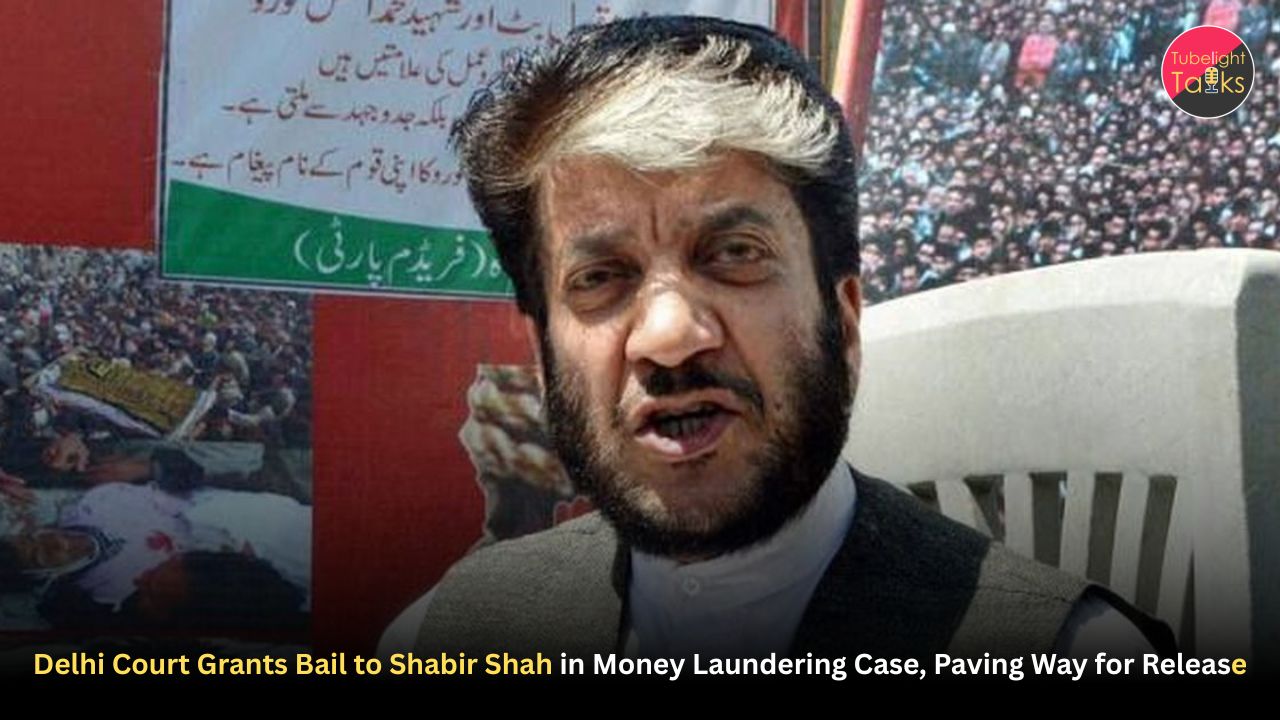
Delhi Court Grants Bail to Shabir Shah in Money Laundering Case
A Delhi court has granted bail to separatist leader Shabir Ahmad Shah in a money laundering case, marking another major legal development in a long-running set of proceedings connected to alleged terror funding, as Delhi Court Grants Bail to Shabir Shah. PTI-based reports published on March 28 said the order was passed by Special Judge Prashant Sharma and that it could pave the way for Shah’s release from jail after completion of legal formalities.
The timing of the order is important. On March 12, the Supreme Court granted Shah bail in the linked terror-funding case investigated by the National Investigation Agency. Reports on the latest Delhi court order say that this earlier Supreme Court relief was treated as a material fact in Shah’s favour while deciding the ED money laundering case.
Why this bail order matters
This is not an isolated courtroom development. Money laundering cases under the Prevention of Money Laundering Act often depend heavily on the underlying or “predicate” offence. In Shah’s case, the predicate matter was the NIA terror-funding case in which the Supreme Court had already granted him bail this month. That is why the Delhi court’s reasoning matters: once relief had come in the underlying case, the continued custody question in the linked ED case became harder to sustain. This is an inference based on the reported court reasoning and the sequence of the two bail orders.
The order is also significant because Shah had remained in custody for years. NDTV’s report on the Supreme Court order said he was arrested in 2019 in the NIA case and had remained in judicial custody since then. That background helps explain why the latest bail decision is being seen as legally and politically notable.
What the court reportedly observed
Current reports say Special Judge Prashant Sharma noted that Shah’s receiving bail from the Supreme Court in the NIA case was a material circumstance in his favour. PTI-based coverage also indicates that the money laundering case was linked to the same broader terror-funding allegations.
That does not mean the court has declared him innocent. Bail is not an acquittal. It means the court has decided that continued pre-trial custody in this case is no longer justified on the present legal footing. This is a legal inference drawn from the nature of a bail order and the reporting on the case.
Also Read: Delhi Excise Policy Case: ED’s Stand on Sisodia’s Bail Plea
Why the case drew such attention
Shabir Shah has long been one of the better-known separatist figures from Kashmir, so any judicial development involving him tends to attract national attention. The legal importance of this case, however, lies less in public profile and more in what it says about prolonged custody, linked prosecutions, and how courts weigh bail after years of incarceration. NDTV’s report on the Supreme Court proceedings said Shah’s lawyers argued he had already spent more than six years in custody and that the trial was unlikely to conclude soon.
That broader issue matters because Indian courts increasingly face hard questions around lengthy pre-trial detention in complex national-security and financial-crime cases. Shah’s case now becomes part of that larger legal conversation. This is an inference based on the reported custody timeline and the sequence of court orders.
What happens next
The latest order reportedly clears the path for Shah’s release, but only after the usual bail formalities are completed. Reports do not suggest that all legal proceedings against him have ended; they indicate only that he has now received bail in this money laundering case as well.
So the immediate effect is practical rather than final. The legal battle does not disappear, but the custody position changes sharply. In public terms, that is why this order is being described as a major relief for Shah. This is an inference from the reported effect of the bail order.
Truth, Fairness, Compassion and Justice
Teachings associated with Sant Rampal Ji Maharaj emphasize truth, fairness and compassion in the administration of justice. In that spirit, the legal system must remain firm, but it must also remain just. Prolonged legal struggles test not only the accused, but also the fairness and balance of institutions.
Call to Action
Cases like this are often reduced to politics and slogans. The more useful approach is to watch the legal reasoning, the custody timeline, and what the courts actually say. Bail orders can be important without being final judgments, and understanding that difference is essential to reading the news responsibly.
FAQs: Delhi Court Grants Bail to Shabir Shah in Money Laundering Case, Paving Way for Release
1. Who granted bail to Shabir Shah in this case?
Reports say the order was passed by Special Judge Prashant Sharma in Delhi.
2. Which case is this bail related to?
It is related to an Enforcement Directorate money laundering case linked to the broader terror-funding allegations.
3. Why was the Supreme Court’s March 12 order important here?
Because current reports say the Delhi court treated Shah’s bail in the linked NIA case as a material fact in his favour.
4. Does bail mean Shabir Shah has been acquitted?
No. Bail is not an acquittal. It means the court has allowed release from custody while proceedings continue. This is a legal inference from the nature of bail.
5. Since when had Shah been in custody?
NDTV’s March 13 report said he was arrested in 2019 in the NIA case and had remained in judicial custody since then.
6. Will he be released immediately?
Reports say the order paves the way for release, subject to completion of legal formalities and bail conditions.
Related Stories










Discussion (0)