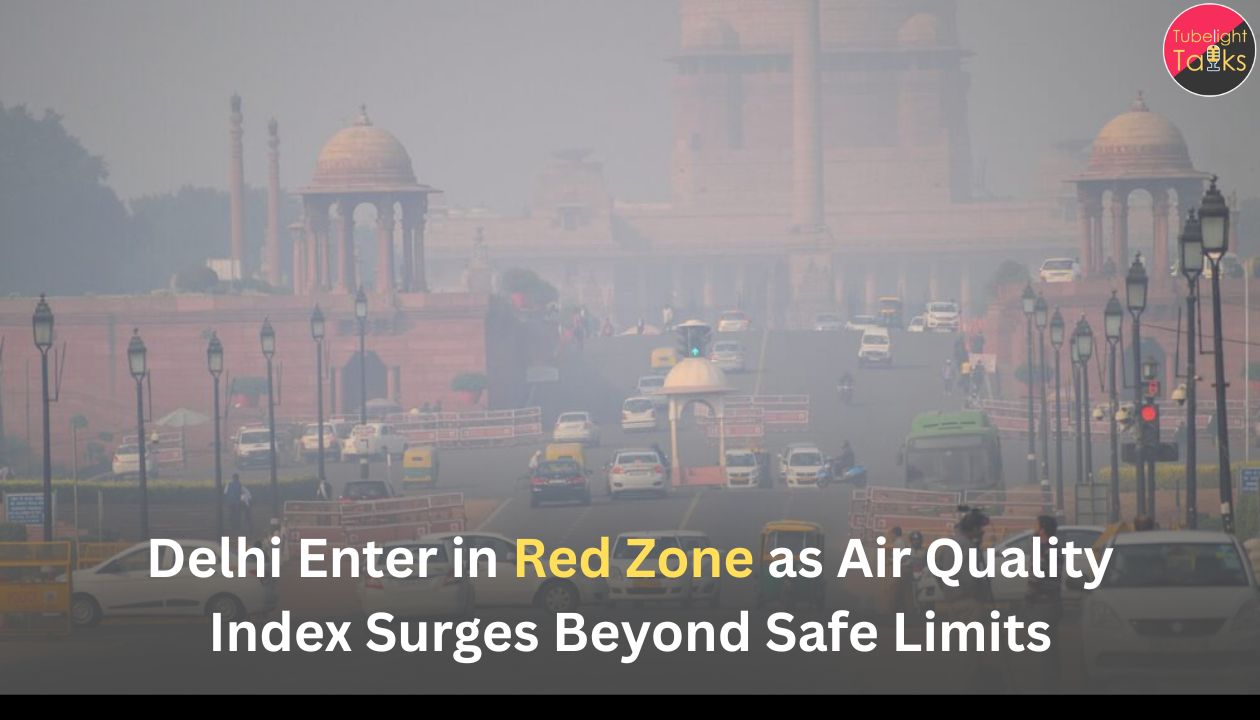
Delhi Enter in Red Zone as Air Quality Index Surges Beyond Safe Limits
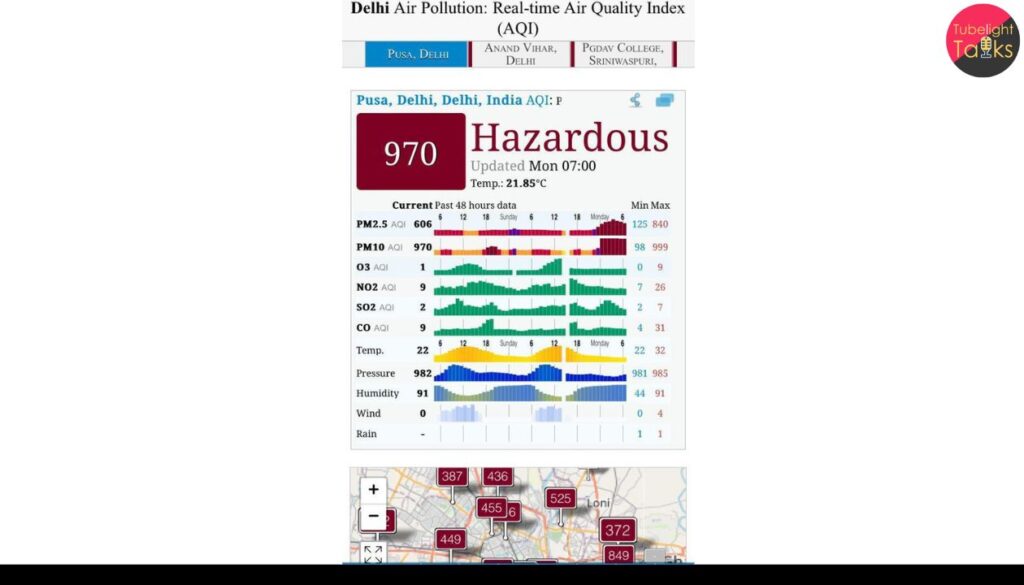
Delhi enter in Red Zone, with the Air Quality Index (AQI) breaching the 400 mark on 8 November 2025. This puts the capital’s air quality in the “severe” category, posing immediate and serious health hazards to its over 30 million residents. Despite the alarming numbers, authorities have not yet enforced Stage 3 of the Graded Response Action Plan (GRAP), prompting criticism from environmental groups and healthcare professionals.
What is the AQI and Why is 400 Dangerous?
Understanding the Index
- AQI (Air Quality Index) is a standardized tool that indicates how polluted the air currently is or how polluted it is forecast to become.
- An AQI reading above 400 falls under the “Severe” category, which implies serious health impacts for all age groups and significant risk for individuals with respiratory or cardiac issues.
Recent Data
- Multiple parts of Delhi including Anand Vihar, Jahangirpuri, RK Puram, and Mundka recorded AQIs ranging between 430–470.
- PM2.5 and PM10 levels were found to be 8 to 12 times above the safe limits prescribed by the World Health Organization (WHO) and CPCB.
(Source: CPCB – Central Pollution Control Board)
Impact on Public Health
Widespread Health Warnings
- Doctors in Delhi’s major hospitals have reported a surge in respiratory complaints, particularly among children, elderly, and individuals with asthma and bronchitis.
- Schools across Noida, Ghaziabad, and Delhi NCR have been issued advisories to limit outdoor activity and consider virtual classes.
“We are treating even young adults with aggravated respiratory distress. This isn’t just a pollution problem anymore—it’s a public health emergency.”
— Dr. Meenakshi Rana, Pulmonologist, AIIMS Delhi
Medical Symptoms Reported
- Burning eyes
- Sore throat
- Persistent cough
- Shortness of breath
- Increased use of inhalers and nebulizers
Why Has GRAP Stage 3 Not Been Enforced Yet?
Understanding GRAP
The Graded Response Action Plan (GRAP) is a four-stage strategy used to combat pollution in NCR.
- Stage 3 includes banning construction activities, entry of diesel trucks, closure of stone crushers, and restriction of public movement.
Despite the AQI being in the “severe” category for over 48 hours, Delhi’s Environment Department has not implemented Stage 3, leading to widespread backlash.
“Delay in executing GRAP Stage 3 is costing Delhi valuable time. Every hour in this toxic air is damaging lungs permanently.”
— Sunita Narain, Director General, Centre for Science and Environment (CSE)
The Role of Weather and Crop Burning
Stubble Burning in Punjab & Haryana
Satellite imagery from ISRO’s NRSC and reports from SAFAR confirm widespread parali (stubble) burning in Punjab and Haryana, contributing up to 45% of the PM2.5 concentration in Delhi.
(Source: SAFAR – System of Air Quality and Weather Forecasting and Research)
Weather Worsens Trapping of Pollutants
- Low wind speed, temperature inversion, and lack of rainfall have created conditions that trap pollutants near the ground.
- The mixing height (vertical space for dispersion) has fallen below 500 meters, making even mild emissions lethal.
Government’s Response So Far
- Delhi government stated the state is “monitoring the situation” and hinted that “all options, are on the table.”
- Union Environment Minister Bhupender Yadav blamed Punjab’s delayed stubble management but emphasized the Centre’s support to state governments.
Yet, no clear timelines have been issued for enforcing Stage 3.
Also Read: ‘Ready to Share Our Journey’: China Offers Help as Delhi Battles Toxic Air
Spiritual Reflection: Pollution of the Soul & the Air
Just as pollution in the air harms the body, pollution of thoughts, greed, and selfishness pollutes society. Sant Rampal Ji Maharaj emphasizes spiritual cleanliness through Satbhakti (True Devotion) and righteous living.
“The root of worldly problems lies in ignorance of true spiritual knowledge. Purify your soul, and harmony will follow in nature and society.”
— Sant Rampal Ji Maharaj
Rampant urbanization, overconsumption, and neglect for nature can only be reversed when spiritual wisdom leads behavior. Clean surroundings begin with clean hearts.
Learn more:
🔗 www.jagatgururampalji.org
Call to Action: How You Can Protect Yourself & the Environment
Protect Your Health
- Wear certified masks
- Use air purifiers indoors
- Limit outdoor exposure during peak pollution hours (especially 6–11 AM)
- Use saline nasal sprays and stay hydrated
Be the Change
- Carpool or use public transport
- Avoid burning leaves or garbage
- Support afforestation drives and clean energy initiatives
- Join awareness campaigns and educate others
Demand Action
- Petition local bodies for stricter GRAP enforcement
- Push for adoption of crop residue management technology in Punjab & Haryana
- Support eco-friendly policies and leaders who prioritize environment
FAQs: Delhi Enters Red Zone as AQI Crosses 400
Q1. What is Delhi’s current AQI level?
As of November 8, 2025, Delhi’s AQI ranges from 410 to 470, placing it in the “severe” or “Red Zone” category.
Q2. What are the health effects of AQI >400?
AQI above 400 can cause serious respiratory distress, especially in children, elderly, and those with preexisting conditions.
Q3. Why is GRAP Stage 3 not active yet?
Despite the rise in pollution, authorities have delayed enforcement due to logistical and political concerns.
Q4. Is crop burning the main cause of Delhi’s pollution?
Yes, stubble burning contributes up to 45% of PM2.5 during this season, but local vehicular emissions and dust also play significant roles.
Q5. Where can I track Delhi’s AQI live?
You can monitor real-time air quality at https://cpcb.nic.in/
Related Stories










Discussion (0)