Environmental Action: Delhi Expands Green Transport Push to Cut Urban Pollution
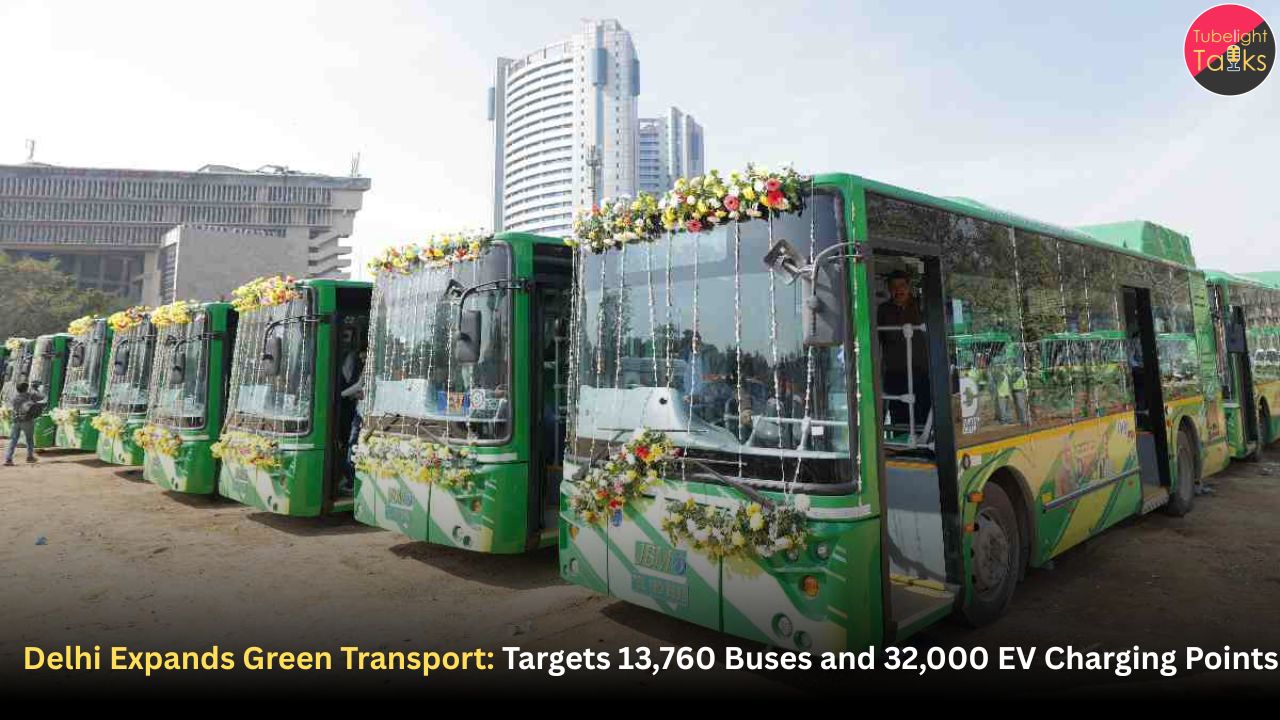
Delhi Expands Green Transport: Delhi has unveiled a broader transport-led anti-pollution push under its Air Pollution Mitigation Action Plan 2026. According to current reporting, the government plans to expand the city’s bus fleet to 13,760 by 2028-29, prioritise electric buses, and install 32,000 EV charging points over the next four years. The same plan also includes cleaner-entry norms for goods vehicles, stronger last-mile integration and traffic decongestion measures.
Public transport and charging infrastructure are now central
The plan’s transport component is significant because it addresses both public mobility and private transition. Expanding bus numbers is aimed at reducing dependence on personal vehicles, while the charging-point target is meant to support much faster EV adoption. Current reporting also says the upcoming EV Policy 2026 will focus on two-wheelers, commercial vehicles and cleaner government fleets.
The plan is therefore broader than a simple bus procurement announcement. It is a layered mobility strategy that links buses, charging, feeder systems and regulatory restrictions into one air-quality framework. This is an inference, but it follows directly from the multiple measures described in the official coverage.
Why the “Delhi-NCR” wording needs care
The current strongest source I checked describes this as a Delhi government action plan unveiled by Chief Minister Rekha Gupta. Because pollution, traffic and commuting patterns spill across the wider Delhi-NCR region, the plan has regional relevance. But it is more accurate to say this is a Delhi initiative with NCR implications than a formally coordinated NCR-wide green transport rollout.
That distinction matters for policy clarity. Delhi can directly control its own bus fleet, charging network targets and city-entry restrictions, but a full Delhi-NCR transformation would require cross-state alignment with neighboring administrations and regional authorities.
Also Read: Bharat Darshan Educational Tour 2025 Glory: Uttarakhand Toppers Embark on Unity Quest
Why this matters for air pollution
Vehicular emissions are one of the major contributors to Delhi’s poor air quality, especially when combined with congestion and older fuel standards. The new plan directly addresses this by expanding cleaner public transport, tightening goods-vehicle rules and improving integration with metro and RRTS systems. If implemented seriously, these changes could cut emissions at both the individual-trip and fleet level. This is an inference, but it is strongly grounded in the transport measures described in the plan.
Clean mobility needs public discipline too
Better transport policy matters, but clean air also depends on how consistently the system is used and enforced. In a wider moral sense, public life improves when convenience is balanced with responsibility. That fits naturally with the principle that real progress should reduce harm to others, a value also reflected in the teachings of Sant Rampal Ji Maharaj. Cleaner mobility is not only a technical shift. It is also a social one.
Call to Action
The real test now is implementation. Watch whether bus procurement, charging infrastructure, EV policy updates and vehicle-entry enforcement all move on schedule. A plan of this scale matters only if it changes what people actually see on roads and breathe in the air.
FAQs: Delhi Expands Green Transport: Targets 13,760 Buses and 32,000 EV Charging Points
1. What bus-fleet target has Delhi announced?
13,760 buses by 2028-29.
2. How many EV charging points are planned?
32,000 over the next four years.
3. Will electric buses be prioritised?
Yes. Current reporting says priority will be given to electric buses.
4. Is this an NCR-wide official policy?
The strongest current reporting frames it as a Delhi government plan, not a full NCR-wide coordinated policy.
5. What else is in the plan?
Cleaner goods-vehicle rules, last-mile integration, hotspot decongestion and stronger traffic management.
6. Why is this important?
Because transport emissions are a major part of Delhi’s air-pollution burden.
Related Stories









Discussion (0)