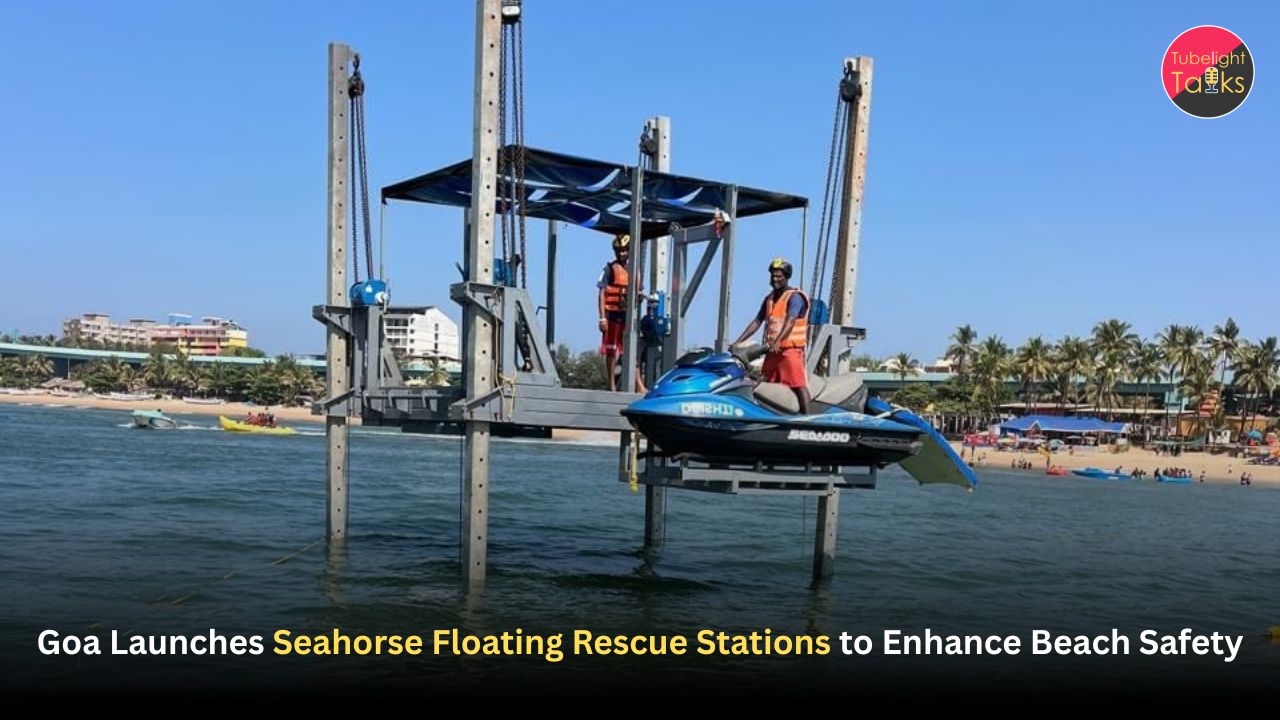
Goa Unveils Seahorse Floating Rescue Stations
In a pioneering move for Indian tourism, Goa Launches Seahorse Floating Rescue Stations along key beaches to significantly improve tourist safety. These high-tech, solar-powered offshore platforms are strategically positioned to enable faster emergency response for swimmers in distress.
Equipped with medical kits, communication tools, and drone-assisted rescue technology, the stations represent a modern solution to longstanding beach safety challenges. As domestic and international tourism rebounds strongly, Goa’s proactive approach signals a new benchmark for coastal safety management in India.
What Are Seahorse Floating Rescue Stations?
Solar-powered offshore platforms
The Seahorse stations are anchored structures located at safe yet strategic distances from the shoreline. Powered by solar energy, they operate sustainably while remaining active throughout peak tourist hours.
Equipped for rapid response
Each station includes:
- Emergency medical kits
- Communication systems linked to shore authorities
- Life-saving flotation devices
- Rapid-response drones capable of delivering rescue aids
These features reduce the time taken to reach swimmers caught in strong currents.
Why This Upgrade Matters
Faster emergency intervention
Beach rescues often depend on lifeguards stationed along the shore. Offshore rescue platforms shorten the distance between responders and victims, increasing survival chances.
Technology-enabled safety
The integration of drones marks a significant advancement. Drones can quickly drop flotation devices or relay live footage to emergency teams, enabling coordinated action.
Enhanced tourist confidence
Improved safety infrastructure strengthens Goa’s reputation as a responsible global tourist destination. Visitors are more likely to feel secure knowing advanced systems are in place.
Also Read: Nepal Bus Accident: 12 Dead, Dozens Injured After Vehicle Plunges Into River
Addressing Coastal Challenges
Strong currents and seasonal risks
Goa’s beaches attract millions annually, but strong tides and unpredictable currents can pose risks.
By placing floating stations closer to high-risk zones, authorities can mitigate accidents more effectively.
Reducing pressure on lifeguards
While lifeguards remain essential, technology-supported platforms serve as additional safety layers, reducing response time and workload.
Why This Story Is Trending
The Seahorse initiative stands out because it blends innovation with public safety.
Tourists on social media are praising the modernization effort, calling it a long-overdue step toward international safety standards.
In an era where travel decisions are influenced by safety perceptions, such initiatives contribute positively to Goa’s tourism image.
Economic and Tourism Impact
Boosting sustainable tourism
By integrating solar power and eco-friendly design, the project aligns with sustainable tourism goals.
Strengthening global competitiveness
Modern safety measures enhance Goa’s appeal among international travelers comparing destinations worldwide.
A Broader Reflection on Protecting Life
Safeguarding human life is among society’s highest responsibilities. In spiritual teachings shared by Sant Rampal Ji Maharaj, compassion and proactive protection of others are emphasized as noble duties. When governance integrates technology to preserve life, it reflects a commitment to collective welfare.
The Seahorse Floating Rescue Stations embody this principle—innovation dedicated to saving lives.
FAQs: Goa Launches Seahorse Floating Rescue Stations
1. What are Seahorse Floating Rescue Stations?
Solar-powered offshore platforms designed to assist in beach rescues.
2. Where are they installed?
Along major beaches in Goa.
3. What equipment do they include?
Medical kits, communication systems, flotation devices, and rescue drones.
4. Why are drones used?
To deliver rescue aids quickly and provide real-time monitoring.
5. Why is this initiative significant?
It modernizes beach safety standards and enhances tourist confidence.
Related Stories









Discussion (0)