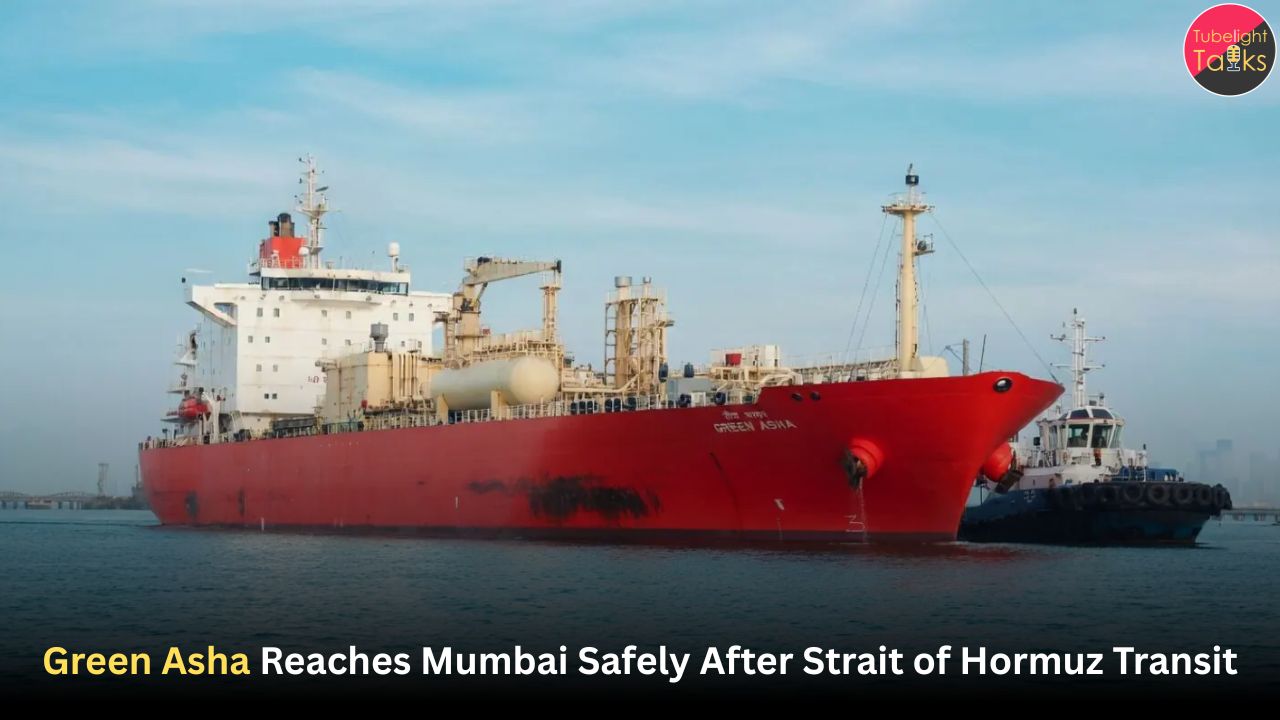
Maritime Update: Green Asha Arrives Safely in Mumbai
The Indian-flagged LPG vessel Green Asha has reached the Mumbai region safely after navigating the Strait of Hormuz at a time of high geopolitical tension in West Asia. A recent PIB release said Green Asha was carrying about 15,405 metric tonnes of LPG with 26 seafarers onboard, and news reports later confirmed that the vessel docked at Jawaharlal Nehru Port after the passage. The successful transit is being read as a small but important sign for India’s energy security.
Why this arrival matters
The Strait of Hormuz is one of the most critical energy chokepoints in the world. Any military escalation there can disrupt shipping, raise insurance costs and create supply anxiety for import-dependent countries like India. Against that background, the safe arrival of an LPG carrier carrying over 15,000 tonnes of cargo is more than a routine docking; it is a reminder of how fragile and strategic sea lanes remain.
A signal on energy resilience
India’s ability to keep energy cargoes moving during periods of uncertainty matters for households, industry and prices. Even one vessel cannot solve regional instability, but safe passage improves confidence that logistical channels have not completely shut down.
Also Read: Jaishankar Speaks With Abbas Araghchi as Indian LPG Tanker Green Asha Safely Transits Hormuz
Safe Maritime Transit Carries Strategic Importance for India
The safe arrival of Green Asha matters because maritime transport is one of the least visible yet most critical pillars of India’s energy security. During periods of regional instability, every successful voyage through sensitive routes like the Strait of Hormuz becomes a marker of resilience.
LPG cargoes are especially important because they affect household supply chains, commercial distribution and pricing stability. A safe docking in Mumbai therefore sends reassurance not just to the shipping sector, but also to consumers and policymakers monitoring regional risk.
Strait of Hormuz Remains a Global Pressure Point
The Strait of Hormuz continues to be one of the world’s most important maritime chokepoints, with any disruption there capable of affecting global energy trade almost immediately. Even without a full blockade, rising tensions can increase shipping insurance costs, rerouting risks and operational uncertainty.
For India, which depends heavily on imported energy, the functioning of this corridor has both economic and strategic implications. The passage of Green Asha is a reminder that maritime security and foreign policy are closely connected in times of crisis.
Security, dependence and Sat Gyaan
This episode reminds us how dependent modern life is on systems we barely notice. Sant Rampal Ji Maharaj teaches that human beings often feel secure because of material arrangements, yet real stability is fragile. Spiritual wisdom encourages humility, gratitude and preparedness. Outer security matters, but inner steadiness matters too.
Call to Action
Support informed discussion on energy security, maritime safety and responsible national planning. Ordinary daily comforts often depend on extraordinary logistical discipline.
FAQs: Green Asha Reaches Mumbai Safely After Strait of Hormuz Transit
Q1. What is Green Asha carrying?
LPG cargo of about 15,405 metric tonnes, according to PIB-linked reporting.
Q2. Why is its arrival important?
Because it crossed the Strait of Hormuz during a period of regional tension.
Q3. Where did it dock?
Reports said it reached the Mumbai/JNPA area safely.
Related Stories









Discussion (0)