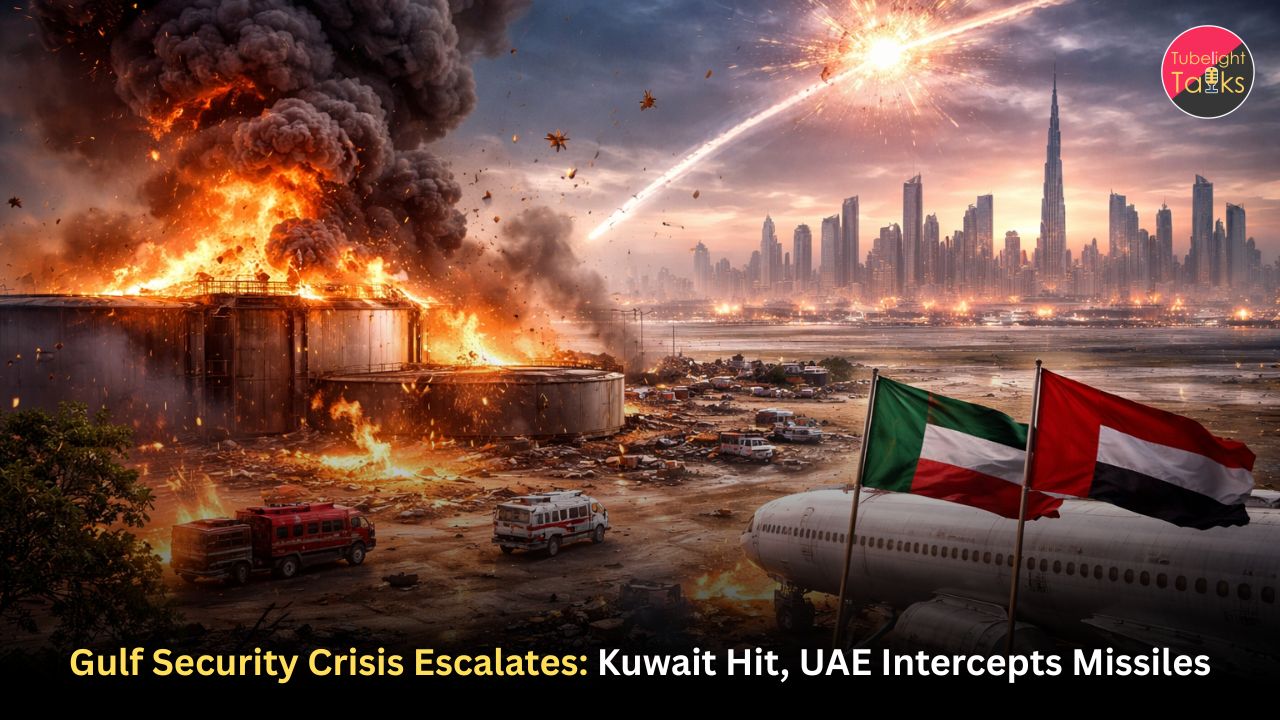
Gulf Security Crisis Deepens as Kuwait Hit and UAE Intercepts Missiles
The Gulf security crisis has witnessed a sharp escalation over the past 12 hours, with fresh drone and missile attacks targeting critical infrastructure in the Gulf region. A fuel storage facility at Kuwait International Airport was struck, triggering a fire, while air defense systems in the United Arab Emirates successfully intercepted a barrage of drones and ballistic missiles.
These developments highlight the rapidly deteriorating security environment in the Gulf—one that carries serious implications not just for regional stability, but also for global energy markets and countries like India that are deeply dependent on the region.
What Happened in the Last 12 Hours
Attack on Kuwait International Airport
A drone strike hit a fuel tank at Kuwait International Airport, causing a fire and raising alarm over the vulnerability of civilian infrastructure. Although no casualties have been reported, the targeting of an airport facility signals a dangerous expansion of conflict zones.
UAE Intercepts Missiles and Drones
Air defense systems in the UAE intercepted multiple incoming threats, including ballistic missiles and drones. These interceptions prevented potential damage, but also underline the frequency and scale of attacks now being witnessed in the region.
Also Read: Global Relief as Trump Iran Strike Pause Eases Economic Pressure
Why This Escalation Matters Globally
Threat to Energy Infrastructure
The Gulf region is the backbone of global oil and gas supply. Any attack on infrastructure—whether airports, refineries, or shipping routes—can disrupt global markets and push energy prices higher.
Rising Risk to Civilian Zones
The recent attacks show that civilian and commercial infrastructure is increasingly being targeted, raising concerns about broader instability and humanitarian risks.
India’s Strategic Concerns
Energy Security at Risk
India relies heavily on oil and LPG imports from the Gulf region. Any disruption in supply routes, especially through the Strait of Hormuz, can directly impact fuel availability and prices in the country.
Safety of Indian Diaspora
Millions of Indians live and work in Gulf countries. Escalating tensions increase risks to their safety, livelihoods, and mobility.
Monitoring and Preparedness
The Indian government is closely monitoring developments and maintaining diplomatic communication with key stakeholders to ensure stability and safeguard national interests.
Also Read: PM Modi’s Iran Peace Push: Why India Is Turning Diplomacy Into an Energy-Security Strategy
Wider Implications
Global Market Volatility
Such geopolitical tensions often lead to volatility in stock markets, currency fluctuations, and rising inflation due to increased fuel costs.
Shipping and Trade Disruptions
Attacks near critical trade routes can delay shipments and increase transportation costs, affecting global supply chains.
What Could Happen Next
The situation remains highly fluid. Further escalation could lead to:
- Increased military responses
- Disruption of oil supply routes
- Heightened global economic uncertainty
At the same time, diplomatic efforts may intensify to prevent a larger conflict.
Spiritual Perspective: Teachings on Peace
Sant Rampal Ji Maharaj teaches that true peace can only be achieved through righteousness, truth, and spiritual awareness. Conflicts driven by ego and power ultimately harm humanity at large.
His teachings emphasize that lasting global harmony requires a shift from violence to understanding and spiritual wisdom.
Call to Action
Citizens should rely on verified information and avoid spreading panic. Awareness and responsible behavior are crucial during times of global uncertainty.
At a deeper level, adopting values of peace and compassion can contribute to a more stable world.
FAQs: Gulf Security Crisis
1. What happened in Kuwait?
A drone strike hit a fuel tank at Kuwait International Airport.
2. What did the UAE report?
It intercepted multiple drones and ballistic missiles.
3. Why is this important for India?
It affects energy imports and the safety of Indians in the Gulf.
4. What is the Strait of Hormuz?
A key oil shipping route critical for global energy supply.
5. Are Indians in danger?
There is increased risk, and the government is monitoring the situation.
6. What could happen next?
Either further escalation or diplomatic de-escalation efforts.
Related Stories









Discussion (0)