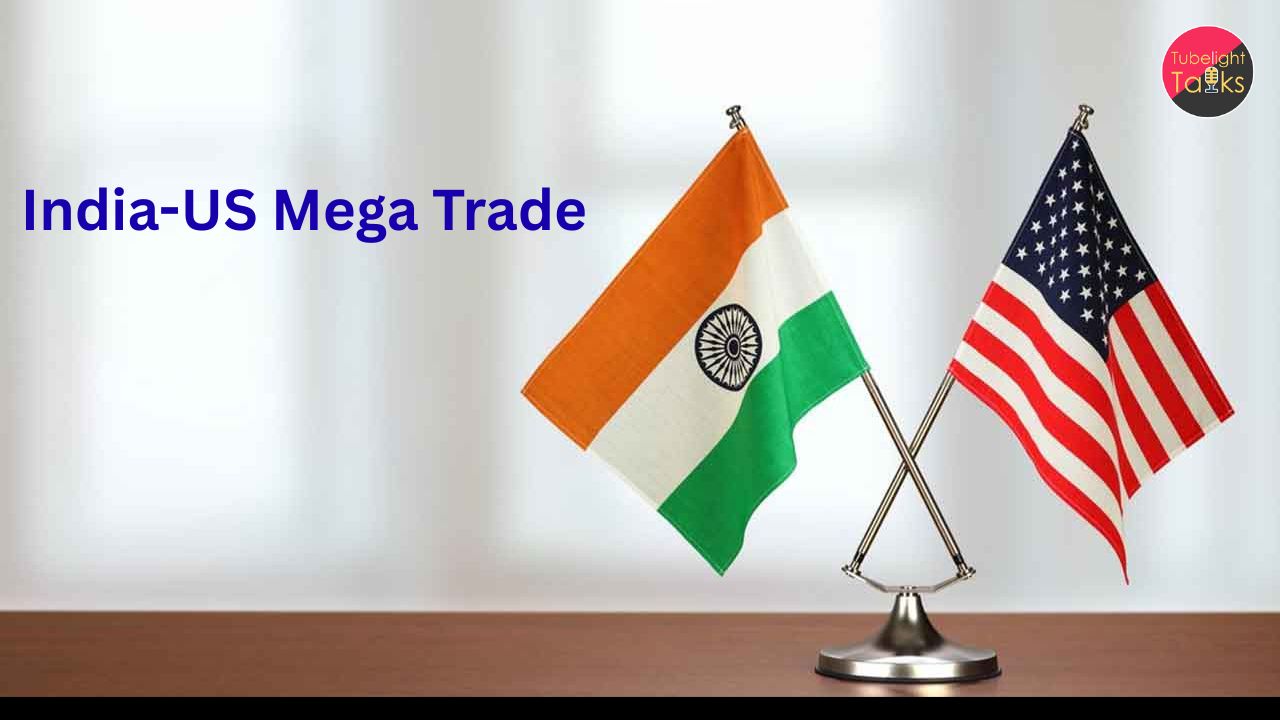
India-US Mega Trade Breakthrough: US Cuts Tariffs on Indian Goods to 18%
India-US Mega Trade: In a landmark development, India and the United States have signed a major trade agreement that could redefine global supply chains and economic collaboration. The US has slashed tariffs on Indian goods from highs of 50% (in 2025) to just 18%, signaling a new era of cooperation. This deal is expected to boost India’s export economy, create jobs, and strengthen bilateral relations with long-term global impact.
The Deal at a Glance
What Changed?
Under the new trade pact signed in Washington D.C., the United States has agreed to:
- Reduce average tariffs on Indian goods to 18%
- Provide market access for pharmaceuticals, textiles, auto components, and electronics
- Eliminate non-tariff barriers on certain agricultural and organic products
A Strategic Shift
This policy marks a drastic rollback of the 2025-era protectionist tariffs that had seen Indian exporters struggle under levies as high as 50%. The change reflects growing trust and interdependence between the two democracies amidst evolving global trade dynamics.
Why This Deal Matters
1. Boost to “Made in India”
The lower tariffs are a huge win for the “Atmanirbhar Bharat” campaign. Indian manufacturers in key sectors like:
- Textiles and apparel
- Generic drugs and biopharma
- Electronics and EV parts
- Processed foods and handicrafts
…are now expected to expand production and hiring.
2. Job Creation & MSME Growth
With reduced trade barriers, India’s micro, small, and medium enterprises (MSMEs) gain greater access to the lucrative American market. Experts estimate over 10 lakh jobs could be created in export-linked sectors by 2027.
3. FDI & Supply Chain Integration
This development is also expected to drive foreign direct investment (FDI) as American companies look to diversify supply chains away from China and into India.
Geopolitical Implications
Strengthening Strategic Ties
This agreement is not just about trade. It comes amid growing military and diplomatic cooperation between the two countries, including:
- Quad initiatives
- Technology transfer discussions
- Indo-Pacific maritime cooperation
As China’s influence grows, the India-US axis is being seen as a counterbalance in the Indo-Pacific.
Shift in Global Trade Focus
With Europe facing energy uncertainties and East Asia struggling with demographic decline, the India-US corridor is emerging as a robust alternative economic engine.
Also Read: India–EU Summit 2026: Strategic Agenda and “Mother of All Deals” on the Verge of Being Unveiled
Challenges Still Ahead
Quality, Compliance, and Logistics
To truly leverage this deal, India must:
- Upgrade quality standards
- Improve port and customs infrastructure
- Streamline logistics and supply chain bottlenecks
Currency Fluctuations & Market Volatility
Exporters remain cautious about currency risk and global inflationary pressures. Stable policy implementation will be key.
Sector-Specific Winners: Who Stands to Gain?
With the tariff reduction from 50% to 18%, several Indian sectors are poised for significant gains. The textile and apparel industry, one of India’s largest employment generators, is expected to see a surge in exports, especially in high-demand categories like organic cotton garments and ethnic wear. The pharmaceutical sector, known for its generic drugs, will now be able to expand its footprint in the competitive U.S. healthcare market.
Meanwhile, auto component manufacturers and electronics exporters stand to benefit from the increased cost competitiveness, opening doors for Indian-made EV parts, circuit boards, and consumer tech devices.
Strengthening MSMEs and Local Manufacturers
This deal is also a major win for India’s Micro, Small, and Medium Enterprises (MSMEs). Many small-scale exporters had struggled with steep U.S. tariffs and non-tariff barriers in the past. The new agreement includes provisions for capacity-building support, access to U.S. quality standards compliance training, and participation in bilateral trade expos. These steps will empower smaller businesses to scale and compete in global markets, potentially contributing billions to India’s annual export earnings.
Strategic Diplomacy: A Deeper Alignment
Beyond trade, this tariff deal signals a deeper strategic alignment between New Delhi and Washington. With growing tensions in the Indo-Pacific and the global need to de-risk from Chinese supply chains, India is emerging as a trusted alternative.
Experts view the deal as part of a larger diplomatic framework that includes defense cooperation, semiconductor collaboration, and joint climate initiatives. The ease of trade will also encourage more joint ventures and technology transfers, making India a key partner in America’s long-term economic and geopolitical vision.
Trade with Responsibility: Sustainability and Compliance
With increased access comes increased responsibility. Indian exporters are being encouraged to adopt sustainable manufacturing practices to meet U.S. consumer expectations and regulatory norms. New incentives have been announced to help exporters comply with ESG (Environmental, Social, Governance) standards, particularly in textiles and agro-exports. This shift toward “green trade” is seen not just as a requirement, but as a competitive advantage in global markets increasingly driven by conscious consumption.
Spiritual Insight: Trade Prosperity vs Eternal Wealth
What Sant Rampal Ji Maharaj Reveals
While such trade deals uplift nations economically, true and lasting prosperity cannot be found in material gains alone. According to Sant Rampal Ji Maharaj, worldly wealth is transient and often brings stress, competition, and ego. The real wealth lies in attaining spiritual knowledge and devotion to the Supreme God, which guarantees peace, stability, and eternal joy.
“True prosperity is when the soul is content, not just the market,” says Sant Rampal Ji Maharaj.
By embracing Naam Diksha (initiation) from a Complete Saint and walking the path of Satbhakti (true worship), individuals can attain Satlok—a divine realm free from sorrow and inequality.
Learn more:
👉 www.jagatgururampalji.org
YouTube: Sant Rampal Ji Maharaj
Call to Action
From Export Boost to Inner Growth
Choose Eternal Growth Alongside Economic Success
This India-US trade breakthrough is historic—but real breakthroughs happen within.
If you’re a business owner, student, policymaker, or citizen, this is your moment to explore a higher path.
✅ Take Naam Diksha from Sant Rampal Ji Maharaj
✅ Watch free spiritual discourses on YouTube
✅ Experience peace, focus, and prosperity through true worship
“When spiritual consciousness grows, even trade becomes a tool for compassion, not just profit.”
Let’s build a future that’s prosperous both economically and spiritually.
FAQs on India-US Mega Trade
Q1. What is the new tariff rate under the India-US trade deal?
The US has reduced tariffs on Indian goods to an average of 18%, down from as high as 50% in 2025.
Q2. Which sectors will benefit the most?
Key sectors include pharmaceuticals, textiles, electronics, auto components, food processing, and handicrafts.
Q3. How will this impact India’s economy?
Experts predict a significant increase in exports, job creation, and FDI inflows, particularly in MSME sectors.
Q4. Why is the US reducing tariffs now?
It’s part of a broader geopolitical and economic alignment aimed at countering China and stabilizing global supply chains.
Q5. What is the spiritual perspective on this deal?
Sant Rampal Ji Maharaj emphasizes that material success is temporary, and true peace and wealth lie in spiritual awakening through Satbhakti.
Related Stories








Discussion (0)