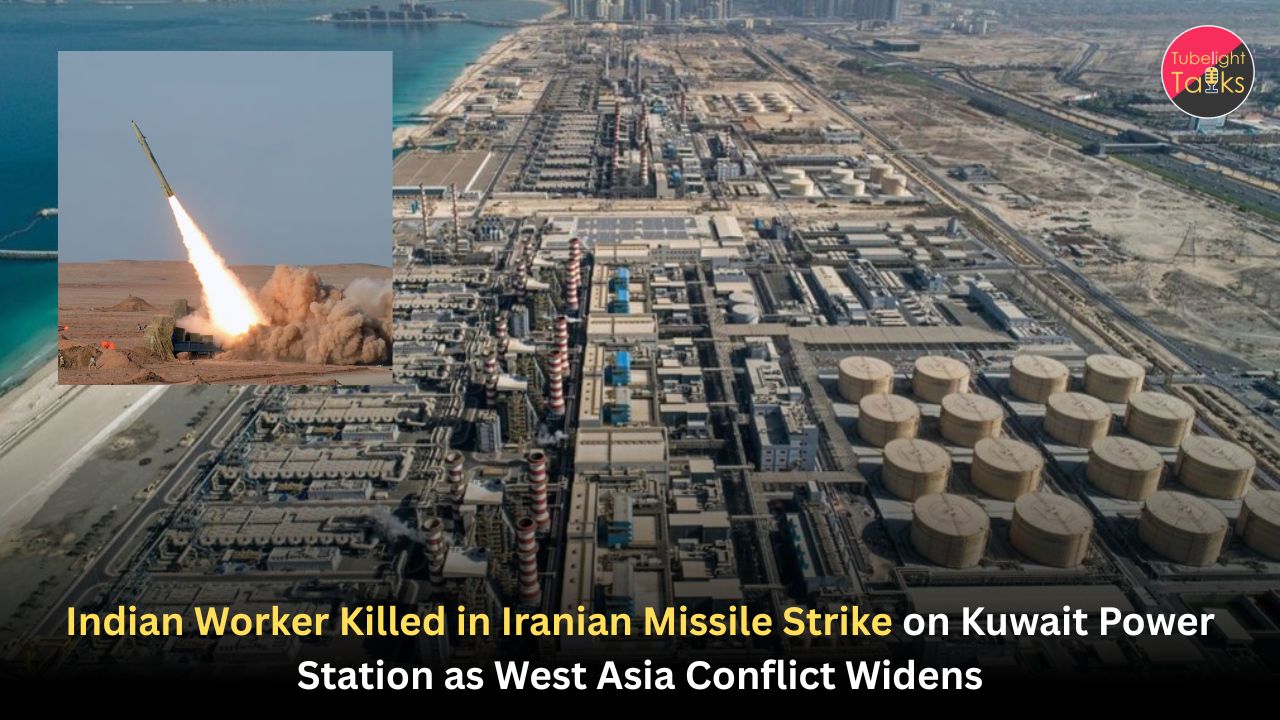
Indian Worker Killed in Iranian Missile Strike on Kuwait Power Station as West Asia Conflict Widens
An Indian worker was killed in an Iranian strike on a power and water desalination facility in Kuwait, marking another grim moment in the expanding West Asia conflict. Reuters reported that Kuwait’s Ministry of Electricity and Water said a service building at one of its plants was hit, killing an Indian worker and causing damage to the facility. Indian media reports and embassy-linked coverage said the attack took place on Sunday, with confirmation and response statements emerging on Monday.
This incident matters because it shows how far the conflict has spread beyond military and symbolic targets. A power and water desalination facility is critical civilian infrastructure. When such sites are hit, the consequences extend well beyond one blast zone. They affect utility systems, worker safety, public confidence, and the wider sense that Gulf infrastructure is becoming increasingly exposed. That is an inference based on the nature of the target and the official Kuwaiti description of the damage.
What happened in Kuwait
Kuwaiti authorities said the strike hit a service building at a power and water desalination plant and caused “significant material damage,” while also killing one worker of Indian nationality. Reuters reported the announcement came via Kuwait’s Ministry of Electricity and Water. Indian press reports based on agency copy and official statements echoed that description and said the facility was part of Kuwait’s essential energy and water system.
The exact identity of the Indian victim has not been publicly detailed in the reporting I reviewed. But the implications are already clear. The strike shows that the risks to foreign workers in the Gulf are growing as conflict increasingly touches infrastructure rather than staying limited to distant military zones. This is an inference supported by the fact pattern in current reports.
India’s official response
The Indian Embassy in Kuwait has issued a condolence message and said it is closely coordinating with Kuwaiti authorities to extend all possible support and assistance. That embassy response is reflected in multiple Indian reports published today. India’s reaction so far appears focused on immediate consular support rather than public escalation in rhetoric.
That is significant because it shows New Delhi is still trying to balance two urgent responsibilities at once: protecting Indians in the region and avoiding further diplomatic instability in an already inflamed environment. This is an inference based on the embassy’s support-focused response and India’s broader handling of the regional crisis in recent days.
Also Read: Indian Navy Escorts LPG Tankers Safely Through Volatile Strait of Hormuz
Why this incident is bigger than one tragic death
This death comes at a time when the conflict is increasingly affecting Gulf infrastructure, shipping, aviation, and migrant-worker safety. The target in this case was not a battlefield position but a plant tied to electricity and water production. That shift matters because it means civilian-linked systems and the workers inside them are becoming part of the war’s danger zone.
It also deepens India’s challenge in the region. Millions of Indians live and work across Gulf countries, many in industries like construction, transport, utilities, maintenance, and industrial operations. If conflict continues to spill into economic infrastructure, the number of vulnerable Indian workers could become a much bigger policy concern. This is an inference based on the nature of Gulf employment patterns and the current attack profile.
The wider West Asia context
The strike on the Kuwaiti facility fits a broader regional pattern in which the conflict is no longer confined to conventional frontlines. Reuters and related reports in recent days have documented attacks, interceptions, and damage involving airports, industrial zones, and energy-linked sites across the Gulf. This latest incident reinforces the view that the crisis is spreading through the infrastructure that supports daily life and regional economies.
For India, that makes the story not just humanitarian but strategic. Every attack on Gulf infrastructure increases the pressure on energy routes, worker safety, and emergency planning. A single death is a personal tragedy. Repeated incidents of this kind can quickly become a national concern for India’s foreign policy, labor protection, and economic security. This is an inference drawn from the current direction of the conflict and India’s exposure in the Gulf.
The value of human life
Teachings associated with Sant Rampal Ji Maharaj emphasize compassion, nonviolence, and the equal value of every human life. In that spirit, the death of a worker far from home is a painful reminder that war’s worst burden often falls on ordinary people who have no role in the conflict itself. A truly humane society is one that protects workers, values peace, and never treats human lives as collateral to power struggles. This is a spiritual reflection, not a diplomatic claim.
Call to Action
Stories like this should not be consumed only as war headlines. They should also be understood as labor, safety, and humanitarian stories. Governments, employers, and families need verified information, active consular coordination, and practical contingency planning for workers in exposed zones. When conflict widens, the first question should not only be what was hit, but who was working there.
FAQs: Indian Worker Killed in Iranian Missile Strike on Kuwait Power Station as West Asia Conflict Widens
1. What happened in Kuwait?
An Indian worker was killed after an Iranian strike hit a service building at a power and water desalination plant in Kuwait, according to Kuwaiti authorities cited by Reuters.
2. Was the target civilian infrastructure?
Yes. Reports describe the site as a power and water desalination facility, which is critical civilian infrastructure.
3. Has India officially responded?
Yes. The Indian Embassy in Kuwait expressed condolences and said it is coordinating with local authorities to provide support and assistance.
4. Do we know the identity of the victim?
The reports I reviewed did not provide the worker’s public identity.
5. Why is this incident especially important?
Because it shows the conflict is reaching Gulf infrastructure and putting foreign workers, including Indians, at direct risk. That is an inference based on the nature of the target and the current regional escalation.
6. Does this mean the conflict is widening?
Yes, the strike on a Kuwaiti power and desalination facility strongly suggests the conflict is spreading deeper into Gulf infrastructure zones. This is an inference supported by current reporting on the incident.
Related Stories









Discussion (0)