Maritime Update: Iran Announces Alternative Shipping Routes Through the Strait of Hormuz
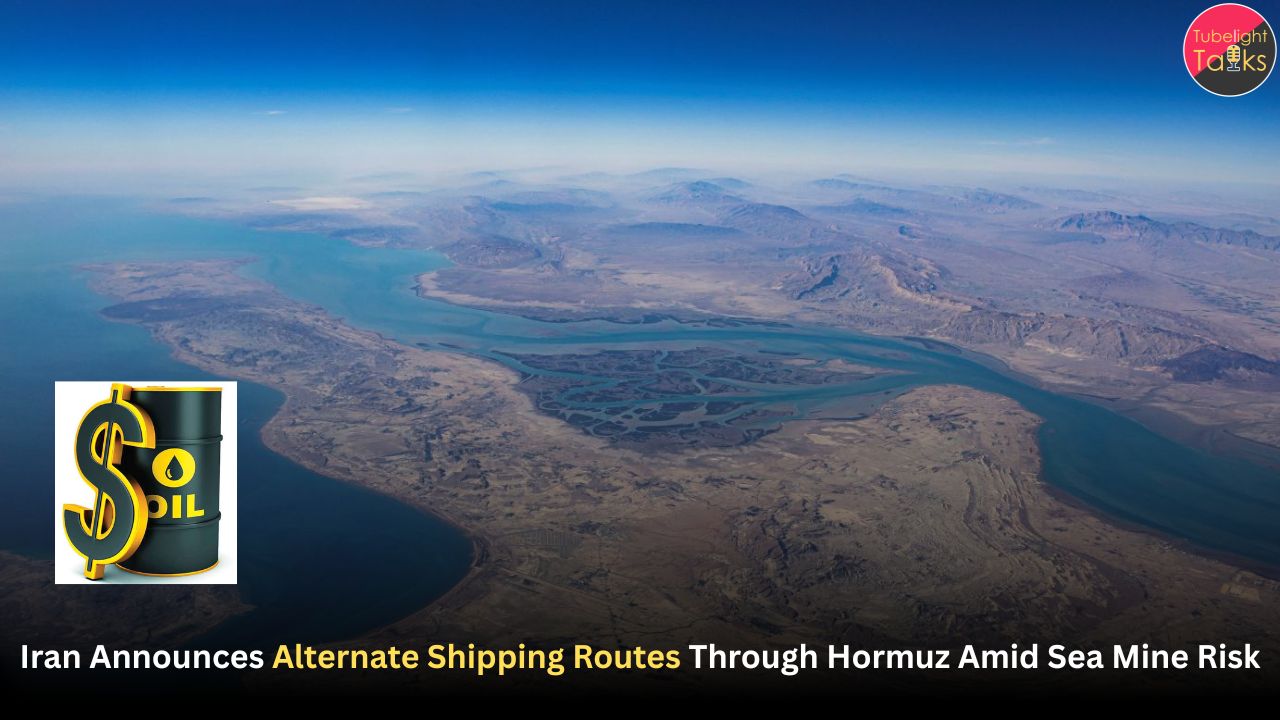
Iran has announced alternative routes for commercial vessels moving through the Strait of Hormuz, citing the danger of sea mines in the main navigation lanes and requiring ships to coordinate with the Islamic Revolutionary Guard Corps Navy. Reporting from the Wall Street Journal’s live coverage said Iran directed inbound vessels to move northward via Larak Island into the Persian Gulf and outbound vessels to pass south of the island toward the Gulf of Oman.
Reuters also reported that despite ceasefire announcements, shipping remains restricted, highly politicised and dependent on Iranian permission, underscoring how fragile maritime movement remains.
Why Iran’s route guidance matters
The Strait of Hormuz is one of the world’s most important maritime chokepoints, carrying roughly a fifth of global oil and LNG flows in normal conditions. When a state controlling access to such a route issues alternate navigation instructions, global markets pay attention immediately. Iran’s guidance is not simply a technical maritime notice. It is evidence that the security environment inside the strait is still abnormal, even after diplomatic moves suggested some level of de-escalation.
The mention of sea mines is especially serious. Mines change the character of a waterway because they create invisible risk, slow inspection processes, increase insurance costs and force ship operators to accept route deviations or delays. A mined or potentially mined chokepoint cannot function like an open commercial corridor, even if authorities nominally permit passage. That is why Iran’s announcement signals only controlled movement, not restored freedom of navigation.
Also Read: Maritime Update: Green Asha Arrives Safely in Mumbai
Larak Island has become strategically central
The alternative routing around Larak Island is important because it effectively channels traffic through a corridor that Iran can monitor closely. Reporting in several outlets has described the island area as central to the current transit arrangement. The practical meaning is that Iran is shaping not only whether ships move, but how they move and under what supervision. That converts a global trade artery into a tightly managed geopolitical instrument.
Such control has obvious consequences. Shipping firms must decide whether the risk is acceptable. Energy buyers must decide whether cargo timing remains reliable. Governments must decide whether the current arrangement can be tolerated without setting a larger precedent about control over international chokepoints. None of those questions has an easy answer.
Passage is possible, but far from normal
Reuters reported that Glencore and Taiwan’s CPC booked tankers to load Middle East crude after the ceasefire, showing that some movement was resuming. But the same report stressed that ship passage through Hormuz remains subject to Iranian permission and safe-navigation guidance because of naval mines and ongoing security concerns. This is a very different situation from normal commercial transit. It is selective, risk-priced and politically conditioned.
Reuters also quoted ADNOC chief Sultan Al Jaber as saying the strait is effectively shut because Iran is restricting and conditioning access. Whether one describes the current situation as partially open or effectively closed depends on the standard being used. If the standard is any movement at all, then some passage exists. If the standard is free and normal commercial navigation, that standard clearly has not been restored.
Also Read: Market Surge: Sensex and Nifty Jump on Oil Relief and Ceasefire Hopes
Why mines change the economics of trade
Even when no ship is struck, mine risk inflates costs. War-risk premiums can spike. Tanker availability tightens. Some operators avoid the region entirely. Charter rates rise because fewer vessels are willing to enter danger zones. Cargo timing becomes uncertain. Refiners and importers may then draw down reserves or pay more for alternative supply. These consequences ripple outward into fuel prices, freight systems and national inflation.
That is why route guidance from Iran carries significance beyond maritime procedure. It affects how quickly physical oil can move, how much it costs to move it, and how financial markets assess future supply stability. In the current crisis, navigation advice itself has become an economic variable.
The legal and geopolitical question
International law strongly protects transit passage through straits used for global navigation, and AP reported growing criticism of Iranian attempts to condition passage or impose forms of control inconsistent with trade norms. Yet in practice, law alone does not move ships through a militarised chokepoint. What matters day to day is coercive power, risk tolerance and the willingness of navies, insurers and commercial operators to engage. The gap between legal principle and operational reality is stark in Hormuz right now.
This is why the shipping issue is inseparable from the ceasefire issue. If Iran believes regional attacks continue or ceasefire terms are being violated elsewhere, it can tighten the maritime environment without formally declaring a permanent closure. Route announcements, permissions and restrictions then become pressure tools. The Strait turns from a waterway into a negotiating lever.
What this means for energy-importing countries
For countries such as India, Japan and many Asian economies, the problem is immediate. They do not need a full closure to feel pain. Even limited passage under high risk can raise import costs and complicate supply planning. Reuters noted that Asian buyers rushed to manage supply through reserves, subsidies or tanker bookings once a two-week truce offered a narrow window of movement. This confirms how deeply dependent the region is on reliable Hormuz access.
The broader lesson is sobering: global energy security can be compromised not only by missiles and bombs, but by rerouting instructions, permissions, escort uncertainty and the presence of unseen mines. Modern economies remain astonishingly vulnerable to narrow maritime bottlenecks.
Outer routes, inner fear and Sat Gyaan
In the light of Sat Gyaan, this crisis shows how much fear governs worldly systems. A single sea lane can unsettle markets, governments and millions of homes. Sant Rampal Ji Maharaj teaches that material arrangements are always temporary and uncertain. Real steadiness begins when human beings act with truth, humility and awareness rather than pride and coercion.
Call to Action
Follow verified shipping and energy updates, reject sensational rumours, and understand that safe navigation is a foundation of everyday economic life. Maritime stability deserves public attention.
FAQs: Iran Announces Alternate Shipping Routes Through Hormuz Amid Sea Mine Risk
Q1. What did Iran announce?
Iran issued alternative navigation guidance for ships moving through Hormuz and told vessels to coordinate with the IRGC Navy.
Q2. Why were alternate routes proposed?
Because of the reported risk of sea mines in the main shipping lanes.
Q3. Is the Strait of Hormuz fully open?
No. Reuters reported that passage remains restricted and conditioned by Iran.
Q4. Why does this matter globally?
Because about 20% of global oil and LNG flows typically move through Hormuz.
Q5. What role does Larak Island play?
It is part of the alternate routing guidance Iran has issued for inbound and outbound vessels.
Related Stories








Discussion (0)