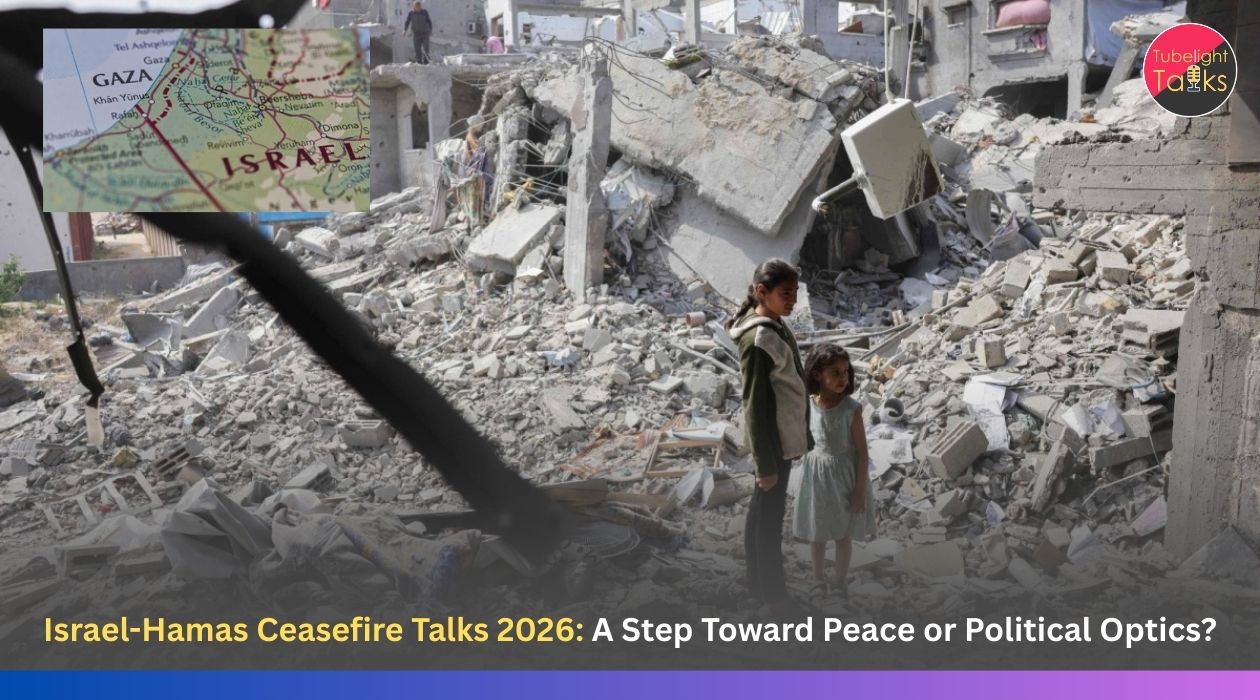
Israel-Hamas Ceasefire Talks 2026: A Step Toward Peace or Political Optics?
Israel-Hamas Ceasefire Talks 2026: In a world worn out by years of relentless conflict in the Middle East, Israel and Hamas have resumed ceasefire negotiations in early 2026. With mounting international pressure, worsening humanitarian crises, and a fragile geopolitical balance, many are hoping for a breakthrough. But global analysts question: will this initiative result in sustainable peace or just another tactical pause?
Background: The Gaza Conflict Enters Its Most Dangerous Phase
Since the escalation in late 2023, the Israel-Gaza conflict has intensified with devastating consequences. Over 40,000 people have died, tens of thousands displaced, and basic infrastructure in Gaza has collapsed. Despite repeated international calls for restraint, both sides have continued with aggressive postures—until now.
Why Talks Resumed in 2026
- Humanitarian pressure: International agencies like the UN and Red Cross have declared Gaza a “zone of complete collapse.”
- Political shifts: Recent elections in both Israel and the West Bank have led to a change in leadership, bringing moderate voices to the table.
- Back-channel diplomacy: Qatar, Egypt, and Turkey have played crucial roles in facilitating secret meetings between Hamas and Israeli intermediaries.
The Ceasefire Proposal: Key Points
Terms Being Discussed
- A three-month ceasefire with scope for extension
- Humanitarian aid corridors monitored by UN peacekeeping forces
- Prisoner exchanges and safe passage for civilians
- Gradual lifting of Gaza blockades
Role of International Community
The United Nations has stationed a dedicated team in Cairo to monitor talks, with U.S., EU, and Arab League playing supportive roles.
UN Secretary-General António Guterres stated,
“The world cannot afford another breakdown. We urge both parties to act in the interest of humanity.”
Also Read: Gaza Under Fire: Israeli Airstrikes Continue Despite Declared Cease-Fire
Will It Last? Ground Realities Speak Otherwise
Analysts remain skeptical about the sustainability of the ceasefire. Previous attempts (notably in 2014, 2021, and 2024) ended in renewed hostilities within months.
The Challenges
- Lack of trust: Decades of broken promises and betrayals
- Internal dissent: Both governments face internal opposition to compromise
- Extremist elements in both sides reject diplomacy altogether
Human Cost: Civilians Caught in the Crossfire
Children in Gaza now live in ruins. Hospitals are overwhelmed, and UNICEF reports over 3,000 children suffering from post-traumatic stress in Gaza alone. Meanwhile, Israeli towns near the border face constant fear of rocket attacks.
A recent Al Jazeera report shows how aid convoys have been blocked or attacked, worsening the suffering of non-combatants.
Source: Al Jazeera English, 2026 Coverage
Geopolitical Implications
A Regional Domino
Peace here could have spillover effects:
- Better Arab-Israel relations, especially with Egypt and Jordan
- Reduction in Iranian proxy conflicts
- Improved oil market stability
However, a failed ceasefire could reignite hostilities across Lebanon, Syria, and even Yemen.
Lasting Peace Begins With Inner Reform
Why Peace Efforts Keep Failing
According to Sant Rampal Ji Maharaj Ji, the root cause of conflict lies not in weapons or ideologies, but in mankind’s distance from true spiritual knowledge.
“Violence exists where there is ignorance of the Supreme God’s Constitution,”
— Sant Rampal Ji Maharaj
His teachings emphasize that true peace begins within—when individuals embrace Satbhakti (true devotion) based on holy scriptures. Political treaties may provide short-term relief, but permanent peace can only come through spiritual awakening.
Through Naam Diksha (spiritual initiation), countless individuals have transformed their lives from hate to harmony, from anxiety to peace. If world leaders and populations embraced spiritual values, wars would lose their relevance.
Learn more at: JagatGuruRampalJi.org
Watch spiritual discourses: YouTube – Sant Rampal Ji Maharaj Ji
Call to Action
Rebuild the World with Spiritual Awareness
While world leaders negotiate temporary peace, you can build eternal peace within.
Join the millions who’ve found clarity, courage, and compassion through SatGyan—the true spiritual wisdom of Sant Rampal Ji Maharaj Ji.
- Say no to hate
- Say yes to Satlok
- Reclaim your divine right to live in peace
FAQs on Israel-Hamas Ceasefire Talks 2026
Q1. What triggered the 2026 Israel-Hamas ceasefire talks?
Massive civilian casualties, global diplomatic pressure, and regional political shifts led both sides to reconsider dialogue under UN mediation.
Q2. What is being offered in the ceasefire?
A temporary ceasefire, safe humanitarian corridors, prisoner swaps, and partial easing of blockades.
Q3. Who are the international mediators?
The UN, Egypt, Qatar, and Turkey are key mediators, with U.S. and EU support.
Q4. Will this ceasefire last?
That remains uncertain. Past ceasefires have failed due to lack of trust, extremist violence, and political opposition.
Q5. How does Sant Rampal Ji Maharaj’s teachings relate to this?
He emphasizes that spiritual ignorance is the root of all conflict. True peace can only come through devotion to the Supreme God, as per holy scriptures.
Q6. What can individuals do in such global crises?
Beyond donations and activism, one can embrace inner transformation through spiritual knowledge, promoting peace from the grassroots level.
Related Stories









Discussion (0)