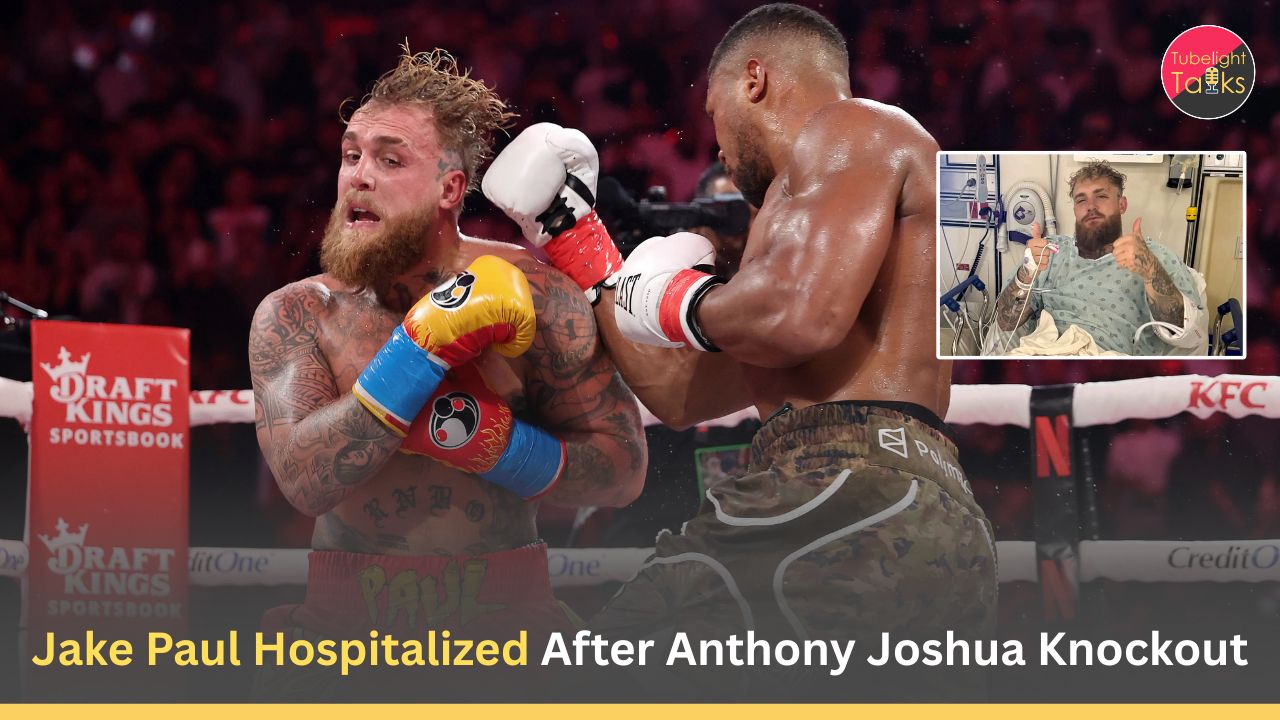
Jake Paul Hospitalized After Anthony Joshua Knockout: Viral Photos, Second Jaw Surgery, and the Crossover Boxing Safety Debate
Jake Paul’s attempt to bridge influencer boxing and elite heavyweight competition has taken a painful turn. After being knocked out by former world champion Anthony Joshua, Paul says he needed another procedure to stabilise his broken jaw, and hospital photos with fiancée Jutta Leerdam have gone viral.
The images reignited a familiar argument: should crossover bouts be sanctioned when size, experience and risk are so uneven? With medical suspensions, healing timelines and promoter incentives now under scrutiny, the story has become bigger than one fight – touching athlete safety, sports regulation and the attention economy.
What’s confirmed: the hospitalization and the second jaw surgery
What Jake Paul said about the setback
The biggest reason “Jake Paul hospitalized” is trending is not a mystery leak – it’s Paul’s own update. Multiple outlets report he posted that he had to undergo another jaw surgery because the hardware from his first operation was loosening.
A short version of the key line being widely quoted: Paul said he needed another jaw surgery and that the “screws and plates were coming loose,” linking it to not resting properly.
The viral moment: hospital images with Jutta Leerdam
The “hook” isn’t just medical – it’s visual. Coverage notes that photos and clips of Paul in the hospital alongside his fiancée, Olympic speed skater Jutta Leerdam, spread rapidly and fuelled comment wars about the legitimacy of influencer boxing and the safety of “crossover boxing matches.”
That viral loop matters because it changes the tone of public discussion: instead of debating scorecards or hype, people are reacting to injury, recovery, and whether the entertainment value is worth the risk.
The fight that started it: Anthony Joshua’s KO of Jake Paul
What happened in the ring
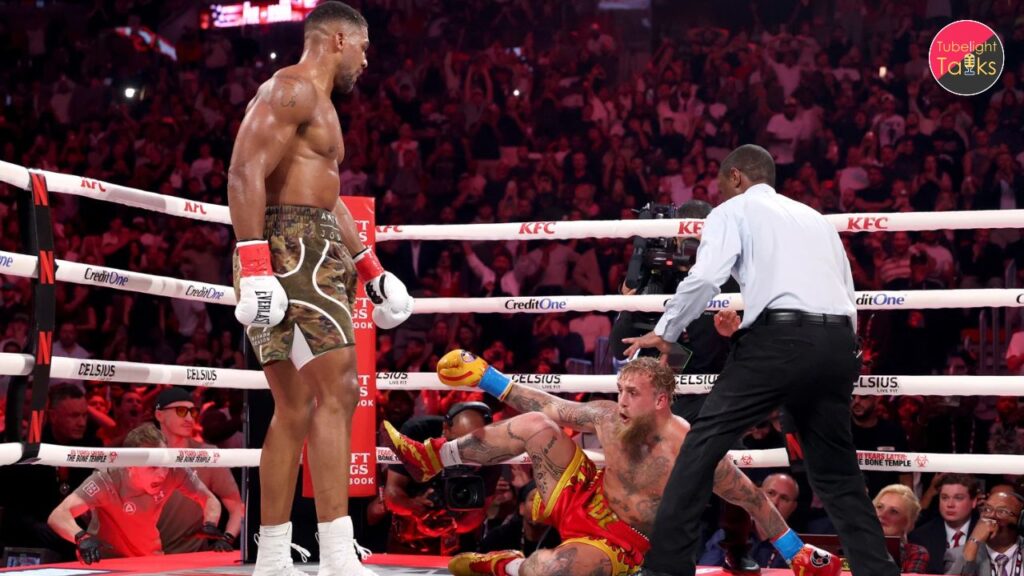
This story traces back to the Netflix main event in Miami where Anthony Joshua defeated Jake Paul by sixth-round knockout – a result that mainstream outlets and Netflix’s own recap framed as Joshua’s experience and power overwhelming Paul’s game plan.
Reports from the event describe repeated knockdowns and a finishing sequence that ended the bout in the sixth, with Paul later acknowledging he believed his jaw was broken.
Why the matchup was always controversial
Even before the bell, this bout represented the most extreme version of influencer boxing: a social-media megastar stepping up against a heavyweight champion-level athlete with years of elite-ring conditioning and high-pressure championship rounds.
That’s why the “Anthony Joshua knockout” moment triggered such a large backlash: many fans weren’t surprised by the outcome – only by how far the sport was willing to stretch spectacle into a heavyweight setting.
Why a second jaw surgery happens: recovery isn’t just “time off”
The anatomy of the issue: plates, screws, and healing time
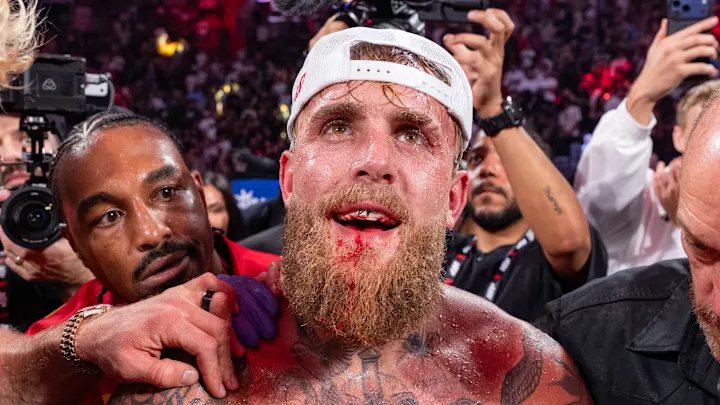
A fractured jaw repaired surgically is often stabilised using plates and screws. Even when hardware holds the bone in place, full healing takes time – patient guidance from a university dental school notes it can take about six weeks for the jaw to heal completely, and patients are typically advised to stick to soft foods during that period.
When a fighter returns to intense activity too early – training, travel, shouting, grinding teeth, or taking accidental bumps – there’s a risk that swelling, strain, or mechanical stress can interfere with stability. In Paul’s case, multiple reports say the hardware loosened, forcing a second operation.
“Jaw surgery recovery” is especially tricky for fighters
For combat athletes, the jaw is not like a sprained ankle you can “work around.” It affects:
- eating and nutrition (critical for recovery)
- sleep quality and inflammation
- training intensity (even light sparring is risky)
- speech and breathing comfort
That’s why this “Jake Paul jaw surgery” story hit so hard: it highlights the reality that the consequences of one big punch can echo for months – sometimes longer than the hype cycle that sold the fight.
The bigger controversy: are crossover boxing matches safe?
The safety argument
Critics of influencer boxing point to three recurring danger zones:
- Experience gap (timing, defence, ring IQ)
- Size and power gap (especially at heavyweight)
- Audience pressure that rewards escalation (bigger opponents, higher stakes, faster timelines)
Promoter Eddie Hearn’s earlier comments about a Joshua–Paul matchup captured this bluntly – suggesting Paul would get “flattened” quickly – while also admitting the modern attention economy would still make people watch.
This is the uncomfortable truth behind the debate: crossover fights can be simultaneously risky and commercially irresistible.
The legitimacy argument
Supporters counter that:
- Paul is a licensed pro boxer who trains seriously
- commissions sanction fights only after medicals and contract review
- fans vote with their attention and wallets
- crossover events bring new audiences and revenue into boxing
And to be fair, regulated boxing is built on consent and risk – even “normal” pro fights carry danger. The controversy is about how much risk is being added when the opponent is a world-class heavyweight.
What regulators typically require after a KO
Medical suspension: the baseline many commissions follow
If the conversation is “boxing safety debate,” it has to include what commissions already do. The Association of Boxing Commissions (ABC) regulatory guidelines state that a boxer losing by KO should receive a medical suspension and should not participate in boxing activity for a minimum of 60 days, with doctors able to extend that period.
That’s not a social-media opinion – that’s a standard many jurisdictions look to when setting post-fight restrictions.
The challenge: concussion protocols aren’t uniform
A major sports-medicine consensus piece has noted that return-to-sport clearance after concussion/KO can be inconsistent across jurisdictions, often relying on fixed suspension periods (30/60/90 days) rather than individualised medical clearance.
So when fans see “Jake Paul hospitalized” after a crossover event, the bigger question becomes: are current rules strong enough for viral-era matchmaking, where fame can accelerate risk-taking?
The social-media engine: why this story exploded beyond boxing fans
“Hospital photos” turn injuries into content
In the influencer era, recovery updates are part of the storyline: images, captions, X-rays, jokes, and couple moments. Coverage of Paul’s post-fight medical journey has repeatedly been amplified by his own posts and the public fascination with celebrity relationships and dramatic visuals.
This creates a feedback loop:
- injury update goes viral
- debate spikes (safety vs entertainment)
- more clips circulate
- pressure builds for the next escalation
And that loop doesn’t just affect Paul. It shapes what other influencers believe they need to do to stay relevant.
The “crossover boxing” business model
Crossover boxing sits at the intersection of three industries:
- combat sports
- creator economies
- streaming-era entertainment
Netflix’s coverage of Joshua vs Paul shows how these fights are packaged like global pop-culture events, not just sporting contests.
That’s why the public reaction is so intense: people aren’t only judging boxing – they’re judging an entertainment system that monetises real bodily risk.
What this setback means for Jake Paul’s next steps
Short-term: recovery first, timeline second
Right now, Paul’s priority is straightforward: stabilise the jaw, heal, avoid complications, and rebuild training gradually. Reports stress that the second surgery delays any realistic return and reinforces that the injury was serious, not cosmetic.
From a career perspective, this also affects leverage. A fighter coming off a KO plus surgery typically faces:
- more cautious matchmaking
- longer medical checks
- tougher negotiations with broadcasters and regulators
Medium-term: does he stay away from heavyweight?
Most of Paul’s “world title” talk has historically aligned more naturally with cruiserweight-sized opponents than elite heavyweights. And after a highlight-reel Joshua KO, the argument for staying out of heavyweight danger zones is louder than ever – especially while his jaw surgery recovery is still ongoing.
What Anthony Joshua gets from all this (and why the sport allowed it)
Joshua’s career has always mixed elite sporting ambition with box-office instincts. A crossover fight adds global attention, big money, and mainstream relevance – especially in a streaming era where views matter as much as belts.
For boxing as an industry, the incentive is obvious: these events sell. The hard part is designing a model where selling doesn’t override safety.
When discipline matters more than hype
Moments like this force a deeper question: what are we rewarding – skill and growth, or risky spectacle? Teachings shared on Jagatguru Rampal Ji Maharaj’s official platform frequently emphasise self-control, restraint over impulse, and avoiding choices driven purely by greed or ego. One article describing the book Jeene Ki Raah highlights how problems like greed and harmful habits pull people toward suffering and how disciplined living brings stability.
In the same spirit, guidance on controlling the mind stresses restraining desires “with the reins of knowledge,” encouraging decisions that protect life rather than endanger it for applause. In a world where viral moments can tempt athletes to rush recovery, that message lands naturally: real strength is patience, not pressure.
Call to Action: Watch crossover boxing like a responsible fan
If you follow influencer boxing and crossover boxing matches, treat safety as part of the sport – not an afterthought. Before amplifying clips, check whether the bout was properly sanctioned, whether the fighters had recent medicals, and whether there’s a major size/experience mismatch that increases risk. Learn what post-KO medical suspensions typically look like (often 60 days minimum in many guidelines) and remember that “viral” doesn’t mean “safe.”
FAQs
Q1. Is Jake Paul really hospitalized right now?
Multiple outlets report Paul shared updates from hospital as he underwent a second jaw surgery due to complications from his earlier repair.
Q2. Why did Jake Paul need a second jaw surgery?
Reports say the plates/screws from his first operation loosened during recovery, leading to another procedure.
Q3. When did Anthony Joshua knock out Jake Paul?
Netflix’s recap states Joshua defeated Paul by sixth-round knockout in their Miami main event.
Q4. How long does a broken jaw typically take to heal after surgery?
Patient guidance from a university dental school notes that complete healing can take about six weeks, even when plates and screws stabilise the jaw.
Q5. What do boxing guidelines say about medical suspension after a KO?
ABC regulatory guidelines state a KO loss should result in a medical suspension with no boxing activity for at least 60 days, with doctors able to extend it.
Q6. Why is this reigniting the “crossover boxing” safety debate?
Because the fight combined influencer boxing with elite heavyweight power, and the aftermath – KO plus jaw surgeries – highlights the real physical cost behind viral spectacle.
Related Stories










Discussion (0)