West Asia Tensions: Lebanon Declares National Mourning After Strikes Kill Over 200 and Jeopardise Truce
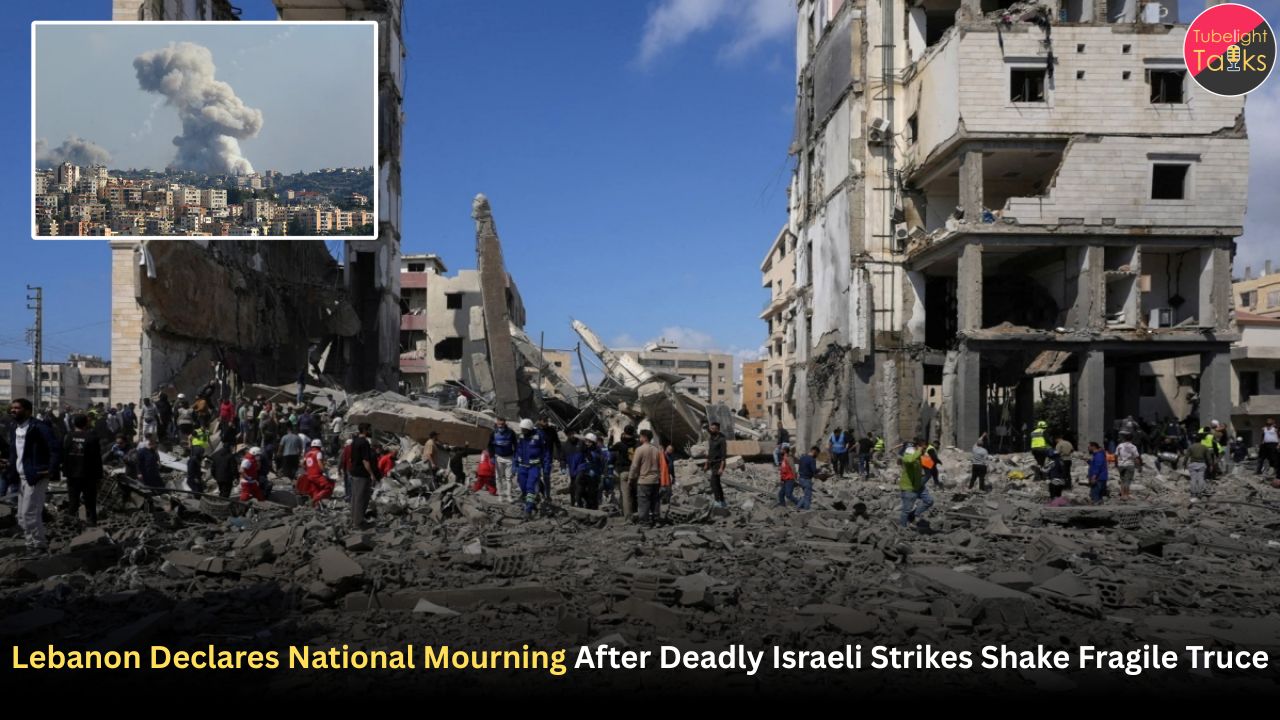
Lebanon has declared a national day of mourning after large-scale Israeli strikes killed more than 200 people in what has been described as one of the deadliest days of bombing in the current conflict. Reuters reported that Israeli attacks killed more than 250 people in Lebanon, while other reporting cited Lebanese authorities saying Prime Minister Nawaf Salam declared Thursday a day of national mourning after the toll surged.
The strikes came just after a U.S.-Iran ceasefire announcement that some parties believed would calm the wider region, but which Israel and the United States said did not apply to Hezbollah in Lebanon.
A day of grief in Lebanon
National mourning is not simply a symbolic act in this context. It reflects the scale of shock and loss inside Lebanon after a wave of strikes hit Beirut, the Bekaa Valley and southern areas, damaging civilian infrastructure and causing heavy casualties.
Al Jazeera’s summary of the day said Lebanon ordered a national day of mourning, lowered flags and shut public institutions as the country reeled from one of the deadliest bombardments in months. Reuters, meanwhile, described the assault as Israel’s most intense on Lebanon since the current round of hostilities began.
The emotional impact on Lebanon goes beyond casualty numbers. A country already carrying the weight of displacement, economic breakdown, damaged institutions and public fatigue has been hit by a fresh trauma at the very moment many people thought a wider ceasefire might reduce the danger. That psychological whiplash matters. When populations move from hope to devastation in a matter of hours, trust in diplomacy erodes quickly.
Civilian cost at the centre of global concern
The United Nations condemned the casualty reports as “appalling,” and Reuters said U.N. human rights chief Volker Türk described the destruction and deaths as horrific. Even when official military claims frame operations as targeted, the global response has focused sharply on the scale of civilian suffering and the need for investigation into possible violations of international humanitarian law. That concern matters because it shifts the debate away from narrow battlefield claims toward the human consequences of the campaign.
Lebanese officials and many outside observers have questioned whether heavily populated urban and commercial neighbourhoods can be treated as conventional military target zones without catastrophic civilian consequences. AP reported that local officials and residents denied the presence of military sites in some of the areas hit. This gap between military justification and local accounts is one reason the strikes have drawn such widespread condemnation.
Also Read: West Asia Crisis: Iran Warns Ceasefire at Risk After Deadly Lebanon Airstrikes
Why the truce now looks dangerously fragile
The ceasefire problem is not only that violence continued. It is that the parties involved appear to have had fundamentally different ideas about what the ceasefire covered. Iran and some mediating voices suggested Lebanon was part of the de-escalation expectation. Israel and the United States rejected that interpretation and said Hezbollah operations were outside the arrangement. Reuters captured this clash directly, noting that the strikes jeopardised the truce because Iran and Pakistan believed Lebanon was included, while Israel and Washington said it was not.
That ambiguity is not a technical detail; it is the heart of the crisis. A ceasefire can survive pressure only if all parties accept the same map of restraint. Once competing interpretations emerge, every subsequent strike becomes not just a military act but a dispute over legitimacy. That is what makes the current situation so unstable. The issue is no longer only whether the truce was violated, but whether a common truce ever existed in the first place.
Hezbollah, Iran and the danger of chain escalation
Reuters reported that Hezbollah had paused attacks under the U.S.-Iran ceasefire but later responded after the Israeli strikes, accusing Israel of breaching the truce. AP similarly said Hezbollah indicated it had not committed to the ceasefire and cited ongoing Israeli aggression. This matters because Lebanon is not a side theatre in West Asia; it is deeply connected to the broader balance involving Iran, Israel, the United States and regional intermediaries. Once violence resumes in one arena, the entire diplomatic frame starts to shake.
The spillover has already been visible in energy markets and shipping anxieties around the Strait of Hormuz. Reuters and AP both tied the deteriorating Lebanon situation to renewed stress around Hormuz and broader fears of escalation. In other words, the human tragedy in Lebanon is inseparable from global economic risk. The region’s conflicts do not remain local for long.
International response and the politics of language
The language used by governments and institutions in a crisis like this is revealing. The U.N. condemned casualty reports as appalling. France urged all sides to respect the ceasefire and argued that Lebanon should be included. Britain and other international voices also pushed for a broader reading of de-escalation. These responses show a growing discomfort with compartmentalised peace deals that reduce one front while leaving another open to large-scale violence.
Israel’s position, however, has been that its campaign in Lebanon is strategically distinct. That argument may make military sense to Israeli planners, but its diplomatic cost is obvious: it weakens confidence in ceasefire announcements and creates the impression that peace language is being used selectively. When the public hears “truce” but sees mass civilian casualties within hours, credibility collapses.
Mourning as both grief and political message
Lebanon’s national mourning is therefore not only an act of remembrance. It is also a statement to the world that the country considers what happened exceptional, intolerable and politically consequential. Such declarations signal that leaders want international attention, solidarity and pressure on outside actors. Mourning becomes both a national expression of pain and a diplomatic instrument.
For civilians on the ground, however, none of that changes the immediate reality: damaged hospitals, fear of renewed strikes, disrupted movement, families searching through rubble, and a society asked once again to absorb loss while external powers argue over definitions and terms. That gap between diplomatic language and civilian experience remains one of the harshest truths of the crisis.
Mourning, violence and Sat Gyaan
In the light of Sat Gyaan, this moment shows the cost of ego, aggression and revenge. Human beings and nations alike suffer when power is used without compassion. Sant Rampal Ji Maharaj teaches that anger and domination never create lasting peace; they multiply sorrow. A ceasefire built without truth and humanity becomes fragile, but a society guided by justice, restraint and spiritual awareness can move toward real peace.
Call to Action
Do not glorify war, do not spread unverified images or rumours, and keep attention on civilian suffering and peace efforts. In times of conflict, humanity must not be pushed below strategy.
FAQs: Lebanon Declares National Mourning After Deadly Israeli Strikes Shake Fragile Truce
Q1. Why did Lebanon declare a national day of mourning?
Because of the heavy death toll after Israeli strikes, with reporting saying Prime Minister Nawaf Salam declared Thursday a day of national mourning.
Q2. How many people were reported killed?
Reuters reported that more than 250 people were killed in the Israeli attacks on Lebanon.
Q3. Why is the U.S.-Iran truce under pressure?
Because Iran and some mediators believed Lebanon was included in the de-escalation framework, while Israel and the U.S. said it was not.
Q4. What did the UN say?
The U.N. condemned the casualty reports as appalling and called for accountability and investigations.
Q5. Has Hezbollah responded?
Reuters and AP reported that Hezbollah resumed attacks or signalled non-commitment after the strikes, saying Israel had breached the expected truce environment.
Related Stories








Discussion (0)