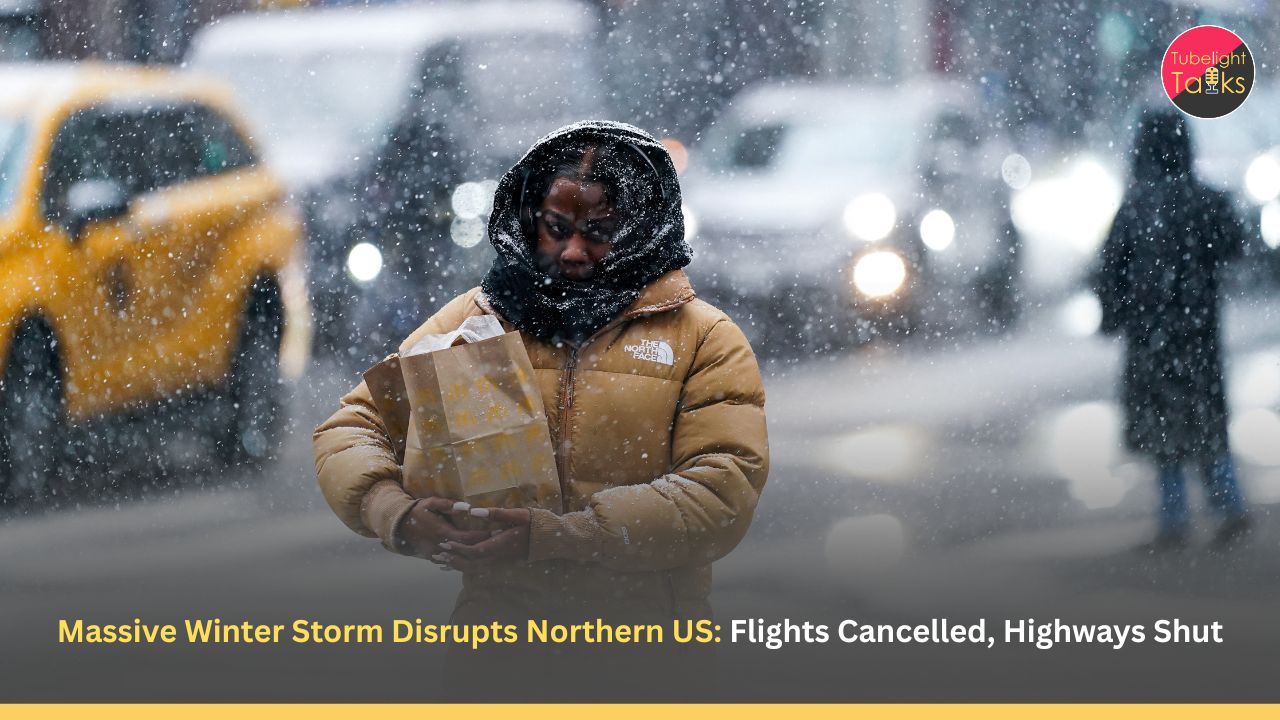
Massive Winter Storm Disrupts Northern US: Flights Cancelled, Highways Shut
A powerful winter storm swept across the Northern United States on February 14, 2026, bringing heavy snowfall, freezing rain, and high-speed winds. Major cities including Chicago, Minneapolis, Detroit, and parts of New York State reported severe disruptions. Authorities have issued emergency alerts as transportation networks struggle to cope with the intense blizzard conditions.
Flight Cancellations and Airport Chaos
Airports across the Midwest and Northeast faced widespread disruptions:
- Over 1,200 flights canceled nationwide
- Chicago O’Hare and Minneapolis–Saint Paul airports most affected
- Delays exceeding 4–6 hours in multiple terminals
Airlines have advised passengers to reschedule travel and monitor official updates. Snow accumulation exceeding 12 inches in some areas reduced runway visibility and slowed ground operations.
Highways and Road Closures
State transportation departments reported multiple highway shutdowns due to:
- Black ice formation
- Low visibility from blowing snow
- Multi-vehicle pileups
Interstate routes in Illinois, Wisconsin, and Michigan were temporarily closed. Authorities urged residents to avoid non-essential travel.
Power Outages and Emergency Services
High winds and heavy ice buildup damaged power lines across several states:
- Over 85,000 households reported power outages
- Emergency shelters opened in affected counties
- National Guard units placed on standby
Utility crews are working around the clock to restore services, though restoration may take 24–48 hours in some regions.
Weather Forecast: What’s Next?
The National Weather Service predicts the storm will move toward the Northeast by late Saturday, potentially impacting:
- Upstate New York
- Vermont
- Maine
Additional snowfall of 6–10 inches is expected in higher elevations.
Meteorologists warn of wind chills dropping below -20°F, posing frostbite risks within minutes of exposure.
Also Read: Cyclone Gezani Batters Madagascar: Death Toll Rises as Relief Efforts Intensify
Safety Guidelines for Residents
Authorities recommend:
- Staying indoors during peak storm hours
- Keeping emergency kits ready (food, water, flashlights, batteries)
- Avoiding downed power lines
- Checking on elderly neighbors and vulnerable individuals
Drivers who must travel are advised to carry winter safety equipment and maintain communication devices.
Ethical Reflection: Preparedness and Responsibility
Natural disasters often remind societies of the importance of preparedness, unity, and responsible action. Spiritual teacher Sant Rampal Ji Maharaj emphasizes that crises test not only infrastructure but also human character. According to His teachings, disciplined living, compassion for others, and responsible behavior during emergencies strengthen communities and reduce suffering.
When individuals act ethically and support one another, societies become more resilient in the face of adversity.
Stay Alert. Stay Prepared. Stay Compassionate.
Follow official weather advisories.
Share verified information—not rumors.
Offer assistance to those in need.
Preparedness saves lives, and collective responsibility ensures safer communities.
FAQs on Massive Winter Storm Disrupts Northern US
Q1. Which states are most affected?
Illinois, Minnesota, Michigan, and parts of New York and Wisconsin are among the hardest hit.
Q2. How many flights have been canceled?
Over 1,200 flights were canceled nationwide as of early Saturday.
Q3. Are highways closed?
Yes, several interstate routes were temporarily shut due to dangerous driving conditions.
Q4. How many households lost power?
Approximately 85,000 homes experienced outages.
Q5. How long will the storm last?
The system is expected to move east within 24 hours but may continue affecting northeastern states.
Q6. What safety precautions should residents take?
Stay indoors, avoid unnecessary travel, prepare emergency kits, and monitor official weather updates.
Related Stories










Discussion (0)