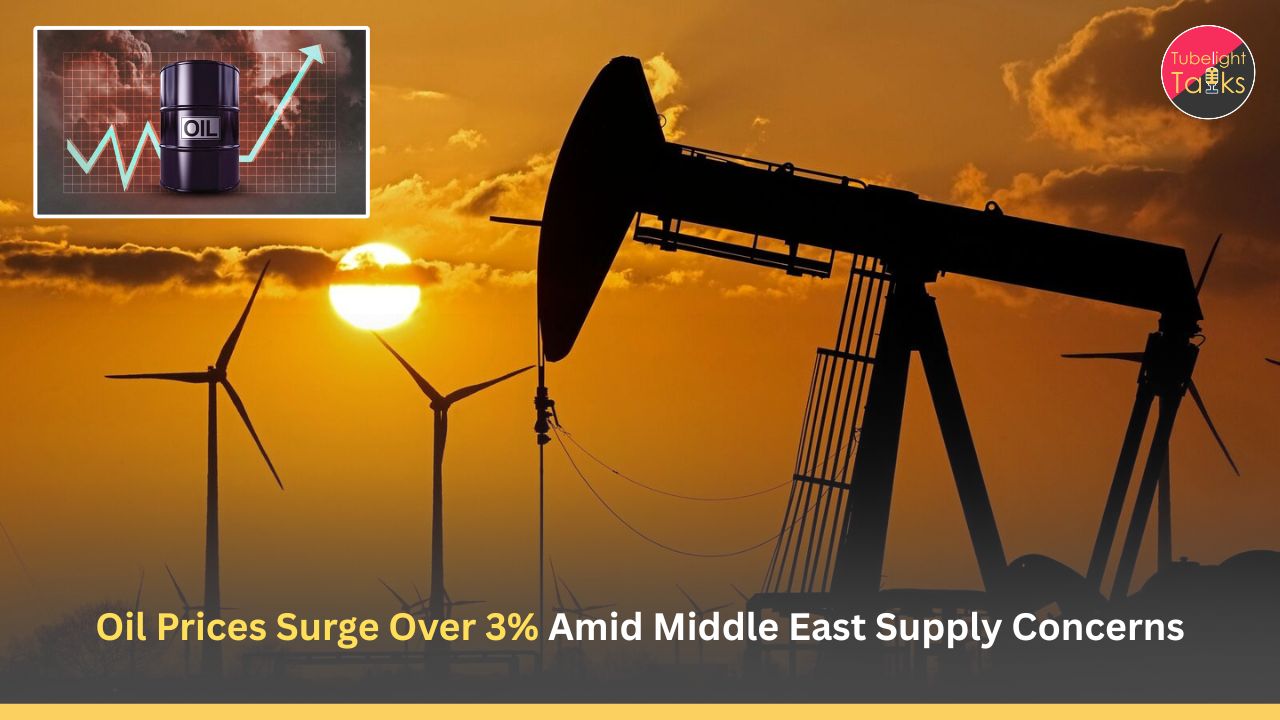
Oil Prices Surge Over 3% Amid Middle East Supply Concerns
Oil Prices Surge: Global oil markets witnessed sharp volatility on February 14, 2026, as crude prices surged more than 3% amid rising concerns over potential supply disruptions in the Middle East. Brent crude futures climbed above $92 per barrel, while West Texas Intermediate (WTI) also posted strong gains. Traders reacted swiftly to geopolitical developments that could tighten global energy supplies.
What Triggered the Surge?
Reports of heightened military activity near key oil transit routes in the Gulf region raised fears of disruptions. While no confirmed shutdown has occurred, even the possibility of supply constraints can drive rapid price spikes.
The Middle East accounts for nearly 30% of global oil supply, making it a critical factor in price stability.
Market Reaction
- Brent crude rose to $92.40 per barrel, up 3.4%
- WTI crude reached $88.70 per barrel, gaining 3.1%
- Energy stocks in Europe and Asia closed higher
- Airline shares dipped amid concerns of higher fuel costs
Commodity analysts describe the move as a “risk premium rally,” where prices reflect fear of potential disruption rather than confirmed shortages.
Impact on Global Economy
Higher oil prices can have ripple effects across economies:
- Increased fuel prices for consumers
- Higher transportation costs
- Rising production expenses for industries
- Renewed inflationary pressures globally
Countries heavily dependent on oil imports—such as India, Japan, and parts of Europe—are particularly vulnerable.
Also Read: Oil Prices Rise on Supply-Disruption Fears: What the Market & You Need to Know
OPEC+ and Supply Balancing
Market participants are closely watching OPEC+ for possible output adjustments. If prices remain elevated, producers may increase supply to stabilize markets. However, political uncertainties could complicate coordinated responses.
Energy Security in Focus
The latest surge has revived discussions around:
- Diversifying energy sources
- Accelerating renewable energy transitions
- Strategic petroleum reserves utilization
Governments may consider releasing reserves if prices continue to spike sharply.
Ethical Reflection: Responsible Resource Management
Energy crises often highlight the importance of responsible resource management and ethical governance. Spiritual teacher Sant Rampal Ji Maharaj emphasizes that when societies prioritize fairness, restraint, and long-term welfare over short-term gain, instability can be minimized. His teachings encourage disciplined living and responsible use of natural resources to prevent conflict and imbalance.
Sustainable stability requires not only economic planning but also moral accountability in decision-making at every level.
Call to Action
Stay informed about fuel price trends.
Support renewable and sustainable energy solutions.
Encourage transparent and accountable energy policies.
Balanced resource management today secures economic stability tomorrow.
FAQs on Oil Prices Surge – February 2026
Q1. Why did oil prices rise sharply?
Due to rising geopolitical tensions in the Middle East that may threaten oil supply routes.
Q2. How much did oil prices increase?
Brent crude rose over 3%, crossing $92 per barrel.
Q3. Will fuel prices increase for consumers?
If high oil prices persist, retail fuel prices may rise globally.
Q4. Can OPEC+ stabilize prices?
Yes, through production adjustments, though geopolitical factors may influence decisions.
Q5. How does this affect inflation?
Higher oil prices can increase transportation and production costs, contributing to inflation.
Q6. What can governments do to manage the impact?
They may use strategic reserves, adjust taxes, or promote renewable energy investments.
Related Stories









Discussion (0)