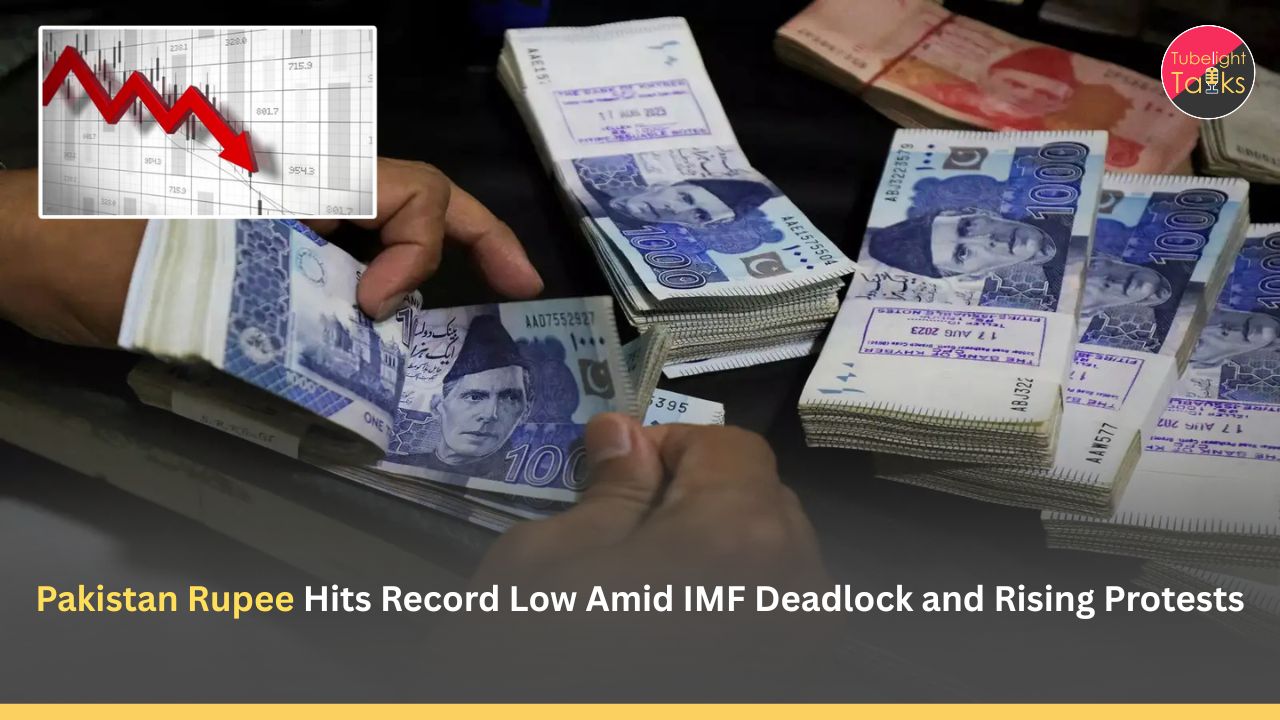
Pakistan Rupee Hits Record Low Amid IMF Deadlock and Rising Protests
Pakistan’s economic crisis deepened on February 14, 2026, as the Pakistan rupee hits record low against the US dollar, highlighting growing concerns over the Pakistan economic crisis 2026. The sharp currency depreciation comes amid stalled IMF Pakistan negotiations, declining foreign reserves, and rising public protests linked to inflation and economic instability. Economists warn that without urgent policy reforms, Pakistan faces increasing default risk, raising fears of a potential sovereign default and further pressure on the struggling economy.
Rupee in Freefall
The Pakistani rupee fell to PKR 382 per US dollar, marking its weakest level ever recorded.
Key drivers behind the plunge:
- Delayed IMF loan tranche approval
- Declining foreign exchange reserves (below $3 billion)
- Rising import bills due to high global energy prices
- Reduced remittance inflows
Currency traders reported panic selling as market confidence weakened further.
IMF Negotiations at a Standstill
Pakistan is currently negotiating a crucial loan review under its $9 billion IMF program. However, disagreements persist over:
- Energy subsidy cuts
- Expansion of the tax base
- Privatization of state-owned enterprises
- Fiscal deficit reduction targets
IMF officials reportedly require stronger structural reforms before releasing the next funding installment.
Inflation Squeezes Households
With currency depreciation accelerating inflation, ordinary citizens face rising hardship.
- Food inflation crosses 40%
- Fuel prices rise sharply
- Electricity tariffs increase
- Medicine shortages worsen
In major cities like Karachi, Lahore, and Islamabad, protests have erupted as citizens demand relief from soaring costs of living.
Also Read: Pakistan’s Economic Meltdown Deepens in 2026: Currency, Inflation and Political Unrest Collide
Political Pressure Mounts
Prime Minister Shehbaz Sharif’s administration faces criticism from opposition parties and economic analysts. Public frustration is growing over:
- Perceived policy mismanagement
- Slow reform implementation
- Rising unemployment
Security forces have been deployed in several areas to maintain order amid demonstrations.
Risk of Sovereign Default
Pakistan must repay over $4 billion in external debt by mid-2026. Without IMF support and foreign investment inflows, repayment capacity remains uncertain.
Global credit rating agencies have signaled potential downgrades if negotiations collapse further.
Regional Implications
Pakistan’s instability could impact:
- Regional trade routes in South Asia
- Border security dynamics
- Investor confidence across emerging markets
Neighboring economies are closely monitoring developments.
Ethical Reflection: Stability Beyond Policy
While financial reform and international assistance are critical, long-term stability also depends on ethical governance and responsible leadership.
Spiritual teacher Sant Rampal Ji Maharaj emphasizes that economic systems rooted in honesty, accountability, and disciplined conduct are less vulnerable to collapse. According to His teachings, when corruption and greed dominate institutions, financial instability becomes inevitable. Sustainable recovery, therefore, requires both structural reform and moral integrity in public life.
Call to Action
Economic recovery demands transparent governance.
Leaders must prioritize long-term stability over short-term gains.
Citizens and policymakers alike must uphold integrity to rebuild trust.
In times of crisis, responsible action today shapes national stability tomorrow.
FAQs on Pakistan Rupee Hits Record Low – February 2026
Q1. Why did the Pakistani rupee hit a record low?
Due to stalled IMF talks, low foreign reserves, rising imports, and weakened investor confidence.
Q2. What is the current exchange rate?
Approximately PKR 382 per US dollar as of February 14, 2026.
Q3. Is Pakistan at risk of default?
Yes, without IMF support and sufficient reserves, default risks increase significantly.
Q4. How are citizens affected?
Rising food, fuel, and electricity prices are placing heavy pressure on households.
Q5. What reforms is the IMF demanding?
Energy subsidy reductions, tax expansion, privatization, and fiscal discipline measures.
Q6. What is needed for long-term stability?
Structural economic reform combined with transparent and ethical governance practices.
Related Stories









Discussion (0)