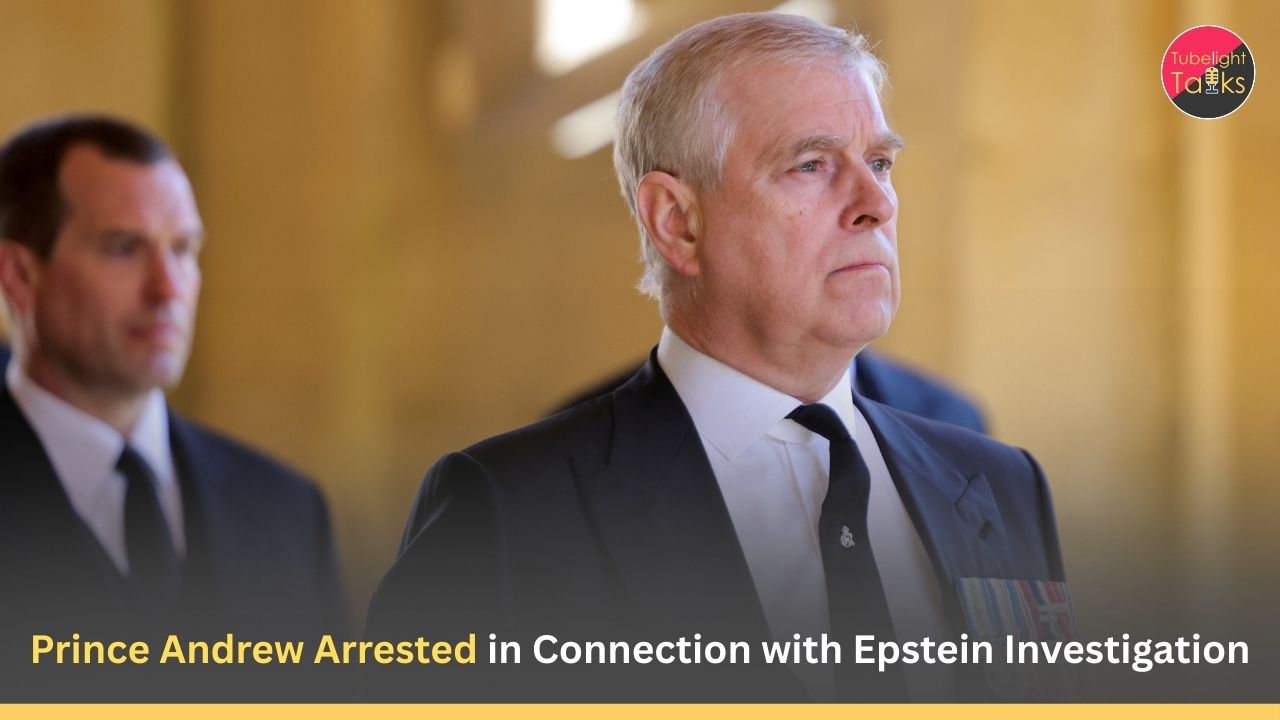
Prince Andrew Arrested in Connection with Epstein Investigation: What Happened, What It Means, What Comes Next
Prince Andrew Arrested: A major legal and constitutional storm has erupted in the United Kingdom after Andrew Mountbatten-Windsor – widely known as Prince Andrew, the former Duke of York – was arrested on suspicion of misconduct in public office in a case tied to renewed scrutiny surrounding Jeffrey Epstein. UK police confirmed the arrest of “a man in his sixties” and said searches were under way, while multiple major outlets identified the suspect as Mountbatten-Windsor.
He was later released after hours of questioning and has not been charged, but remains under active investigation. The development has revived global attention on royal accountability and the long shadow of the Epstein scandal.
What happened in London: a clear timeline of the arrest
The official police confirmation
Thames Valley Police announced it opened an investigation into suspected misconduct in public office and stated that officers had arrested “a man in his sixties from Norfolk” on February 19, 2026, while carrying out searches at addresses in Berkshire and Norfolk.
Because UK police statements often avoid naming suspects at an early stage, the official release does not identify the man. However, major international reporting – including Reuters – has identified the arrested individual as Andrew Mountbatten-Windsor.
Release after questioning: what we know
According to Reuters, Mountbatten-Windsor was arrested and later released after questioning, while remaining under investigation. This matches the “hook” driving the story: an arrest serious enough to shock the public, but no immediate charge – leaving the case in a tense, unresolved phase.
“Released under investigation” in the UK: why that phrase matters
In the UK, being released after questioning does not mean cleared. It typically means police continue inquiries – reviewing documents, conducting interviews, seeking evidence, and consulting prosecutors where appropriate – before deciding whether to charge, take no further action, or impose other outcomes. Reuters and other outlets have emphasized that Mountbatten-Windsor has not been charged at this stage.
For the public, this distinction is crucial: an arrest can be a procedural step, while charging requires a higher evidential threshold and prosecutorial assessment.
What are UK police investigating – and how does it connect to Epstein?
The allegation focus: misconduct linked to public office
Reuters reporting describes the suspected offence as misconduct in public office linked to claims that confidential government material may have been improperly shared during Mountbatten-Windsor’s period as a UK trade envoy.
This is important because it frames the investigation as tied to alleged abuse of an official role, rather than automatically being a new sexual-offence allegation. That said, the broader Epstein context is inseparable from why this story is trending globally.
Why “Epstein files” are back in headlines
The Metropolitan Police issued an update stating that it is responding to developments following the release of Epstein-related files and noted that Thames Valley Police are currently investigating misconduct in public office offences.
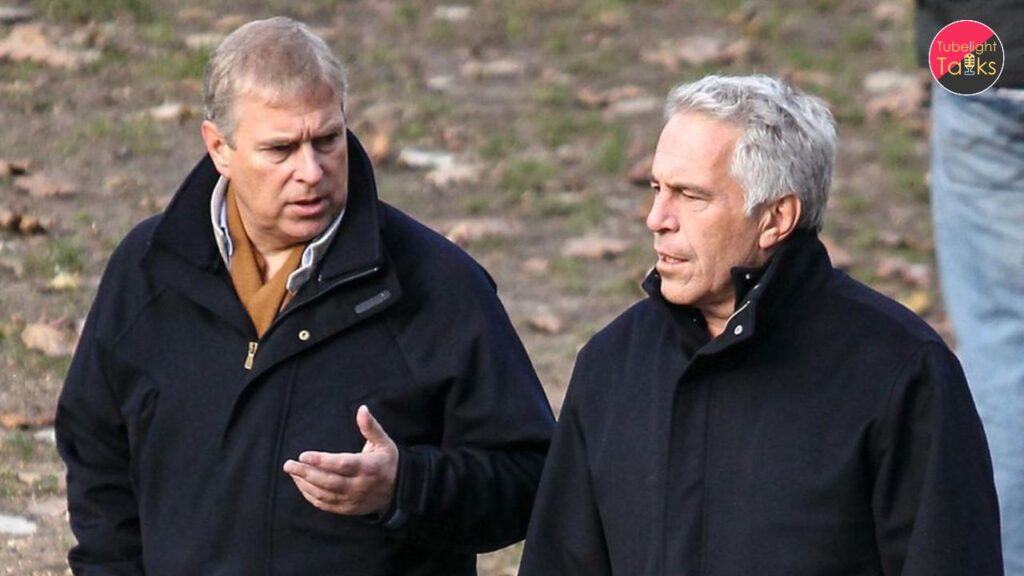
Multiple outlets have reported that UK authorities are reviewing newly released or newly surfaced material connected to Epstein, and that cooperation with partners – including US authorities – forms part of the wider picture.
What this does NOT prove
Because this case is live, it’s essential to avoid treating allegations as established facts. An arrest indicates suspicion and active investigation, not guilt. Mountbatten-Windsor has denied wrongdoing, and the investigation remains ongoing.
That caution is especially important in a story this emotionally charged, where misinformation can spread faster than verified updates.
Understanding the charge: what “misconduct in public office” means
The CPS definition and the core elements
The Crown Prosecution Service (CPS) describes misconduct in public office as a serious common law offence involving wilful abuse or neglect of the powers or responsibilities of public office, requiring a direct link between the misconduct and abuse of those powers.
In simple language: it’s not about embarrassment, bad optics, or poor judgment. It’s about alleged conduct serious enough to represent an abuse of public trust connected to an official function.
Why it’s considered a heavyweight offence
CPS guidance states the offence is indictable-only (serious enough for higher court) and carries a maximum sentence of life imprisonment. The Law Commission has also noted the offence is not defined in statute and has long been debated for reform due to complexity and sensitivity.
That severity is one reason this story is dominating UK front pages: the allegation category signals that investigators view the matter as potentially serious.
Why this offence is relatively rare – and controversial
Legal analysts and public-policy explainers note that misconduct in public office is meant to be narrowly confined to protect public confidence, but its boundaries can be contested.
In high-profile cases, this can trigger debate over:
- what counts as “public office” in practice,
- how prosecutors prove wilfulness and seriousness, and
- whether the offence is too broad or too vague.
Which police force is in charge – and why that detail matters
Thames Valley Police as the lead investigator
Thames Valley Police publicly confirmed it is leading the misconduct in public office investigation. That matters because it anchors the story in a specific investigative authority, rather than vague speculation.
The Metropolitan Police role: coordination and protection detail inquiries
The Metropolitan Police update makes clear that while Thames Valley Police lead the misconduct inquiry, the Met is working with coordination groups to ensure consistency.
Separate reporting has highlighted a specific operational angle: investigators are seeking information from people who may have been in close proximity to Mountbatten-Windsor in official settings – particularly former protection officers.
That is a major reason the story keeps trending: the investigation narrative isn’t static – new interviews and reviews suggest an expanding fact-finding effort.
The Royal Family response: restraint, but not silence
King Charles’ statement: “the law must take its course”
Multiple reports say King Charles issued a message emphasizing that “the law must take its course.”
Even though the wording is brief, the significance is large: it signals the palace is not publicly challenging law enforcement, and it frames this as a matter for institutions rather than family management.
Why the optics are so explosive
A modern constitutional monarchy depends heavily on public trust – especially the idea that no one is above the law. Reuters described the situation as a profound crisis moment for the institution because it revives the most damaging elements of the wider Epstein-linked scandal narrative around royal proximity, influence, and accountability.
For many observers, this is not just one man’s legal jeopardy. It’s a test of how Britain’s most symbolic institution behaves when the spotlight turns harsh.
Why this is trending across the UK and Commonwealth
A global scandal re-ignites – again
The Epstein story is internationally recognized and emotionally charged, and any major development involving a globally known figure immediately travels through headlines, social platforms, and talk shows. The arrest angle is particularly powerful because it moves the story from “allegations and reputational damage” into “criminal procedure and police action.”
The Commonwealth factor: monarchy as shared symbolism
Across Commonwealth nations, the monarchy remains a historical and constitutional reference point – sometimes embraced, sometimes contested. When a royal scandal deepens, it often fuels political debates about the monarchy’s future role and relevance.
The public’s key question: what happens next?
The public is watching for three things:
- Will prosecutors authorize charges?
- Will there be further arrests or interviews?
- Will new documentary evidence be published or disclosed in court?
Until those answers emerge, the story stays “alive” – and that is why it continues to dominate.
What comes next legally: realistic scenarios
Scenario 1: No further action after investigation
This can happen if evidence does not meet the required threshold or if key claims cannot be substantiated. It is a possible outcome in any investigation – even high-profile ones.
Scenario 2: Charge and court process
If police believe evidence supports prosecution, they can present a file to prosecutors. CPS guidance on misconduct in public office emphasizes seriousness and evidential requirements.
A charge would move the case into a different phase entirely – bail conditions, court appearances, disclosure issues, and months (or longer) of legal proceedings.
Scenario 3: Additional investigative widening
Reuters and other reporting indicates investigators are reviewing broader material and seeking information from individuals connected to official protection or operational contexts. That suggests the inquiry could develop further depending on what witnesses or documents reveal.
Also Read: Epstein Files Release Bill: Congress Pushes Disclosure as Legislation Heads to Trump
How to follow updates without falling for misinformation
Use primary sources first
If you want reliable updates on the Prince Andrew arrest story, prioritize:
- Thames Valley Police official updates
- Metropolitan Police updates tied to coordination
- Court filings or official prosecutorial statements (when available)
Then confirm through credible newswires
Reuters, AP, and established UK outlets are typically careful about attribution and legal wording – especially in live investigations.
Be cautious with viral screenshots and “insider” accounts
In major royal stories, fake statements and doctored images circulate quickly. A good habit: if you can’t find it on a police site, a court page, or a major wire service, treat it as unverified.
Integrity in Public Life
When a society watches powerful figures face questioning, the deeper issue is not celebrity – it’s trust. Teachings shared by Sant Rampal Ji Maharaj often emphasize that real strength is shown through truthfulness, restraint, and accountability, and that misuse of authority ultimately harms both the individual and the public.
These ideas appear repeatedly across the official satsang resources, stressing ethical conduct and responsibility as the foundation of stable communities. For readers seeking the broader spiritual perspective on living with honesty and avoiding ego-driven decisions, official materials are available through the central website and satsang channels.
Jagatguru Rampal Ji Maharaj’s official site, YouTube, and X (Twitter)
Call to Action
If you’re tracking the Prince Andrew arrest and the wider Epstein investigation story, rely on official statements first and credible reporting second. Save the Thames Valley Police update page, check for Metropolitan Police coordination notices, and wait for confirmed prosecutorial steps before treating any claim as fact. This is a live investigation: accuracy matters, reputations matter, and misinformation can inflame harm.
FAQs
Q1. Was Prince Andrew actually arrested?
Thames Valley Police confirmed the arrest of “a man in his sixties” as part of a misconduct in public office investigation, and major outlets identified the individual as Andrew Mountbatten-Windsor.
Q2. Has he been charged with a crime?
As reported by multiple major outlets, he was released after questioning and has not been charged at this stage.
Q3. What does “misconduct in public office” mean?
The CPS describes it as serious wilful abuse or neglect of the powers/responsibilities of public office, requiring a direct link to that abuse, and it can carry a maximum life sentence.
Q4. Which police force is leading the case?
Thames Valley Police publicly stated it opened the investigation and carried out the arrest.
Q5. Is this a new sexual offence allegation?
Current reporting centers the arrest on suspected misconduct in public office. Some reporting says investigators are reviewing wider Epstein-related material, but an arrest does not prove any allegation and no charge has been announced.
Q6. What should people watch for next?
Watch for official police updates, any CPS charging decision, and any formal court proceedings – these will determine whether the case escalates or concludes without charges.
Related Stories









Discussion (0)