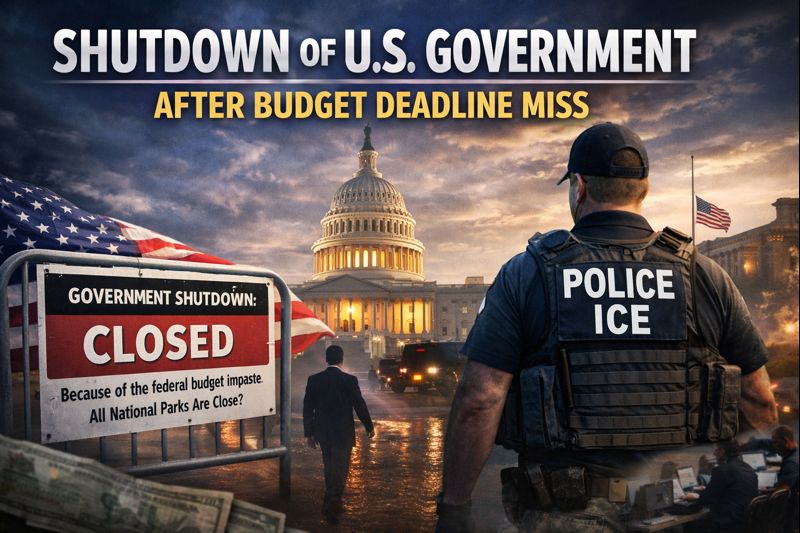
Shutdown of US Government Begins After Budget Deadline Miss, Triggering Funding Lapse Across Key Federal Agencies
The shutdown of the US government began early Saturday after Congress failed to pass the full 2026 federal budget before the midnight deadline. Although the US Senate approved a bipartisan funding package at the last moment, the House of Representatives was out of session, making a brief funding lapse unavoidable.
The partial shutdown is linked primarily to disagreements over homeland security funding and immigration enforcement practices following the fatal shootings of two US citizens in Minneapolis by federal agents. While several major departments have initiated shutdown procedures, lawmakers from both parties say the disruption is expected to be limited and funding could be restored within days.
Key Highlights on the Shutdown of US Government After Budget Deadline Miss
- The shutdown of the US government began at 12:01 am Eastern Time on Saturday after Congress missed the 2026 budget deadline.
- The US Senate passed a bipartisan funding bill by a 71–29 vote, but House approval is pending.
- Funding disputes center on the Department of Homeland Security (DHS) and immigration enforcement practices.
- The shutdown follows the fatal shootings of Alex Pretti and Renee Good in Minneapolis.
- Roughly three-quarters of federal government operations are affected, though the impact is expected to be short-lived.
- A two-week stopgap funding measure for DHS was approved to allow further negotiations.
- This marks the second shutdown of the US government in the past year, following a record 43-day shutdown in 2025.
What Triggered the Shutdown of the US Government
The immediate trigger for the shutdown of the US government was Congress’s failure to approve the full 2026 federal budget before the funding deadline late Friday night. While lawmakers had reached broad agreement on most government spending, negotiations broke down over continued funding for the Department of Homeland Security.
Democratic lawmakers refused to support DHS funding without new restrictions on federal immigration agents, citing the killings of two US citizens, Alex Pretti and Renee Good, during immigration enforcement operations in Minneapolis. The incident became a flashpoint that derailed talks and prevented final passage of the budget package before the deadline.
How Congress Fell Short of Passing the Budget on Time
Late Friday, the US Senate approved a package of five appropriations bills to fund most federal agencies through the end of the fiscal year in September. The package also included a separate two-week continuing resolution to keep DHS operating temporarily.
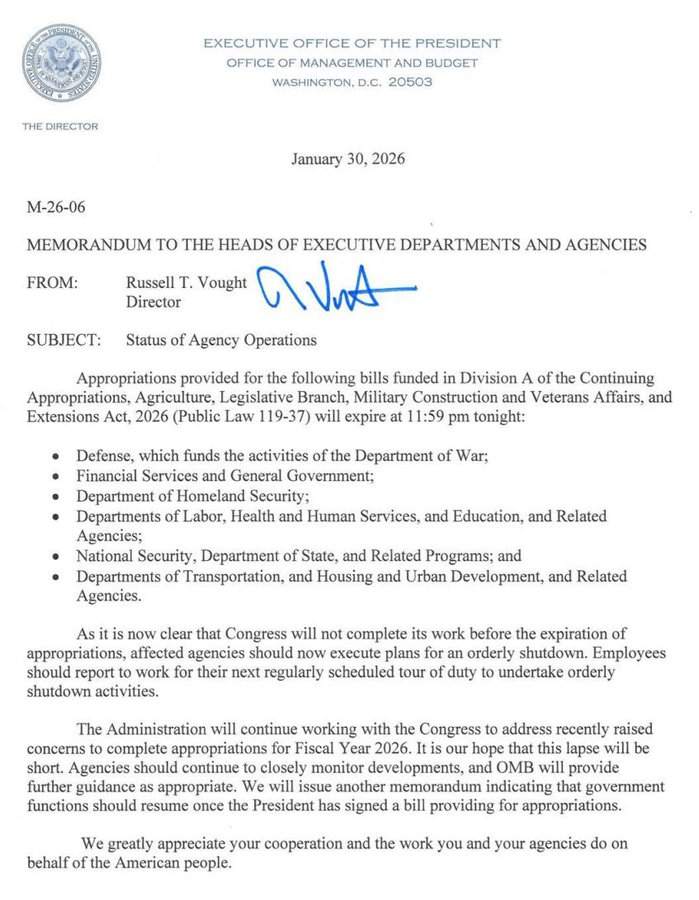
However, the House of Representatives was in recess when the deadline arrived and could not vote on the revised package. Lawmakers are not scheduled to return to Washington until Monday, making a short-term funding lapse unavoidable despite Senate approval and President Donald Trump’s endorsement of the deal.
Federal Agencies Impacted by the Shutdown
Although described as partial, the shutdown of the US government affects a significant portion of federal operations. Officials estimate that approximately 75 to 78 percent of federal government activities are technically impacted.
Departments directed to begin shutdown procedures include:
- Department of Defense
- Department of Homeland Security
- Department of Transportation
- Department of Education
- Department of Health and Human Services
- Department of Labor
- Treasury Department
- Housing and Urban Development
- State Department
The Office of Management and Budget instructed agencies to carry out orderly shutdown plans while expressing hope that the funding lapse would be brief.
Which Government Services Continue to Operate
Despite the shutdown, several key departments remain fully funded because their budgets were approved earlier.
Departments and services that remain funded include:
- Department of Agriculture, allowing food assistance programs to continue
- National parks
- Veterans’ services
- Department of Justice
This prior funding has helped limit the immediate impact of the shutdown on essential public services.
Immigration Enforcement at the Center of the Budget Dispute
Immigration enforcement remains the central issue behind the shutdown of the US government. Democrats are demanding changes to how federal immigration agents operate, including banning the use of masks, requiring body cameras, ending so-called roving patrols, tightening warrant requirements, and mandating clearer identification.
They are also calling for independent investigations into alleged misconduct by federal agents. Democratic leaders argue these measures represent basic accountability standards. Republicans, however, remain divided, with some opposing additional restrictions and others expressing concern over recent enforcement tactics.
Why ICE Operations Are Expected to Continue
Despite the funding lapse, Immigration and Customs Enforcement operations are unlikely to halt. The agency received approximately $75 billion in funding under the 2025 One Big Beautiful Bill Act, providing resources that can be used during a shutdown. In addition, the administration has authority to require DHS employees to continue working during a funding lapse.
Political Hurdles in the House of Representatives
The fate of the funding package now depends on the Republican-controlled House, where the party holds a narrow majority. Speaker Mike Johnson has acknowledged the likelihood of a short shutdown but said the House intends to act quickly once lawmakers return.
However, internal divisions within the Republican caucus could complicate passage. Some lawmakers are pushing to attach unrelated legislation, including voting identification measures, to the funding bill, potentially delaying approval.
How This Shutdown Compares With the Previous One
This is the second shutdown of the US government in the past year. The previous shutdown, which began in October 2025, lasted 43 days, making it the longest in US history. That shutdown disrupted air travel, delayed government services, and left hundreds of thousands of federal workers without pay.
In contrast, the current shutdown is expected to be brief, possibly ending early next week if the House approves the Senate-backed deal.
What Comes Next for the US Government
Lawmakers plan to use the two-week DHS funding extension to negotiate a longer-term agreement on immigration enforcement policies. If the House passes the funding deal on Monday, normal government operations could resume quickly.
If negotiations stall, however, the shutdown could extend, leading to furloughs, unpaid work for federal employees, delayed contractor payments, and broader disruptions across federal agencies.
A Brief Shutdown With Wider Political Implications
The shutdown of the US government underscores how immigration policy has become a defining fault line in federal budget negotiations. While leaders from both parties say they want a swift resolution, the coming days will determine whether Congress can bridge political divisions and restore full government operations without triggering another prolonged crisis.
FAQs on Shutdown of US Government After Budget Deadline Miss
1. Why did the shutdown of the US government begin?
The shutdown of the US government began after Congress failed to pass the full 2026 budget before the midnight deadline, leading to a temporary lapse in federal funding.
2. When did the US government shutdown start?
The partial shutdown of the US government started at 12:01 am Eastern Time on Saturday after the budget deadline expired without House approval.
3. Which agencies are affected by the shutdown of the US government?
About three-quarters of federal agencies are affected, including defense, education, transportation, health, labor, and homeland security, though some departments remain fully funded.
4. Why is homeland security funding at the center of the shutdown?
The dispute centers on Department of Homeland Security funding after Democrats demanded restrictions on immigration enforcement following fatal shootings during federal operations in Minneapolis.
5. How long is the shutdown of the US government expected to last?
Lawmakers expect the shutdown to be brief, with funding likely restored within days once the House reconvenes and votes on the Senate-approved funding package.
Related Stories










Discussion (0)