Supreme Court Issues Landmark Ruling on Digital Privacy & Data Protection
Supreme Court DPDP Act Case: In a significant turning point for digital privacy and data protection in India, the Supreme Court has stepped into the constitutional debate surrounding the Digital Personal Data Protection (DPDP) framework. While the Court has declined to grant an interim stay on the DPDP Act’s operation, it has referred core questions—especially the balance between privacy and transparency under the RTI regime—to a five-judge Constitution Bench.
The move is being seen as “landmark” not because the final verdict has arrived, but because the Court has formally acknowledged that India’s data protection law raises constitutional issues that need authoritative clarity.
What the Supreme Court Ordered and Why It’s Being Called Landmark
The Supreme Court’s latest order is being widely interpreted as a major judicial signal on digital privacy. Reports indicate the Court has:
- issued notice in connected challenges,
- declined an interim stay on the DPDP framework, and
- referred the constitutional questions to a larger (five-judge) Constitution Bench.
This is a crucial distinction: it is not a final verdict on data protection yet. But sending the dispute to a Constitution Bench elevates it into the category of cases that define how fundamental rights are interpreted and balanced.
Why a Constitution Bench reference matters for digital privacy
A five-judge bench is generally constituted when the Court believes issues involve:
- interpretation of constitutional provisions,
- reconciliation of competing fundamental rights, or
- legal questions with long-term impact across government, citizens, and industry.
In the DPDP challenges, the “long-term impact” is obvious: almost every Indian with a smartphone, Aadhaar-linked service usage, banking apps, e-commerce accounts, or social media presence is affected by how personal data is collected, processed, and protected.
The DPDP Framework at the Center of the Dispute
India’s data protection law is built around the Digital Personal Data Protection Act, 2023 and the operational DPDP Rules, 2025.
The DPDP Act’s stated purpose is to regulate the processing of digital personal data while recognising the individual’s right to protect their personal data—alongside lawful data processing needs. This dual objective is explicitly reflected in the Act’s opening description.
DPDP Rules, 2025: What changed when the Rules were notified
The Government notified the DPDP Rules in November 2025, describing them as a “citizen-centric” framework to support privacy protection and responsible data use—positioning the Rules as the step that makes the Act operational in practice.
Try this Tool: Used Phone Price Calculator: Check Resale Value (India, USA, UK, Canada)
In simple terms: the Act sets the legal skeleton; the Rules add operational detail that impacts how consent notices are issued, how grievances are handled, and how enforcement processes may unfold.
What the Petitions Challenge: Privacy vs Transparency, Power vs Safeguards
The challenges before the Supreme Court reportedly raise multiple concerns, but the most publicly discussed flashpoint is the privacy vs RTI transparency clash.
The RTI conflict: will “personal data” become a blanket denial ground?
Multiple reports say petitioners argue the DPDP framework—particularly amendments affecting RTI disclosures—could weaken the Right to Information by allowing public authorities to deny information by labelling it “personal.” The Supreme Court has agreed to examine these concerns while refusing to stay the provision at this stage.
This is where digital privacy becomes a national governance question. If privacy is interpreted too broadly, transparency may suffer. If transparency is enforced without limits, individual privacy can be harmed.
Other key issues reportedly flagged in the challenge
Apart from RTI, explanations of the case also point to concerns such as:
- breadth of government exemptions,
- institutional independence and design of the enforcement body, and
- the risk of chilling effects on investigative journalism.
These issues are central to data protection because enforcement is not only about penalties—it is about credible oversight, fair adjudication, and meaningful remedies for citizens.
The Constitutional Backbone: The Right to Privacy and the Puttaswamy Standard
Any modern digital privacy case in India inevitably traces back to the Supreme Court’s landmark Justice K.S. Puttaswamy (2017) ruling, which affirmed privacy as a constitutionally protected right and discussed informational privacy in an age of data.
Why “proportionality” is central to data protection law
Coverage of the DPDP challenge notes reliance on the Puttaswamy framework—especially the idea that restrictions on fundamental rights must meet constitutional tests such as legitimate aim and proportionality.
For the DPDP Act and Rules, that means the Court may examine:
- whether the framework protects privacy strongly enough,
- whether any limitations are narrowly tailored, and
- whether adequate safeguards exist against misuse.
Why This Moment Matters More Than a Typical Legal Dispute
Calling this development “landmark” is not about drama—it’s about scale and timing.
1) Digital privacy is now a daily-life right, not a niche concept
Personal data is generated everywhere: SIM verification, digital payments, online education platforms, health apps, gig work platforms, and even smart devices. A Supreme Court-led clarification on data protection obligations and privacy boundaries will influence how these ecosystems operate.
2) The DPDP Rules move the debate from theory to enforcement
Once Rules are notified, businesses and government bodies face real compliance expectations—privacy notices, consent handling, grievance workflows, and data security safeguards. That is why judicial scrutiny at this stage can reshape implementation choices.
3) RTI questions make it a democracy-and-governance case
This is not only about consent forms and cookie banners. It is also about how transparency laws function when “personal data” becomes a constitutional shield.
Also Read: India’s DPDP Rules 2025 Explained: Status, Core Obligations, Cross-Border, and a 30-Day Action Plan
What It Means for Citizens: Practical Rights in a Data Protection Era
If you are a citizen (a “data principal” in DPDP terminology), the core promise of a data protection regime is control and remedy—knowing what is collected, why it is collected, and what you can do if it is misused. The DPDP Act’s framework is built around lawful processing of personal data and individual protections.
Key citizen-facing implications to watch
- Access and correction expectations: Many data protection frameworks emphasise the right to correct inaccurate personal data. India’s DPDP architecture is commonly discussed in that direction, including correction/erasure-style controls.
- Children’s data and consent design: Rules-based implementation often affects how platforms verify age and obtain consent for minors—an area frequently highlighted in public explanations of DPDP Rules.
- Nomination and post-death data handling: Legal analysis has discussed how the DPDP Act provides for nomination so that certain rights can be exercised by a nominee in specific circumstances.
The bottom line: the Supreme Court’s Constitution Bench hearing could determine how robust these rights become in real life—especially against large platforms and state entities.
What It Means for Businesses: Compliance, Trust, and Liability
For companies, a stable legal interpretation matters almost as much as the law itself. A Constitution Bench decision can define:
- how consent should be treated,
- how exemptions should be interpreted,
- what safeguards are mandatory vs optional, and
- what due process is required in enforcement.
The Government has publicly framed the DPDP Rules as a framework for “privacy protection and responsible data use,” which signals that compliance will not be treated as a box-ticking formality over time.
Business priorities in the current uncertainty
Until judicial clarity arrives, organisations handling personal data should treat the DPDP regime as a trust-building compliance baseline:
- map what personal data you collect,
- reduce collection to what is necessary,
- lock down vendor and processor contracts,
- strengthen incident response and breach readiness, and
- maintain clear grievance and deletion workflows.
This is not just about penalties—it’s about reputational risk in a world where digital privacy is increasingly understood as dignity.
What Happens Next: Timeline and Possible Outcomes
Tracking pages note that the Supreme Court has indicated the dispute will be taken up by a Constitution Bench, with the next listed hearing date reported for March 2026.
Possible outcomes (broadly) include:
- the Court upholding the DPDP design as constitutional,
- reading down specific provisions to add safeguards, or
- setting clearer tests on how privacy and transparency must be balanced in RTI contexts.
Suggested Images for Publication With SEO Alt-Text
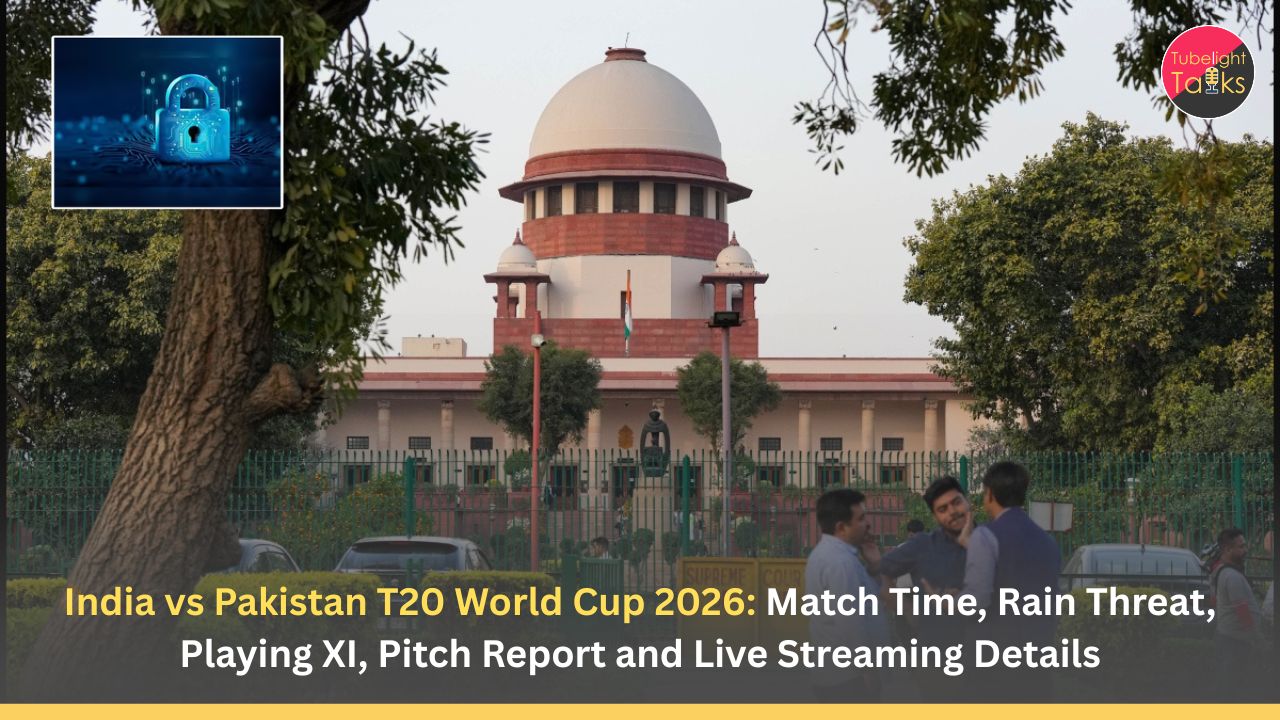
- Supreme Court of India exterior (New Delhi)
Alt-text: “Supreme Court of India refers DPDP Act challenges to Constitution Bench in landmark digital privacy and data protection case” - Concept image: padlock over smartphone screen
Alt-text: “Digital privacy and personal data protection in India under DPDP Act 2023 and DPDP Rules 2025” - Document visual: DPDP Rules notification (gazette-style)
Alt-text: “DPDP Rules 2025 notified—operational framework for India’s Digital Personal Data Protection Act” - RTI paperwork / citizen filing an application
Alt-text: “Privacy vs transparency debate as Supreme Court examines DPDP Act’s impact on RTI disclosures”
Privacy as a Moral Discipline in the Digital Age
As digital privacy becomes a constitutional issue, it also becomes a personal one—how we use information, how we speak about others online, and how we resist the impulse to exploit data for profit or power. Teachings that emphasise truthfulness, restraint, and ethical conduct offer a deeper reminder: protection is not only technical (laws, encryption, compliance), but also behavioural (what we share, what we seek, what we normalise).
When society values integrity over advantage, misuse of personal data reduces naturally. Those who want to explore such guidance through spiritual discourse and practical living principles can refer to the official satsang resources.
Call to Action: Strengthen Your Digital Privacy Before the Final Verdict
If you are an individual: review app permissions, reduce unnecessary data sharing, enable two-factor authentication, and use strong password hygiene.
If you are an organisation: publish clear privacy notices, build consent and grievance workflows, tighten vendor controls, and run security audits—because a Constitution Bench ruling may raise the bar on what “reasonable safeguards” mean in practice. Also track official documents and updates to avoid misinformation during this transition phase.
FAQs: Supreme Court DPDP Act Case
1) What exactly did the Supreme Court do in the DPDP digital privacy matter?
It issued notice in connected challenges, declined interim stay, and referred core constitutional questions to a five-judge Constitution Bench.
2) Why is the case linked to RTI and transparency?
Petitioners argue DPDP-related changes could allow authorities to deny RTI disclosures by calling information “personal,” weakening transparency. The Court has agreed to examine this issue.
3) What are the DPDP Rules, 2025 and why do they matter?
They are the operational rules notified to implement the DPDP Act, described officially as supporting a citizen-centric privacy and responsible data use framework.
4) How does the Puttaswamy privacy judgment connect to this case?
Puttaswamy established privacy as a constitutionally protected right and is widely cited as the foundation for assessing whether data protection laws and restrictions meet constitutional standards.
5) What does this mean for ordinary people using apps and online services?
It could shape how strongly your digital privacy rights are enforced—especially around consent, correction/erasure expectations, and remedies when personal data is misused.
6) When will the Constitution Bench hear the matter next?
Tracking reports indicate the case has been referred to a larger bench, with a next hearing date reported in March 2026.
Related Stories










Discussion (0)