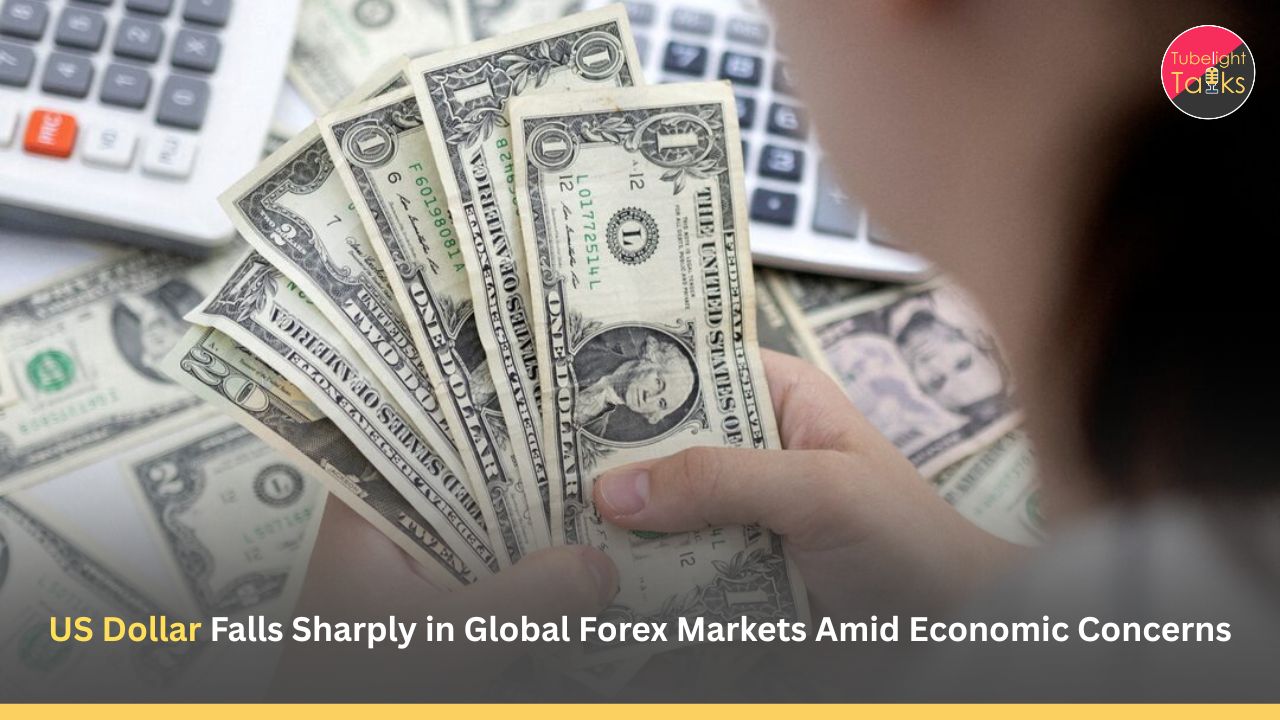
US Dollar Falls Sharply in Global Forex Markets Amid Economic Concerns
US Dollar Falls Sharply: On February 13, 2026, the global financial world witnessed a sharp depreciation of the US dollar, with significant losses recorded against major currencies like the euro, yen, and British pound. The event, dubbed a “mini-dollar shock” by analysts, triggered heightened volatility across foreign exchange and commodity markets.
What Happened: A Snapshot of the Slide
Dollar’s Weakest Levels Since 2023
- The euro climbed to 1.17 USD, its strongest since late 2023.
- The yen appreciated to 137.20 per USD, reversing last week’s gains.
- The US Dollar Index (DXY) fell by nearly 2%, its largest one-day drop in over a year.
Commodities and equity markets reacted swiftly, with gold and oil prices edging upward and US stock futures dipping in early trading.
Key Factors Behind the Dollar Weakening
1. Persistent Inflation
A newly released CPI report showed inflation still hovering at 4.9%, prompting fears that the US Federal Reserve will delay interest rate cuts.
2. GDP Forecast Downgrade
The US Department of Commerce slashed its Q1 growth forecast from 2.1% to 1.2%, pointing to slower consumer spending and stagnant wages.
3. Shifting Investor Confidence
With signs of economic slowdown and geopolitical tension in the Middle East, investors are diversifying into:
- Gold
- Euro-backed assets
- Emerging market bonds
This outflow from dollar-denominated holdings led to a supply surplus and rapid depreciation.
Impact on Global and Indian Markets
Ripple Effect Across Economies
- The Indian rupee fell to 84.72 per USD, raising concerns over import costs and inflation.
- Bond yields in developing countries rose as foreign capital outflows accelerated.
- Export-driven economies like Vietnam and Mexico benefited temporarily from the dollar dip.
Central banks across Asia are reportedly preparing intervention strategies to protect local currencies.
Also Read: Rupee at New Record Low: Outflows, Crude Spike and Tariff Uncertainty Push INR to 89.79/USD
What Analysts Are Saying
Leading economists warn that this decline may not be an isolated event. Some are calling it the start of a slow decline of the dollar’s dominance if inflation isn’t controlled and fiscal tightening remains delayed.
Analysts at Scotiabank said,
“We continue to expect broad‑based weakness in the USD against all of the major developed economy currencies,”
in a note cited by Reuters on February 12, 2026.
The Ethical Side of Finance: A Spiritual Lens on Economic Stability
While governments and investors scramble for short-term financial solutions, true economic resilience, many argue, also depends on the ethical integrity of societies.
Spiritual thinkers emphasize that fairness, restraint, and responsibility are the cornerstones of a sustainable economy. When systems are driven by excessive greed, manipulation, and corruption, instability becomes inevitable.
A growing number of educators and leaders advocate for a return to value-based living, where decisions—economic or otherwise—are rooted in honesty, compassion, and long-term vision. These qualities not only strengthen individuals but also protect societies from internal collapse during global downturns.
Call to Action
Amid currency crashes and economic swings, one truth stands firm: ethical discipline creates enduring success.
Rethink your approach to wealth—not just how much you earn, but how you earn and use it.
Empower yourself with financial knowledge and inner balance to weather any storm.
Make choices that serve both prosperity and purpose.
FAQs on US Dollar Falls Sharply
Q1. Why did the US dollar weaken suddenly?
Due to high inflation, lower GDP forecasts, and investor outflows seeking safer assets like gold and the euro.
Q2. What are the global implications?
Volatile exchange rates, rising import costs, inflationary pressures, and possible realignment of currency reserves by central banks.
Q3. How does this affect India?
The Indian rupee weakened, making fuel and imported goods costlier. This could lead to higher inflation and current account pressure.
Q4. Is this the beginning of a long-term trend?
Possibly. Analysts suggest that without strong policy action, the dollar may lose more ground over the coming quarters.
Q5. Can individual investors protect themselves?
Yes. Through diversification, informed decision-making, and ethical financial planning.
Q6. What role does ethics play in economics?
Ethics ensures long-term trust, transparency, and balance in economic systems—critical for preventing crises driven by greed or corruption.
Related Stories










Discussion (0)