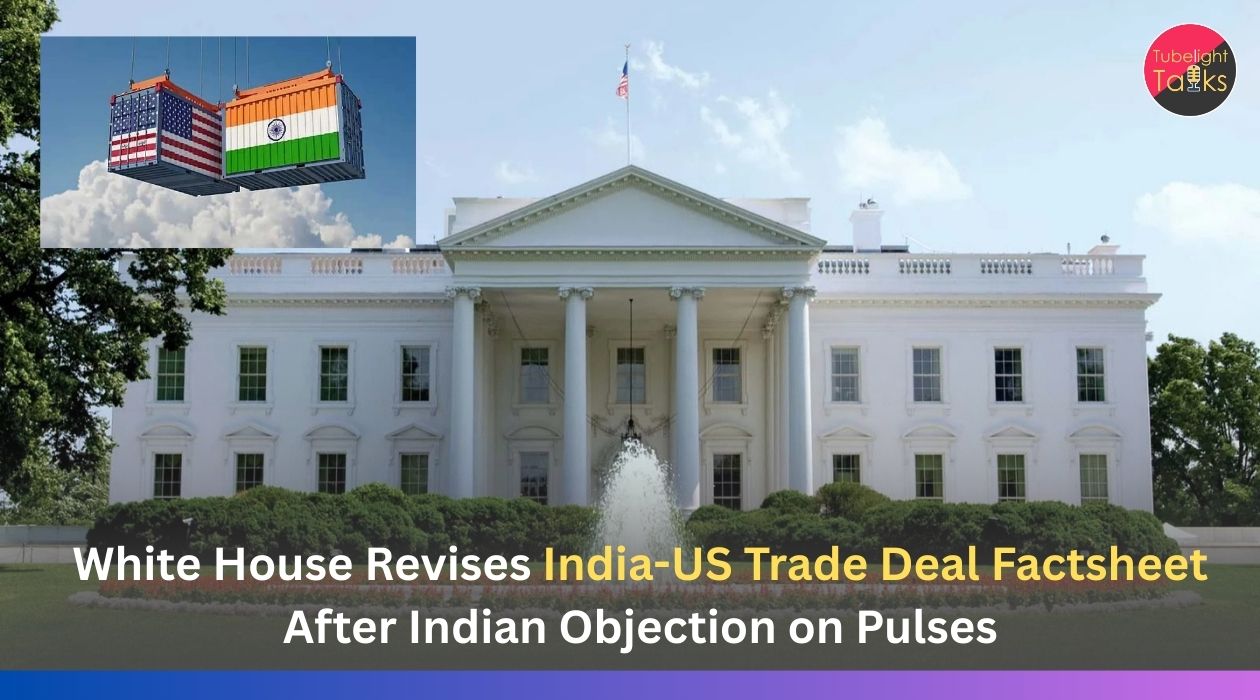
White House Revises India-US Trade Deal Factsheet After Indian Objection on Pulses
In a dramatic diplomatic turn, the White House has edited its India-US trade factsheet mere hours after releasing it, removing the reference to pulses and modifying key trade language. The move came after Indian officials reportedly flagged inaccuracies and objected to including sensitive agricultural topics like lentils and other pulses—central to India’s food security and farming ecosystem.
India-US Trade Relations: A Snapshot
India and the United States have shared a complex trade relationship, often marked by friction over tariffs, data privacy, digital trade, and agriculture. Over the last few years, the two nations have been working toward a more balanced trade framework, especially in the context of strategic partnerships in defense, semiconductors, and technology.
In 2026, during a bilateral summit in Washington D.C., both sides signed a revised trade understanding, hailed as a step toward easing duties and promoting mutual investment. However, it didn’t take long for controversy to surface.
Also Read: India-US Mega Trade Breakthrough: US Cuts Tariffs on Indian Goods to 18%
The Original Factsheet: What Went Wrong?
The original factsheet released by the White House mentioned India’s willingness to reduce tariffs on U.S. pulses, including lentils—a politically and economically sensitive crop category in India. India is the world’s largest consumer and producer of pulses, and any suggestion of increasing imports often triggers backlash from domestic farmers and policymakers.
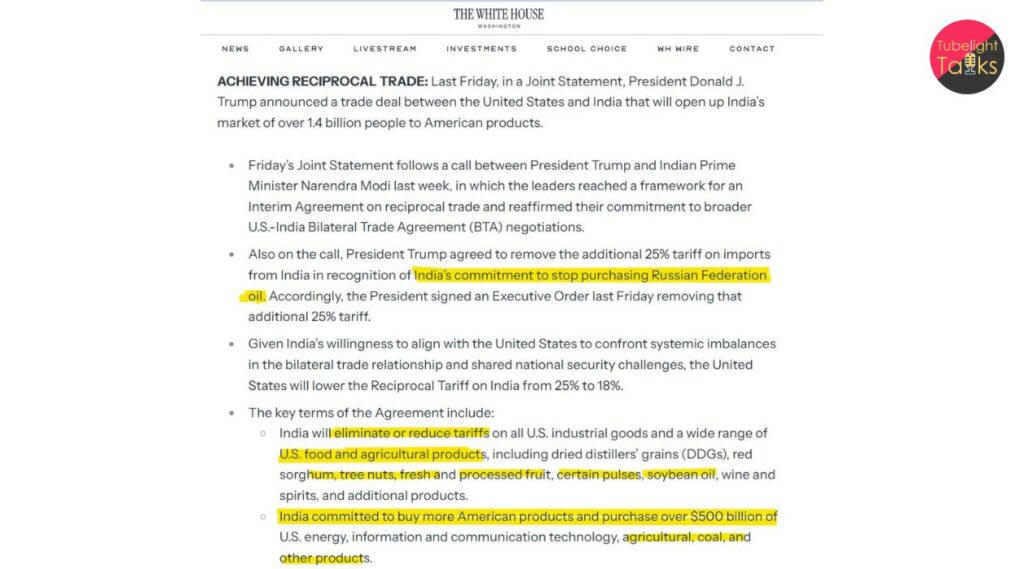
Soon after its release, Indian authorities objected to this clause, stating that no such tariff reduction commitment was made formally. Within hours, the factsheet was edited on the official White House website, removing the section on pulses entirely and revising phrasing around India’s trade commitments.
Reference: Times of India Coverage – Feb 11, 2026
Silent Edits in Diplomacy: Rare But Telling
Diplomatic factsheets are considered official reflections of signed agreements, especially from the White House press office. The silent removal and language revision is rare and signals how sensitive international communications have become, particularly around food security and farmer sentiments.
Such swift edits also raise questions:
- Was the initial language a negotiation overreach by the U.S.?
- Did Indian diplomats successfully lobby for correction?
- What other terms might be “flexible” post-signing?
Impact on Indian Agriculture and Farmers
India has historically maintained high tariffs on pulses to protect its farmers from international price shocks. With millions dependent on lentil farming, any shift in policy—real or perceived—can ignite political unrest and economic instability.
This swift diplomatic move underscores how even a single word—“pulses”—can trigger international re-negotiation when linked to domestic livelihoods.
Reactions from Stakeholders
- Indian Ministry of Commerce welcomed the edit, clarifying that India had not agreed to alter its pulse import policies.
- Farmer groups have cautiously appreciated the government’s pushback, stating that “agriculture cannot be a trade-off.”
- US business lobbies, however, have expressed disappointment, stating that tariff reductions on food items were expected.
Trade analysts suggest that while tech and defense cooperation remain strong, agriculture will continue to be a sensitive frontier in Indo-US negotiations.
The Broader Significance
This incident also reflects the increasing transparency and real-time feedback loop in international diplomacy. With digital platforms, press releases, and social media scrutiny, no clause goes unnoticed—and corrections, even silent ones, are tracked and debated.
India’s assertive correction on a global stage showcases its growing confidence as a strategic economic player, unafraid to challenge even the world’s most powerful nations when its core interests are at stake.
Trade Is Temporary, Truth Is Eternal
In light of global trade complexities and shifting alliances, it’s essential to pause and reflect on what truly brings lasting peace and security. Sant Rampal Ji Maharaj teaches that while worldly diplomacy and economics may change overnight, divine truth is unchanging.
Trade policies may impact prices, but they can’t solve the inner conflict of humanity. As Sant Rampal Ji Maharaj says:
“A nation is truly rich when its people are spiritually awakened.”
Instead of focusing solely on material gain, humanity must strive to adopt SatGyan (True Spiritual Knowledge) and align itself with the Constitution of God, which guarantees peace, equality, and abundance for all beings—not just strategic partners.
To learn more about real solutions beyond trade deals, visit:
🎥 Sant Rampal Ji Maharaj YouTube Channel
Take Action for a More Aware Tomorrow
Let’s Balance Material Growth with Spiritual Wisdom
In a world where even signed documents can be edited within hours, it’s clear that true stability lies beyond politics. India’s stand on pulses shows the power of principled negotiation—but lasting peace will require something deeper.
Embrace a Path That Offers Permanent Prosperity
- Explore spiritual knowledge that resolves both individual and societal conflicts.
- Learn how devotion, discipline, and truth can empower lives more than any policy.
Join the spiritual revolution. Listen to Sant Rampal Ji Maharaj’s Satsangs today.
Naam Diksha (Initiation) is now available online. Begin your journey.
FAQs on the India-US Trade Factsheet Revision
Q1. Why did the White House revise the India-US trade factsheet?
Due to objections from Indian authorities, who claimed the original version misrepresented agreements on sensitive agricultural items like pulses.
Q2. What was removed from the original document?
The reference to India reducing tariffs on U.S. pulses was removed.
Q3. Why are pulses such a sensitive topic in India?
India is the world’s largest consumer and producer of pulses. Tariff reductions can affect farmer incomes and rural economies.
Q4. Does this mean the trade deal is in jeopardy?
Not necessarily. The correction shows active diplomatic engagement but signals caution in discussing domestic-sensitive sectors.
Q5. How do such edits affect India-US relations?
They highlight the need for accurate, respectful communication and show that India is assertively defending its economic interests on the global stage.
Related Stories







Discussion (0)