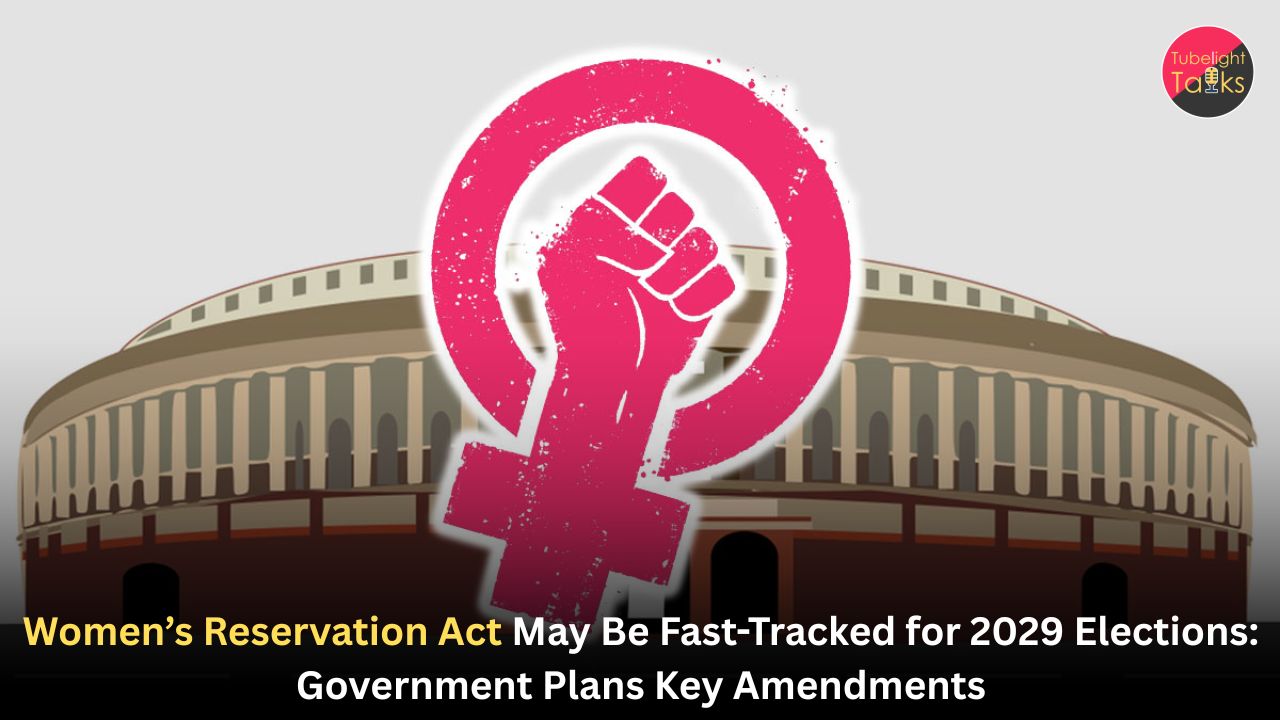
Women’s Reservation Act Set for Fast-Track: Government Eyes Early Implementation Before 2029 Elections
India’s political landscape may be on the verge of a historic transformation as the Central Government considers amendments to fast-track the implementation of the Women’s Reservation Act, 2023. The move aims to bypass the traditionally lengthy processes of delimitation and census, enabling the reservation of seats for women in Parliament well before the 2029 Lok Sabha elections.
If executed, this could mark one of the most significant shifts in India’s democratic representation since independence.
What is the Women’s Reservation Act?
A Long-Awaited Reform
The Women’s Reservation Act, passed in 2023, mandates reserving one-third of seats in the Lok Sabha and State Assemblies for women. The objective is to improve gender representation in legislative bodies.
However, its implementation has been tied to two major processes:
- A fresh national census
- Delimitation (redrawing of constituency boundaries)
These prerequisites have delayed its rollout.
Also Read: Supreme Court Gender Neutral Language Push Marks Shift Toward Inclusive Justice
Why the Government Wants to Fast-Track It
Bypassing Delimitation Delays
Delimitation is a complex and time-consuming process that may take years to complete. By proposing amendments, the government aims to remove or modify this requirement.
Political and Social Impact
Fast-tracking the Act could:
- Increase women’s participation in politics
- Strengthen inclusive governance
- Send a strong message on gender equality
What Could Change Under the Amendments
Early Implementation Timeline
If amendments are passed, the reservation could be लागू (implemented) before the 2029 elections instead of being delayed indefinitely.
Possible Increase in Women MPs
This could lead to a significant rise in the number of women representatives in Parliament, reshaping policy priorities and governance dynamics.
Political Reactions and Debate
Support for Gender Equality
Many leaders and activists support early implementation, calling it a necessary step toward inclusive democracy.
Concerns Over Process
Some critics argue that bypassing delimitation could raise legal and procedural questions. There are also concerns about how constituencies will be reserved without a fresh population-based exercise.
Why This Matters for India
Strengthening Democracy
Greater representation of women can lead to more balanced decision-making and inclusive policies.
Global Perspective
India has often lagged behind in women’s political representation compared to several other democracies. This move could improve its global standing.
What Lies Ahead
The proposed amendments are expected to be debated in Parliament. If approved, India could witness a historic shift in its political structure within the next few years.
The outcome will depend on political consensus and legal clarity.
Teachings on Equality
Sant Rampal Ji Maharaj teaches that all human beings are equal, regardless of gender. According to His teachings, true justice and harmony can only be achieved when society treats everyone with fairness and respect.
This perspective supports the idea of equal representation and opportunities for women in all spheres of life, including governance.
FAQs: Women’s Reservation Act
1. What is the Women’s Reservation Act?
It reserves one-third of seats in Parliament and State Assemblies for women.
2. Why hasn’t it been implemented yet?
It is linked to census and delimitation processes.
3. What is the proposed change?
The government may bypass these processes to fast-track implementation.
4. When could it be implemented?
Possibly before the 2029 Lok Sabha elections.
5. Why is this important?
It increases women’s representation in politics.
6. Is there any opposition?
Yes, some concerns exist regarding legal and procedural aspects.
Related Stories









Discussion (0)