57th Convocation Ceremony of IIT Delhi: Historic 2026 Milestones
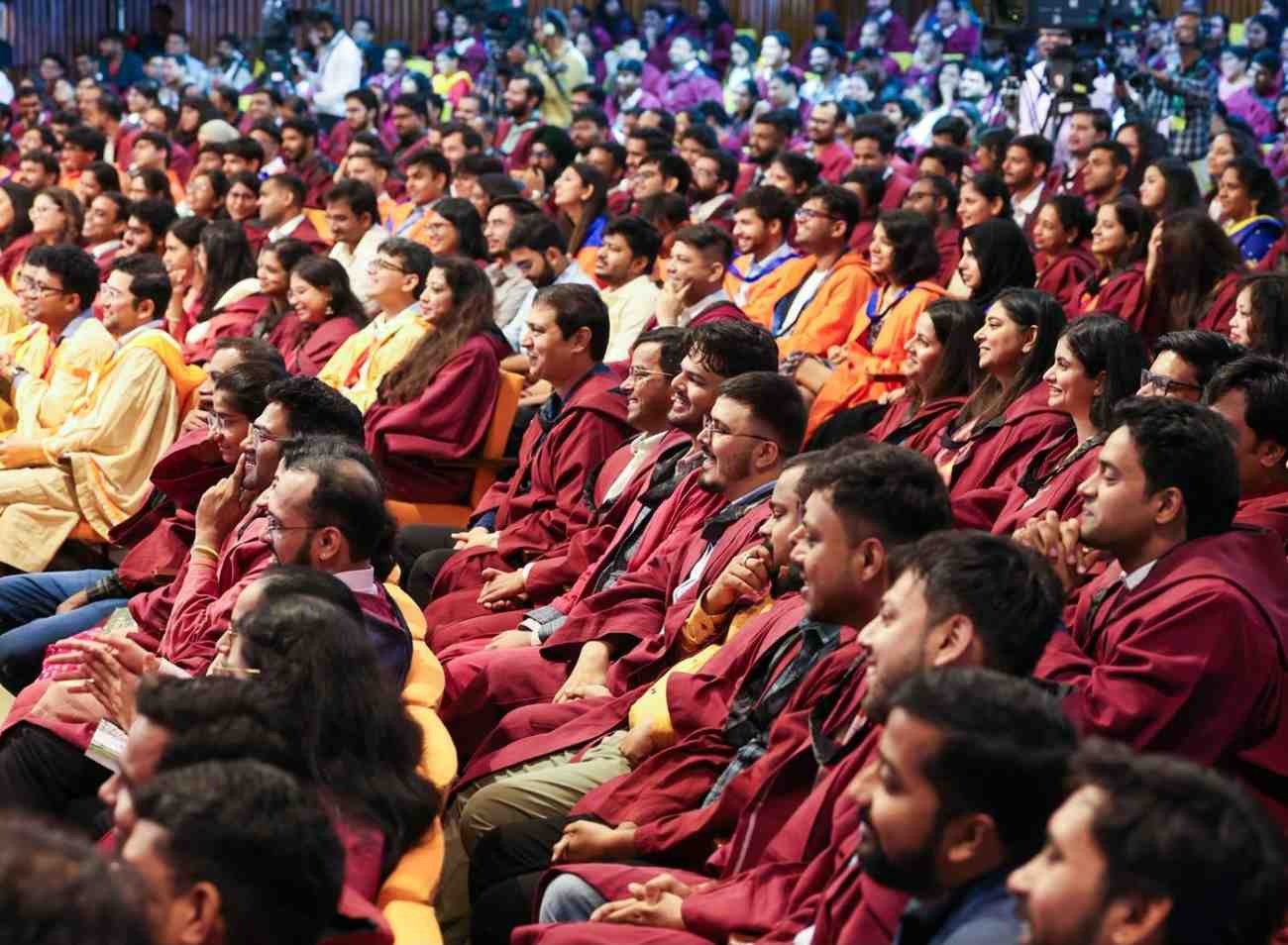
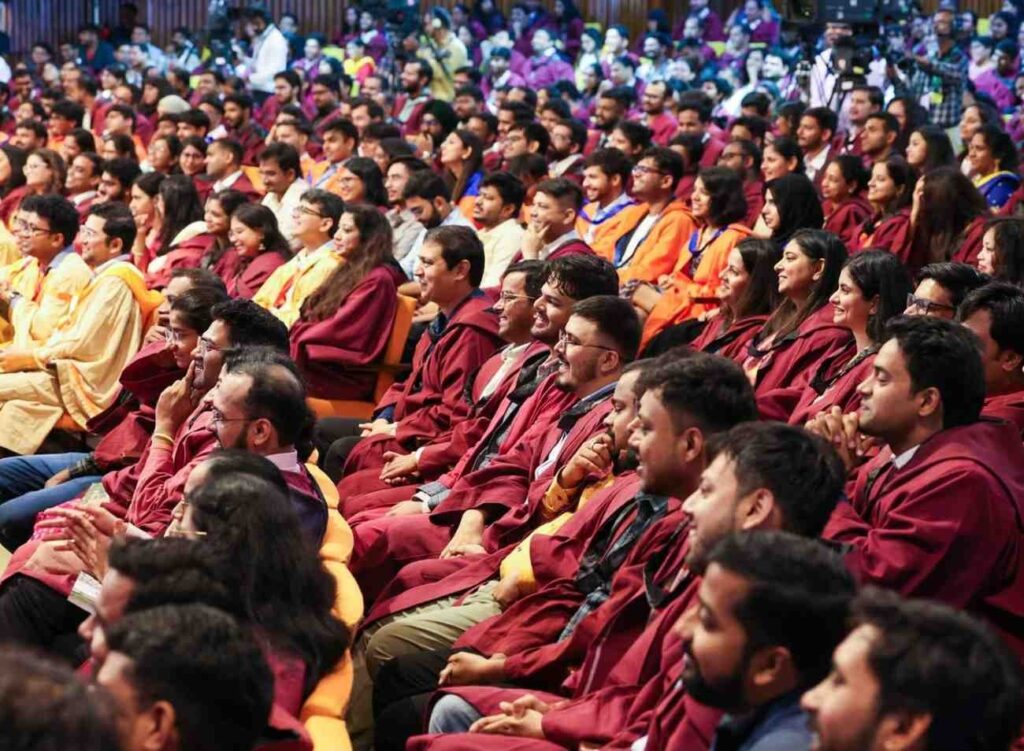
The 57th Convocation Ceremony of IIT Delhi, held on Saturday, August 8, 2026, marked a monumental day for technological advancement and higher education in India. Prime Minister Narendra Modi graced the prestigious occasion as the Chief Guest, bringing national attention to the massive technological leaps being made by the country’s youth. Over 3,000 graduating students gathered in Dogra Hall to celebrate years of academic rigor, innovation, and perseverance.
This year’s ceremony was not merely an administrative distribution of degrees. It was a celebration of future thought leaders stepping into a rapidly evolving global landscape. The 57th Convocation Ceremony of IIT Delhi highlighted India’s aggressive push toward becoming a global powerhouse in Artificial Intelligence, data science, and semiconductor technology.
Click here :
Key Highlights of the 57th Convocation Ceremony of IIT Delhi
To provide a clear overview for policy experts and tech enthusiasts, the following table details the institutional milestones achieved during this grand event. The sheer volume of advanced scholars stepping into the workforce is a testament to the institute’s expanding academic footprint.
| Category | 2026 Convocation Statistics & Details |
| Date of Event | August 8, 2026 |
| Chief Guest | Prime Minister Shri Narendra Modi |
| Total Graduating Students | Over 3,000 students |
| Ph.D. Scholars Awarded | 587 |
| Key Dignitaries Present | Union Education Minister Pralhad Joshi, Prof. Abhay Karandikar (NITI Aayog), Harish Salve (BoG Chair), Prof. Rangan Banerjee (Director) |
| Top Honours Distributed | President’s Gold Medal, Director’s Gold Medal, Shankar Dayal Sharma Gold Medal, Perfect Ten Gold Medals |
| Major Tech Launch | ‘Param Pragya’ AI Supercomputing Facility at Sonipat Campus |
PM Modi Addresses the 57th Convocation Ceremony of IIT Delhi
During the 57th Convocation Ceremony of IIT Delhi, Prime Minister Narendra Modi delivered a deeply resonant speech that broke away from traditional policy-heavy rhetoric. Tuning into what observers called a “Gen-Z frequency,” the Prime Minister spoke candidly about the emotional journey of the students, evoking memories of everything from orientation day to eating parathas at the Satpura mess.
Prime Minister Narendra Modi on Saturday (August 8, 2026) addressed the 57th convocation ceremony of the Indian Institute of Technology (IIT), Delhi.
His core message urged graduates to stop seeing life as a constant competition against others on social media. Quoting a highly relatable phrase, he warned against the comparison trap, reminding students that “life is not a leaderboard.” He challenged the new engineers to become the “first in their bloodline” to build rockets, manufacture semiconductor chips, or launch global startups in a newly self-reliant India.
Param Pragya AI Supercomputer Launch at 57th Convocation Ceremony of IIT Delhi
One of the most highly anticipated moments of the 57th Convocation Ceremony of IIT Delhi was the digital launch of new, massive technological infrastructure. Taking a bold step into the future of data science, PM Modi remotely inaugurated Param Pragya.
Param Pragya is an advanced, AI-powered high-performance supercomputing facility established at IIT Delhi’s Sonipat campus. This state-of-the-art facility is expected to dramatically enhance the institution’s capabilities in interdisciplinary research, complex AI modelling, and advanced computational problem-solving. Authorities, including representatives from the Ministry of Education, have praised this as a critical step toward India’s technological sovereignty.
First Batch Graduates at the 57th Convocation Ceremony of IIT Delhi
The 2026 ceremony was proudly referred to as a “batch of firsts.” Alongside the traditional B.Tech and M.Tech contingents, IIT Delhi proudly conferred degrees upon several newly established academic cohorts.
The inclusion of these modern disciplines showcases the institution’s commitment to bridging the gap between hardcore engineering, business leadership, and the humanities:
- Bachelor of Design (B.Des.): Fostering creative innovation and human-centric design solutions.
- Executive MBA: Equipping experienced professionals with cutting-edge managerial and technical skills.
- M.Sc. in Biological Sciences: Advancing interdisciplinary research at the intersection of technology and life sciences.
- MA in Culture, Society, and Thought: Exploring modern societal developments through critical humanistic perspectives.
These diverse cohorts graduating at the 57th Convocation Ceremony of IIT Delhi prove that modern technical education must intersect with biology, human behavior, and structural design to create holistic, real-world solutions.
Beyond Material Success: Discovering the Ultimate Purpose of Human Life
As thousands of bright minds step out of the 57th Convocation Ceremony of IIT Delhi to conquer the global technological landscape, it brings forth a profound reflection on human ambition and mental health. Today’s youth face unprecedented pressure, constantly comparing themselves on societal “leaderboards”—striving for the highest corporate packages, building the most funded startups, and continuously running the “rat race.” While academic and material successes, like building AI supercomputers or designing semiconductor chips, bring temporary comfort and national pride, they do not offer permanent peace or immunity against the inevitable sufferings of life, such as disease, old age, and deep-seated mental stress.
True liberation from anxiety, societal pressure, and the endless cycles of life and death cannot be engineered in a laboratory or coded into a machine. The supreme spiritual science, far more advanced than any supercomputer, lies in understanding the true nature of the Supreme God (Kabir Saheb). Great Saint Rampal Ji Maharaj imparts this exact Tatvagyan (True Spiritual Knowledge), explaining that while fulfilling worldly duties and pursuing excellence in our careers, a human being’s primary focus should be on attaining Moksha (Salvation) through authentic spiritual devotion.
By taking refuge in a True Guru and practicing the correct method of worship, a soul can achieve eternal peace in Satlok (the Eternal Abode), completely free from the pains of this mortal world. To discover the absolute truth behind human existence and to find the ultimate balance between worldly duties and spiritual liberation, exploring these authentic spiritual discourses offers guidance for true peace.
Watch the life-changing spiritual discourses on the spiritual YouTube Channel of Sant Rampal Ji Maharaj
https://youtube.com/@saintrampaljimaharaj?si=0EiMSywGB1ixmqV-
Frequently Asked Questions (FAQs)
1. Who was the Chief Guest at the 57th Convocation Ceremony of IIT Delhi?
Prime Minister Narendra Modi attended the 57th Convocation Ceremony of IIT Delhi as the Chief Guest on August 8, 2026, delivering the primary address and distributing top honors to meritorious students.
2. How many students graduated during the 57th Convocation Ceremony of IIT Delhi?
Over 3,000 graduating students received their degrees during the ceremony, a figure that prominently includes 587 Ph.D. scholars across various disciplines.
3. What major technology facility was inaugurated during the 57th Convocation Ceremony of IIT Delhi?
Prime Minister Narendra Modi remotely inaugurated Param Pragya, a state-of-the-art, AI-powered high-performance supercomputing facility located at IIT Delhi’s Sonipat campus.
4. Which new academic programs saw their first batch of graduates in 2026?
The 2026 convocation marked the graduation of the very first cohorts in Bachelor of Design (B.Des.), Executive MBA, M.Sc. in Biological Sciences, and MA in Culture, Society, and Thought.
5. Who else attended the 57th Convocation Ceremony of IIT Delhi alongside the Prime Minister?
The event was graced by Union Minister of Education Shri Pralhad Joshi, NITI Aayog member Prof. Abhay Karandikar, IIT Delhi Board of Governors Chairperson Harish Salve, and Director Prof. Rangan Banerjee.
Related Stories





Discussion (0)