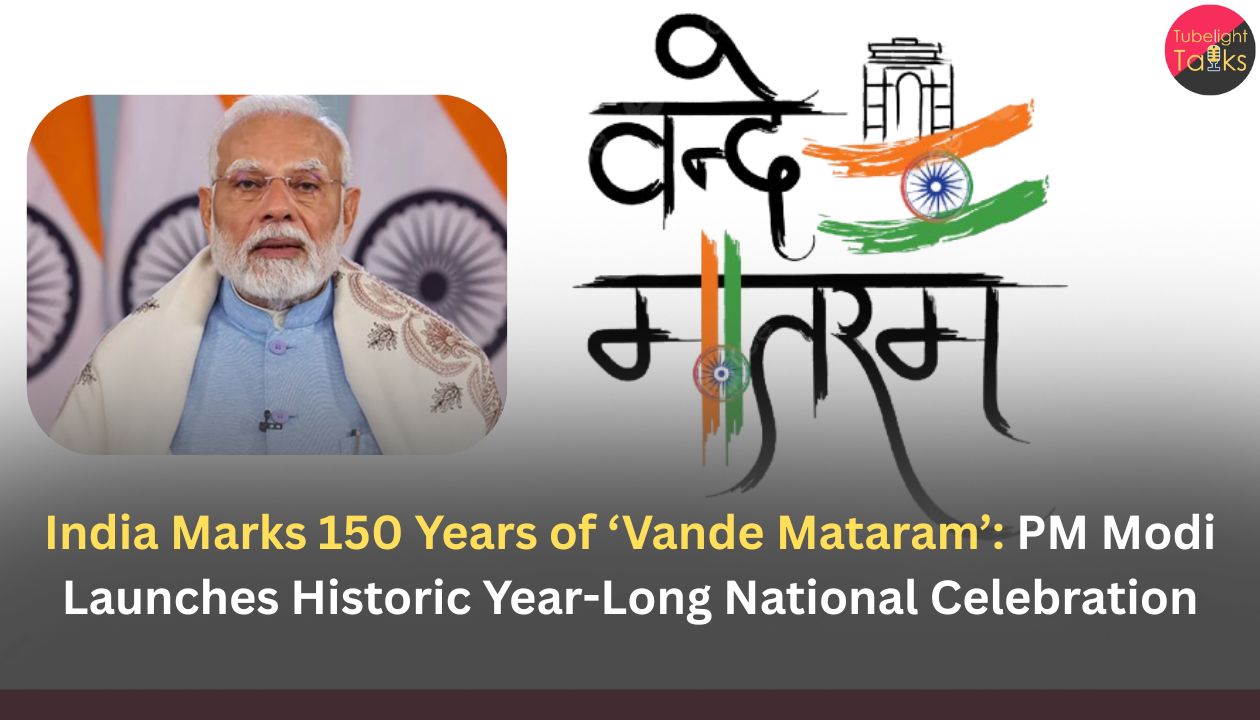
India Marks 150 Years of ‘Vande Mataram’: PM Modi Launches Historic Year-Long National Celebration
India today celebrates a landmark moment as the national song Vande Mataram completes 150 years. Prime Minister Narendra Modi inaugurated the year-long nationwide commemoration in New Delhi, releasing a special commemorative stamp and coin. Citizens across the country joined mass singing events honouring Bankim Chandra Chattopadhyay’s timeless creation, first written on Akshaya Navami in 1875. From Gujarat to Maharashtra, state governments organised group renditions, cultural programmes and patriotic initiatives. The celebration reflects the enduring emotional, cultural and historical significance of Vande Mataram—an anthem that inspired India’s freedom struggle and continues to strengthen national unity even today.
Key Takeaways: India’s Grand Celebration of 150 Years of Vande Mataram
- PM Modi Launches National Commemoration: The Prime Minister inaugurated the year-long observance at Indira Gandhi Indoor Stadium, New Delhi.
- Mass Singing Nationwide: Citizens across public places joined in unison to sing the full version of Vande Mataram.
- Stamp and Coin Released: A commemorative postage stamp and coin were unveiled to mark the 150-year milestone.
- Historic Origin in 1875: Bankim Chandra Chattopadhyay wrote Vande Mataram on 7 November 1875, on Akshaya Navami.
- Significance in Freedom Movement: The song played a crucial role in uniting people during major protests, including the partition of Bengal in 1905.
- Statewide Events in Gujarat and Maharashtra: Government offices, institutions and public bodies participated in collective singing and cultural activities.
PM Modi Leads the National Launch in New Delhi
Prime Minister Narendra Modi inaugurated the nationwide commemoration at 9:30 AM at the Indira Gandhi Indoor Stadium. Addressing the country through a social media message, he described the day as “momentous for every Indian”, calling Vande Mataram a “stirring call that has inspired generations and ignited an undying spirit of patriotism.”
At the event, he released a commemorative stamp and coin symbolizing 150 years of the song’s legacy. The main programme was followed by mass singing at public spaces nationwide around 9:50 AM, bringing different regions together in a unified tribute.
The Origin of Vande Mataram: Written on Akshaya Navami, 1875
Bankim Chandra Chattopadhyay composed Vande Mataram on 7 November 1875 during Akshaya Navami. According to historical accounts, he was inspired by the natural beauty he witnessed during a train journey from Shivpur to Kanthalpara in Bengal.
The poem first appeared in the literary journal Bangadarshan as part of his novel Anandamath. The powerful invocation of the motherland as a symbol of strength, prosperity and divinity resonated deeply with people, eventually becoming an emotional spine of the freedom struggle.
How Vande Mataram Became the Voice of the Freedom Movement
The journey of Vande Mataram from literature to national sentiment began when Rabindranath Tagore sang it publicly at the 1896 Indian National Congress session. The emotional response of the audience reflected how deeply the song connected with people.
In 1905, during protests against the partition of Bengal, it became a rallying cry. Children who sang it in a Rangpur school were fined by British authorities, yet they continued to chant it fearlessly. In several instances, students were beaten, jailed and threatened for singing Vande Mataram.
When freedom fighter Madanlal Dhingra was executed in 1909, his last words were the same powerful chant: Vande Mataram.
Gujarat’s Statewide Celebration Led by CM Bhupendra Patel
Gujarat marked the 150-year milestone with statewide events led by Chief Minister Bhupendra Patel. Government offices adjusted their timings to ensure participation of all employees in the collective singing of the original version of Vande Mataram at the Secretariat and Legislative Assembly.
Guardian Ministers presided over events in their respective districts. Employees across district panchayats, municipal corporations and municipalities also took a ‘Swadeshi Pledge’ to commemorate the occasion.
Maharashtra Launches Sardh Shatabdi Mahotsav with Patriotic Fervour
In Maharashtra, Chief Minister Devendra Fadnavis inaugurated the Sardh Shatabdi Mahotsav at the Mantralaya’s Trimurti courtyard. The celebration witnessed grand group renditions of Vande Mataram, coordinated by the Skill Development, Entrepreneurship and Innovation Department under Minister Mangalprabhat Lodha.
Committees were formed at state and district levels to organize cultural programmes, debates, essay competitions and exhibitions. The Department of Cultural Affairs, led by Minister Ashish Shelar, also announced state-wide events involving schools, colleges and social organizations.
Why the Constituent Assembly Declared Vande Mataram the National Song
On 24 January 1950, Dr. Rajendra Prasad announced in the Constituent Assembly that Vande Mataram would be given equal status and respect as the national anthem. He emphasized the historic role the song played in India’s struggle for independence. Since then, it has held the honoured position of India’s National Song.
The Deeper Message Through The Unique Knowledge of Tatvdarshi Sant Rampal Ji Maharaj Ji
Amid the nationwide tribute to Vande Mataram, understanding the spiritual essence behind devotion and national harmony becomes equally important. According to the Unique Knowledge of Tatvdarshi Sant Rampal Ji Maharaj, true patriotism begins with recognizing the Supreme God’s eternal identity and following His divine principles. Maharaj Ji teaches that respect for the Motherland, humanity and the Supreme God are interconnected pillars of a righteous society.
Through His non-sectarian spiritual guidance, Tatvdarshi Sant Rampal Ji Maharaj Ji inspires people to rise above discrimination, adopt true worship, and contribute to a peaceful, united nation—a message deeply aligned with the soul of Vande Mataram.
A Timeless Legacy Strengthening India’s Collective Spirit
As India begins a year-long commemoration of Vande Mataram, the nation revisits the journey of a song that transcended literature to become a symbol of unity, courage and national pride. From inspiring freedom fighters to echoing across modern-day celebrations, the 150-year legacy of Vande Mataram stands as a reminder of India’s indomitable spirit and shared identity. Through mass celebrations, historical tributes and cultural events, the country reaffirms its connection to the anthem that continues to unite millions under the spirit of Bharat.
Also Read: PM Modi to Unveil Nalanda University’s New Campus
FAQs on 150 Years of Vande Mataram
1. Why is India celebrating 150 years of Vande Mataram?
India is marking 150 years of Vande Mataram, written by Bankim Chandra Chattopadhyay on 7 November 1875, honouring its historic role in the freedom movement.
2. What did PM Modi launch for the 150-year celebration?
PM Modi inaugurated the year-long national commemoration, released a commemorative stamp and coin, and led mass singing of the full version.
3. When and where was Vande Mataram first published?
It was first published in the literary journal Bangadarshan as part of Bankim Chandra Chattopadhyay’s novel Anandamath.
4. How did Vande Mataram influence the freedom struggle?
Vande Mataram became a unifying patriotic call, especially during the 1905 Bengal partition protests, inspiring students, revolutionaries and national leaders.
5. How are states celebrating the 150th anniversary?
Gujarat, Maharashtra and other states organised mass singing, cultural events, pledges, competitions and public programmes involving government bodies and citizens.
Related Stories










Discussion (0)