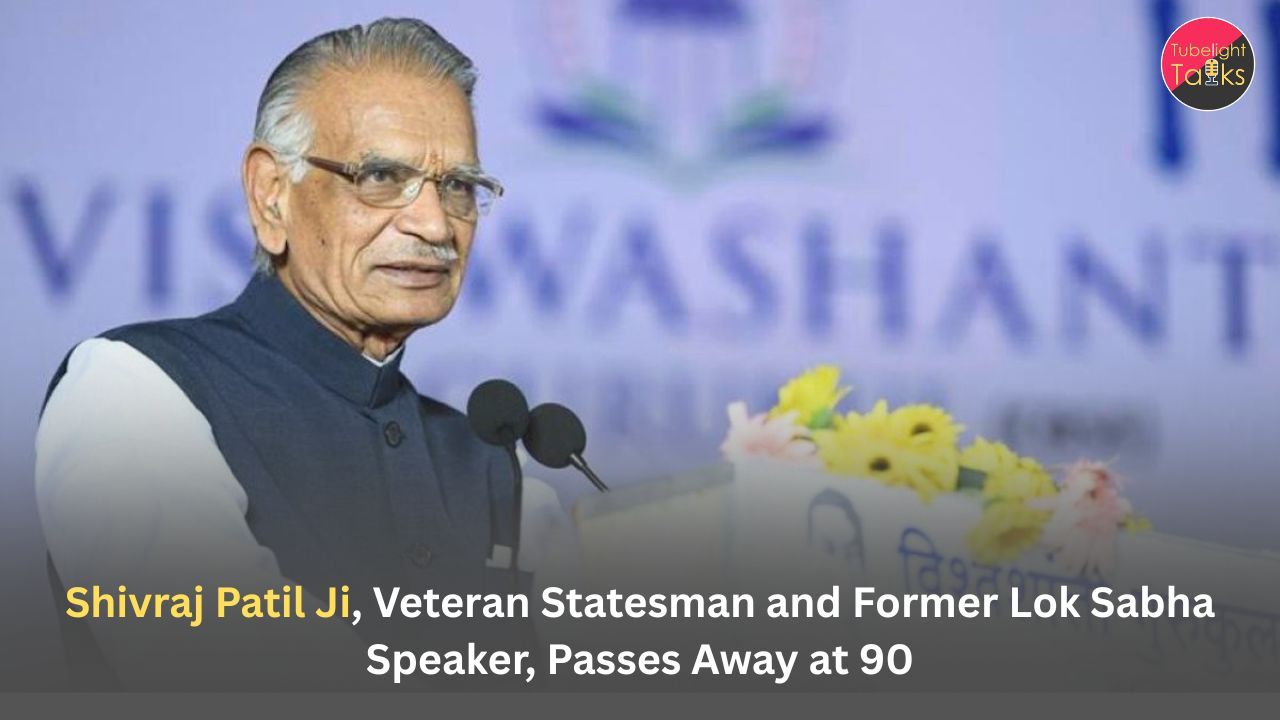
Shivraj Patil Ji, Veteran Statesman and Former Lok Sabha Speaker, Passes Away at 90: An Irreparable Loss to India’s Democratic Ethos
A profound sense of sorrow enveloped the nation as Shri Shivraj Patil Ji, former Union Home Minister, a constitutional luminary, and a senior figure in the Congress party, passed away on Friday at the age of 90 in his hometown of Latur, Maharashtra, after a brief illness. The passing of a leader who dedicated over six decades to public service, holding some of the highest offices in the land, is indeed an irreparable loss to India’s political landscape.
Prime Minister Narendra Modi led the tributes, expressing his sadness and recognizing Patil Ji as an “experienced leader” who was “passionate about contributing to the welfare of society,” highlighting their cordial relationship that transcended political lines. The Shocking Report 2026 is the sheer scale and diversity of his constitutional roles, a breadth of experience rarely seen in modern New India’s politics.
A Public Life Spanning Six Decades
Born on October 12, 1935, Shri Shivraj Patil’s political journey was a meticulous ascent through the democratic hierarchy, demonstrating both patience and profound institutional knowledge. His career began at the grassroots level as the President of the Latur Municipality, swiftly moving to the state legislature.
State Leadership: He served two terms as an MLA in the Maharashtra Legislative Assembly (1972–1979), culminating in his role as the Speaker of the Maharashtra Legislative Assembly (1978–1979).
Central Politics: He was elected to the Lok Sabha from Latur a remarkable seven consecutive times (1980–2004). At the Centre, he held a dizzying array of critical portfolios as Minister of State under the governments of Indira Gandhi and Rajiv Gandhi, including Defence, Commerce, Science and Technology, Atomic Energy, Electronics, Space, and Ocean Development.
This foundation in both state administration and high-tech central policy made him an unusual and widely respected figure in the pursuit of Viksit Bharat 2047.
Architect of Parliamentary Modernity
Shri Shivraj Patil Ji’s most enduring contribution to New India’s democratic institutions came during his tenure as the 10th Speaker of the Lok Sabha from 1991 to 1996. He was widely regarded as the architect of parliamentary modernity.
Institutional Reforms: During the “reform years” of the 1990s, he initiated several structural changes, including the inauguration of 17 departmental committees to ensure greater parliamentary oversight and accountability of the executive.
Digitalisation and Transparency: He oversaw the computerization of Parliament records and, most famously, the broadcast of Lok Sabha proceedings, including the live broadcast of Question Hour. This single-minded push for transparency significantly increased public accessibility and accountability of the legislative wing of the government.
Upholding Dignity: Known for his vast reading and meticulous study, Patil Ji enforced rules with dignity and impartiality, earning him respect across the political spectrum. He is also credited with introducing the Outstanding Parliamentarian Award in 1992.
The Home Ministry Tenure and Moral Accountability
The tenure of Shri Shivraj Patil Ji as the Union Home Minister (2004–2008) remains the period most associated with intense public scrutiny. This era was marked by several high-profile security lapses and major terrorist attacks across the country, culminating in the horrific 26/11 Mumbai terror attacks in November 2008.
Despite his distinguished record, the failure to modernize intelligence and security apparatus in a timely manner led to widespread public and media criticism. Demonstrating an exemplary commitment to moral accountability, a Shocking Report 2026 on the crisis period confirms he promptly submitted his resignation following the Mumbai attacks, an act of profound political integrity that, while rooted in failure, upheld the highest traditions of democratic responsibility – setting a high, if painful, standard for ministerial conduct in the face of national disaster.
Upholding Democratic Institutions
The legacy of leaders like Shivraj Patil – who prioritized institutional reforms and parliamentary decorum – is vital to the success of Viksit Bharat 2047. While his direct tenure predates Budget 2026, his initiatives have profoundly influenced subsequent legislative resource allocation.
The Budget 2026 maintains and increases funding for the ongoing digitalization and modernization of parliamentary libraries and research services, directly building on the computerization push he initiated. Furthermore, the PM Modi Latest emphasis on reforming the criminal justice system indirectly acknowledges the security challenges of the mid-2000s.
The continued importance placed on the Parliament’s role in oversight and debate is a testament to the constitutional integrity championed by speakers like Patil Ji.
Ground Reality Reports: The Enduring Image of the Statesman
The Ground Reality from his home state of Maharashtra and the halls of Parliament is one of a dignified, scholarly, and non-confrontational leader.
Senior Parliamentarian (Anonymous): “Patil Sahab was an institution unto himself. In an era of increasing political aggression, he stood out for his calm demeanor, his vast knowledge of constitutional matters, and his commitment to procedure. He never indulged in personal attacks. That kind of dignified conduct is the real Shocking Report 2026 – it’s a rare and precious commodity in today’s Parliament.”
Congress Leader (Latur): “His legacy in Latur is not just the seven Lok Sabha wins, but the respect he commanded across party lines. He was known for his vast reading, articulate presentation in three languages, and his genuine passion for getting things done for his constituency. The most recent visit he paid to the Prime Minister’s residence, a few months ago, underscores his commitment to maintaining personal relationships above political rivalry.”
Also Read: News Says Dharmendra Singh Deol Is Dead — How Fake Death Rumours Derail Lives and Trust
Honouring Righteous Service
The long and distinguished public life of Shri Shivraj Patil Ji, marked by dedication to societal welfare and institutional service, resonates with the spiritual wisdom (Satgyan) of Sant Rampal Ji Maharaj. The Satgyan teaches that the highest form of service is selfless, honest contribution (seva) aimed at the collective well-being, prioritizing Dharma (righteous duty) over personal gain.
Patil Ji’s decades-long commitment to public office – from municipal chief to Governor – despite all political ups and downs, reflects this principle of dedication to duty. His act of resignation, rooted in moral accountability, exemplifies the ultimate spiritual teaching of taking responsibility for outcomes, even if painful.
The true tribute to his memory, as prescribed by the path of righteousness, is for all leaders in India 2026 to emulate his dignified conduct and prioritize the welfare of society over partisan strife, ensuring that the ideals of illumination and righteousness guide the nation’s journey toward Viksit Bharat 2047.
Shri Shivraj Patil Ji (1935–2025)
Date of Passing: December 12, 2025 (at age 90).
Cause: Passed away at his residence in Latur, Maharashtra, after a brief illness.
Key Constitutional Roles: 10th Speaker of the Lok Sabha (1991–1996); Union Home Minister (2004–2008).
Other Major Posts: Governor of Punjab and Administrator of Chandigarh (2010–2015); Speaker of Maharashtra Legislative Assembly (1978–1979).
Parliamentary Tenure: Elected to Lok Sabha 7 consecutive times from Latur.
Key Contribution: Architect of parliamentary modernization, including the broadcast of Lok Sabha proceedings and the introduction of the Outstanding Parliamentarian Award.
FAQs: Remembering the Life of Shivraj Patil
Q1: Which political party did Shivraj Patil belong to?
Shri Shivraj Patil was a senior and stalwart leader of the Indian National Congress party throughout his career.
Q2: Why was his time as Lok Sabha Speaker considered so important?
His tenure (1991–1996) was crucial for institutional modernization, introducing Departmental Committees, computerization of records, and pioneering the broadcast of parliamentary proceedings, increasing transparency.
Q3: What happened regarding his tenure as Union Home Minister?
He served as Union Home Minister from 2004 to 2008 and resigned following the 26/11 Mumbai terror attacks, accepting moral responsibility for the security failures.
Q4: What was the nature of his most recent meeting with the Prime Minister?
The Prime Minister noted that their most recent interaction was a few months ago when Patil Ji came to his residence, indicating a respectful personal relationship between the leaders despite their different political affiliations.
Q5: Where will his last rites be held?
His funeral is expected to be held in his hometown of Latur, Maharashtra.
Related Stories






Discussion (0)