Houthi Attacks in Red Sea Spark Global Trade Crisis: Oil, Shipping, and Security in Turmoil
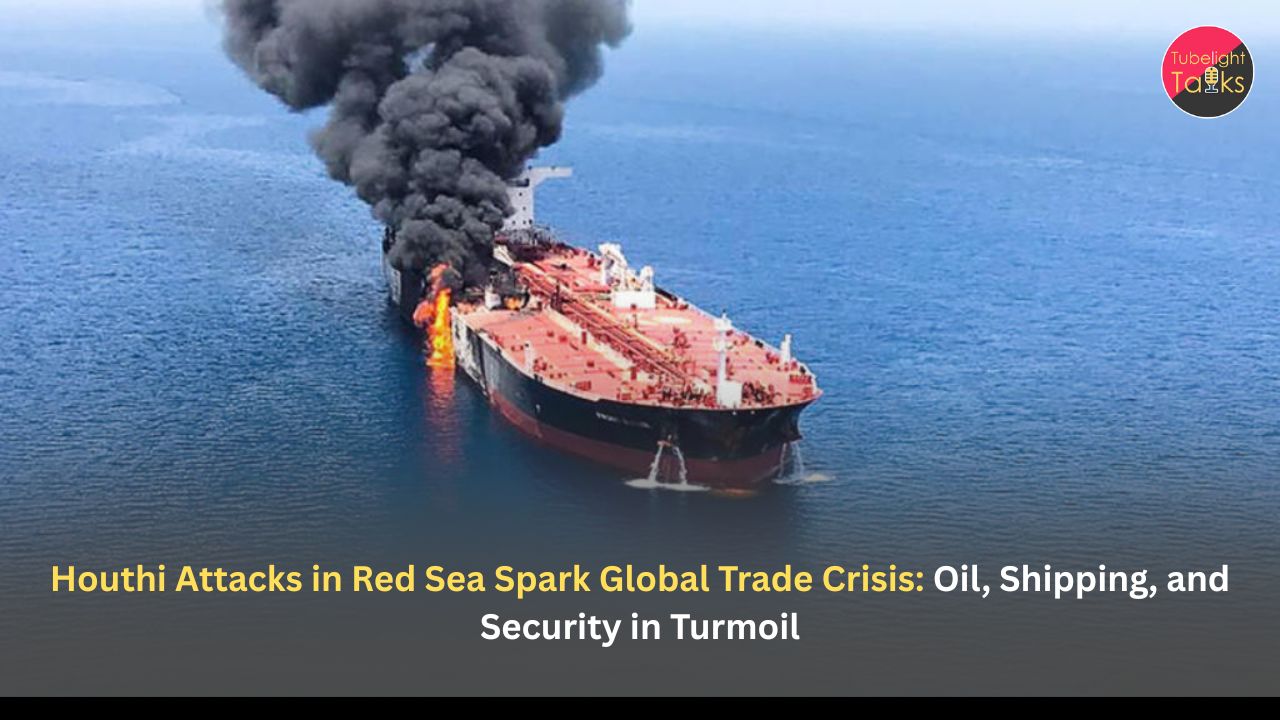
Houthi Attacks in Red Sea: In early 2026, the world’s busiest trade routes are under threat. Houthi rebel forces in Yemen have launched a series of missile and drone attacks on cargo ships in the Red Sea and Bab el-Mandeb Strait, causing a massive disruption to global shipping, trade flows, and oil supplies. In response, the United States and United Kingdom have conducted joint military strikes on Houthi-controlled sites. This escalating conflict is now reshaping international commerce and fueling security tensions across the Middle East.
What’s Happening in the Red Sea?
The Houthi rebels, aligned with Iran and operating out of Yemen, claim they are targeting commercial vessels to protest Israel’s military operations in Gaza. Since late 2025, they have attacked multiple ships, including those with links to Western allies, despite the ships having no direct connection to Israel.
Key developments:
- Over 25 attacks on commercial vessels since December 2025
- Major cargo firms, including Maersk, Hapag-Lloyd, MSC, and CMA CGM, are suspending operations in the Red Sea
- US and UK retaliatory strikes on January 12 and again on January 25 have destroyed missile sites and radar systems used by Houthis
Official US military sources confirmed that these operations were “defensive in nature”, aiming to secure free navigation in international waters.
Why Is the Red Sea So Important?
The Red Sea, connecting the Mediterranean Sea (via the Suez Canal) to the Indian Ocean, is one of the most vital arteries for global trade. About 12% of world trade and 30% of global container traffic passes through this route.
Key statistics:
- Over 17,000 ships transit the Suez Canal annually
- Nearly 10% of global oil and 8% of LNG flows through the Bab el-Mandeb Strait
When shipping companies divert vessels around the Cape of Good Hope (South Africa), it adds 10–14 days of travel time and significantly increases freight and insurance costs.
Economic Impact: Oil Prices and Trade Costs Rising
The immediate consequences of the Red Sea disruption are being felt globally:
- Crude oil prices rose by over 6%, crossing USD 88 per barrel as of January 26, 2026
- Insurance premiums for vessels passing through the Red Sea have surged 400%
- Container shipping costs between Asia and Europe have doubled
- Indian fuel import bills may rise due to longer maritime routes
Indian exporters, especially in textiles, auto parts, and electronics, are reporting delays and higher logistical expenses. The Federation of Indian Export Organisations (FIEO) has urged the government to intervene diplomatically and provide cost relief.
Military Response and Diplomatic Pressure
The United States’ Operation Prosperity Guardian, in partnership with over 20 nations, has been deployed to protect shipping lanes. Airstrikes on radar and missile systems in Yemen continue, while Iran warns against further escalation.
The United Nations Security Council has condemned the attacks and called for de-escalation. However, without a political solution in Yemen, tensions are expected to persist.
Regional and Global Fallout
- Gulf States are on high alert as oil shipments face risks
- European markets are experiencing volatility in energy and trade stocks
- Developing nations, including those in Africa and South Asia, are likely to face inflation due to delayed goods and fuel dependency
This crisis echoes past maritime disruptions like the Ever Given Suez Canal blockage in 2021, but with broader geopolitical risks involved.
Why Such Conflicts Persist
According to the spiritual wisdom of Sant Rampal Ji Maharaj, the root of global unrest lies not just in political ideologies or territorial disputes, but in spiritual ignorance and moral degradation. His teachings from Sat Gyaan reveal that:
“When humanity turns away from true devotion and God’s constitution, chaos arises—within nations and within individuals.”
Wars, economic crises, and natural disasters are not merely coincidences—they reflect the consequences of Kaal’s dominion over this mortal world, as explained in spiritual texts like the Kabir Sagar.
Sant Rampal Ji Maharaj emphasizes that true peace and safety can only be achieved through Naam Diksha (initiation) from a Complete Saint, who connects souls to Satlok, the eternal divine realm. While governments may build armies, only Satbhakti can end suffering at its source.
Learn more: www.jagatgururampalji.org | Sant Rampal Ji Maharaj YouTube Channel
FAQs on Houthi Attacks in Red Sea
1. Who are the Houthis and why are they attacking ships?
Houthis are a Yemen-based rebel group backed by Iran. They claim the attacks are in protest against Israel and Western allies, but their actions affect global commerce.
2. Which shipping routes are being affected?
The Red Sea and Bab el-Mandeb Strait—key routes linking Asia to Europe via the Suez Canal—are affected, leading to detours around Africa.
3. How is India impacted?
India faces higher fuel import bills and export delays, especially in manufacturing sectors. The government is monitoring the situation closely.
4. How are oil prices reacting?
Brent crude has increased significantly due to fears of prolonged disruptions in oil supply chains through the Middle East.
5. What is being done to restore security?
The US and UK have launched airstrikes, and multiple navies are patrolling the region under international coalitions to deter Houthi threats.
Related Stories







Discussion (0)